 Join
Join Donate
 Acadia National Park
Japanese Knotweed
(Fallopia japonica s.l.)
Help support a diverse and thriving Mount Desert Island by taking action in your backyard!
Help support a diverse and thriving Mount Desert Island by taking action in your backyard!
Japanese knotweed (Fallopia japonica) is a widespread invasive species that is found in a variety of habitats, including wetlands, forest edges, and in areas that are heavily influenced by human activity, such as roadways, trails, and construction sites. It grows in dense thickets, crowding out native plants and degrading habitats for birds, insects, and other wildlife.
Japanese knotweed grows quickly, sometimes 10 feet in one growing season, which uses large amounts of resources and limits resources available for native species. The key to Japanese knotweed’s success is its ability to spread through an interconnected, underground system of horizontal roots called rhizomes. New plants can sprout from tiny rhizome fragments, making knotweed extremely persistent and difficult to control.
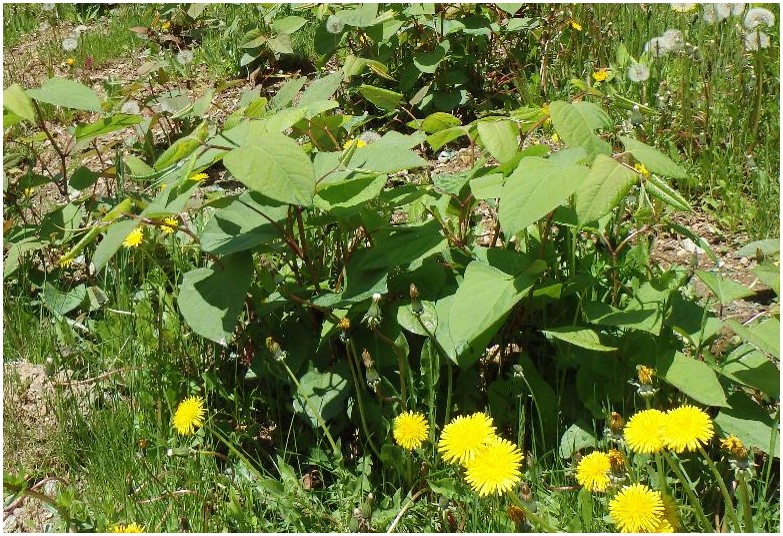
Japanese knotweed grows tall and in dense thickets. Its leaves are broad and spade shaped. They emerge in an alternate pattern from red brown nodes along the stems, which are smooth, jointed, and hollow, closely resembling bamboo. In late summer, small white flowers bloom in branching clusters along the stems. The stems die back in the fall, and red brown stalks persist throughout the winter. New shoots resembling asparagus spears sprout in early spring from the extensive network of underground rhizomes.


Managing Japanese knotweed can be a serious challenge. This species spreads rapidly and is very difficult to eliminate once established. The management suggestions below all require long-term maintenance and monitoring to be successful. No matter which method you choose, think of Japanese knotweed management as a marathon, not a sprint.
Cut plants below the lowest node with pruners or loppers three times per year
For large, robust patches of Japanese knotweed:
Avoid digging or hand pulling except for very young plants as new plants can sprout from small root and rhizome fragments. Mowing can further spread rhizome and root fragments and should also be avoided.
Most successful management of Japanese knotweed will involve the use of herbicide.
The resources below offer suggestions for herbicide application for Japanese knotweed, including recommendations for products, methods, and management timelines. Before applying any herbicide product, make sure to thoroughly read and follow the label’s instructions.
Maine Natural Areas Program – Japanese Knotweed
Penn State Extension – Japanese Knotweed
University of Connecticut – Invasive Plant Factsheet: Japanese Knotweed
Michigan Department of Natural Resources – Japanese Knotweed
Do not compost Japanese knotweed after removal. Instead, bag and seal plant material in heavy-duty plastic bags to prevent any fragments from escaping and spreading, and place the sealed bags in direct sunlight for several weeks. The heat will sterilize seeds and destroy roots or other plant parts, preventing the plant from further spreading. After solarization, the material can be disposed of with regular trash.
Consider replacing with other spreading shrubs, like red-osier dogwood (Swida sericea), which can create hedges and screening for your property.