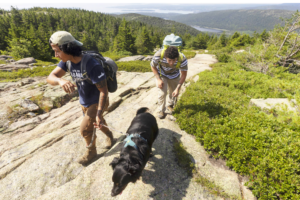
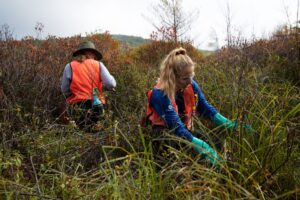
At the summit of Sargent Mountain, 20 sweaty hikers pull black plastic bags from their packs and pile them together on the granite terrain. Inside each bag is anywhere from five to 25 pounds of soil, which has now traveled from the base of Sargent Mountain to its summit, 1,373 feet above sea level.
For their soil-carrying efforts, the distinguished Soil Hero sticker is bestowed upon each of these volunteers. Coveted by many—and proudly pasted to water bottles throughout Acadia National Park and beyond—this sticker is the mark of a Save Our Summits volunteer.
These Soil Heroes are part of an initiative to bring back native summit vegetation on Sargent and Penobscot Mountains.
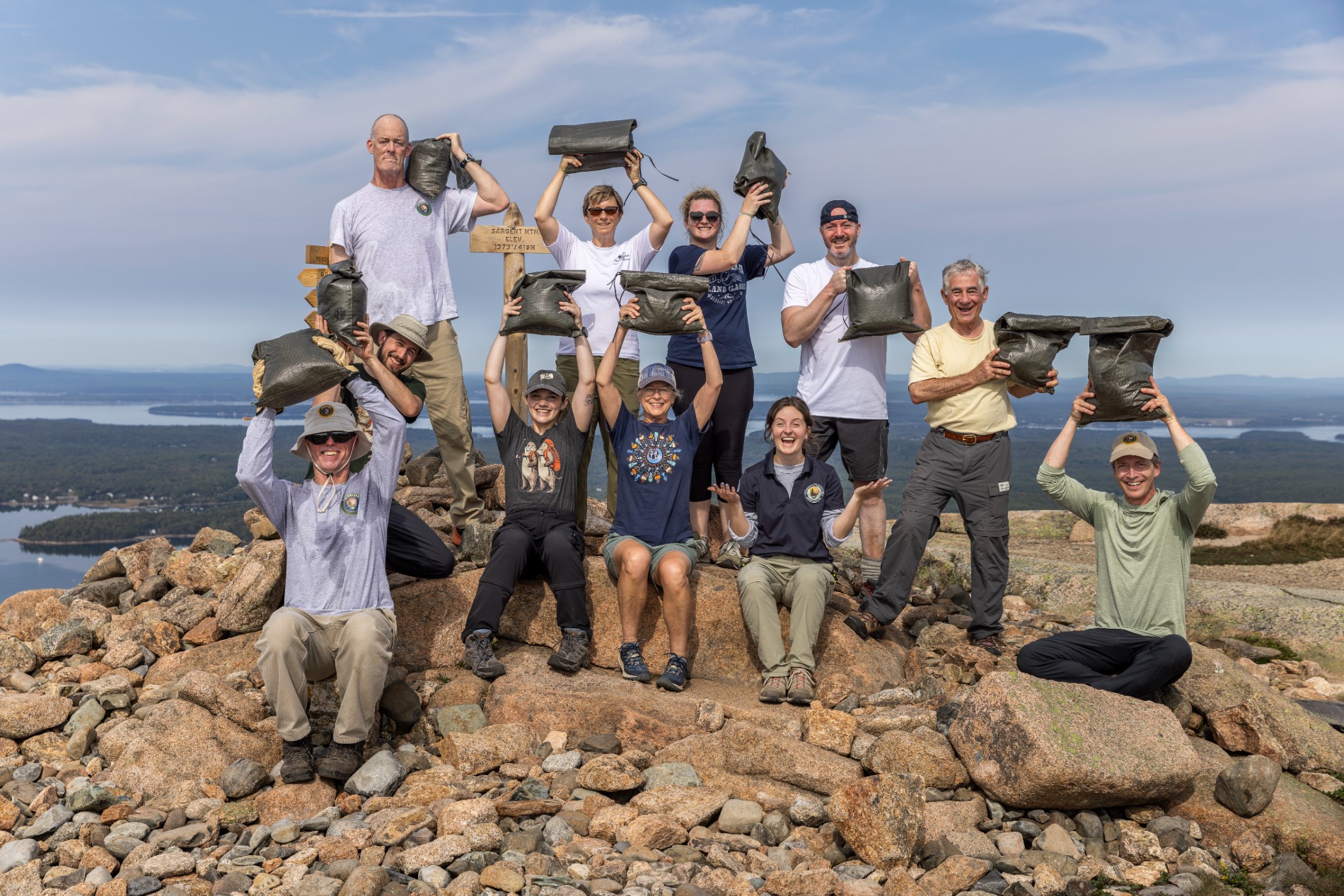
A group of Soil Hero volunteers celebrate with their bags of soil at the summit sign with Community Volunteer Ambassador Lauren Knierim (seated at right in khaki pants). (Rhiannon Johnston/Friends of Acadia)
Despite harsh conditions, Acadia’s mountains host around 145 plant species, many rare and more commonly found further north or on higher mountains. In addition to strong winds and high sun exposure, these plants must also contend with millions of visitor footsteps. The summits are a highlight for Acadia’s visitors, but visitors can lose their way on the open granite, and while trying to find their way back to the trail or looking for a spectacular view, they can step on the low-lying vegetation, causing it to die. Without plant roots to hold it down, soil washes away in heavy wind and rain events. Without soil, those plants can’t grow back.
Plants obviously need soil, but soil accumulation is a slow geologic process and can take hundreds of thousands of years. Acadia’s mountains needed soil soon to successfully restore their summit vegetation. So how do you get thousands of pounds of soil to the summits of two mountains?
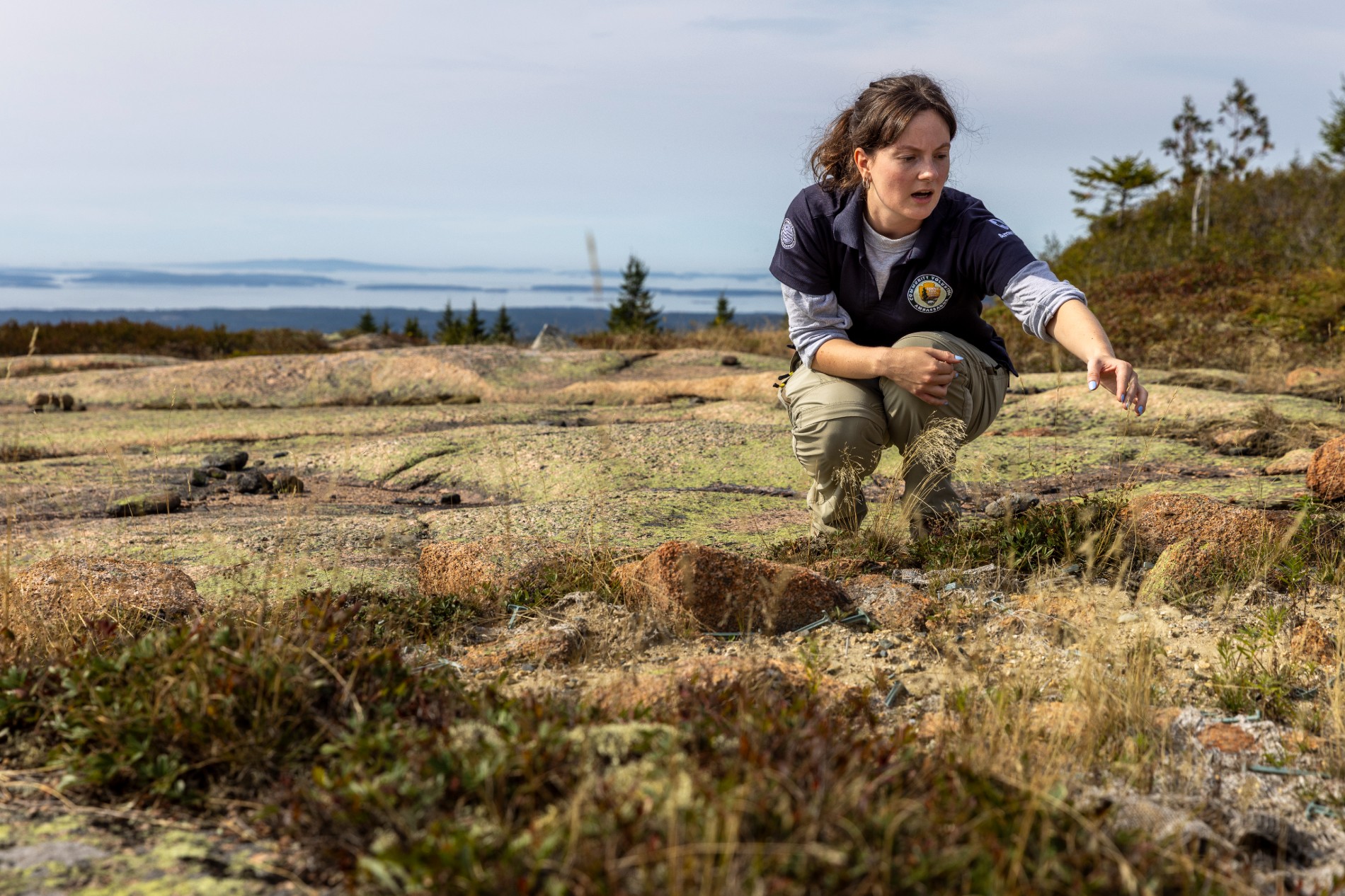
Lauren Knierim, Acadia’s Community Volunteer Ambassador and SOS hike coordinator, points out restoration plots on the summit of Sargent Mountain. (Rhiannon Johnston/Friends of Acadia)
The first idea was to use a helicopter to drop the soil onto the summit. Another, a highline system, a series of ropes and pulleys that are used to bring in materials for maintaining Acadia’s trails. Maybe a pack of mules?
Cost and logistics made those approaches prohibitive. Instead, with collaboration from Schoodic Institute and Friends of Acadia, the current Save Our Summits (SOS) plan began to take shape: Why don’t we just hike the soil up? Inviting volunteers to help was additionally appealing because it added an educational and community-building aspect to the project.
So, throughout the summer, volunteer hikers meet at the parking lot of Parkman Mountain carriage road to save a summit. After quick introductions and a much-needed group stretch, they begin their journey along the carriage roads to Waterfall Bridge, where a pile of soil awaits them. They weigh anywhere from five to 25 pounds of soil to carry, which has already been sterilized to avoid bringing any unwanted seeds or pests to the already sensitive summits. With their soil safely tucked away, hikers leave the level surface of the carriage roads for the steep climb up the Hadlock Brook Trail.
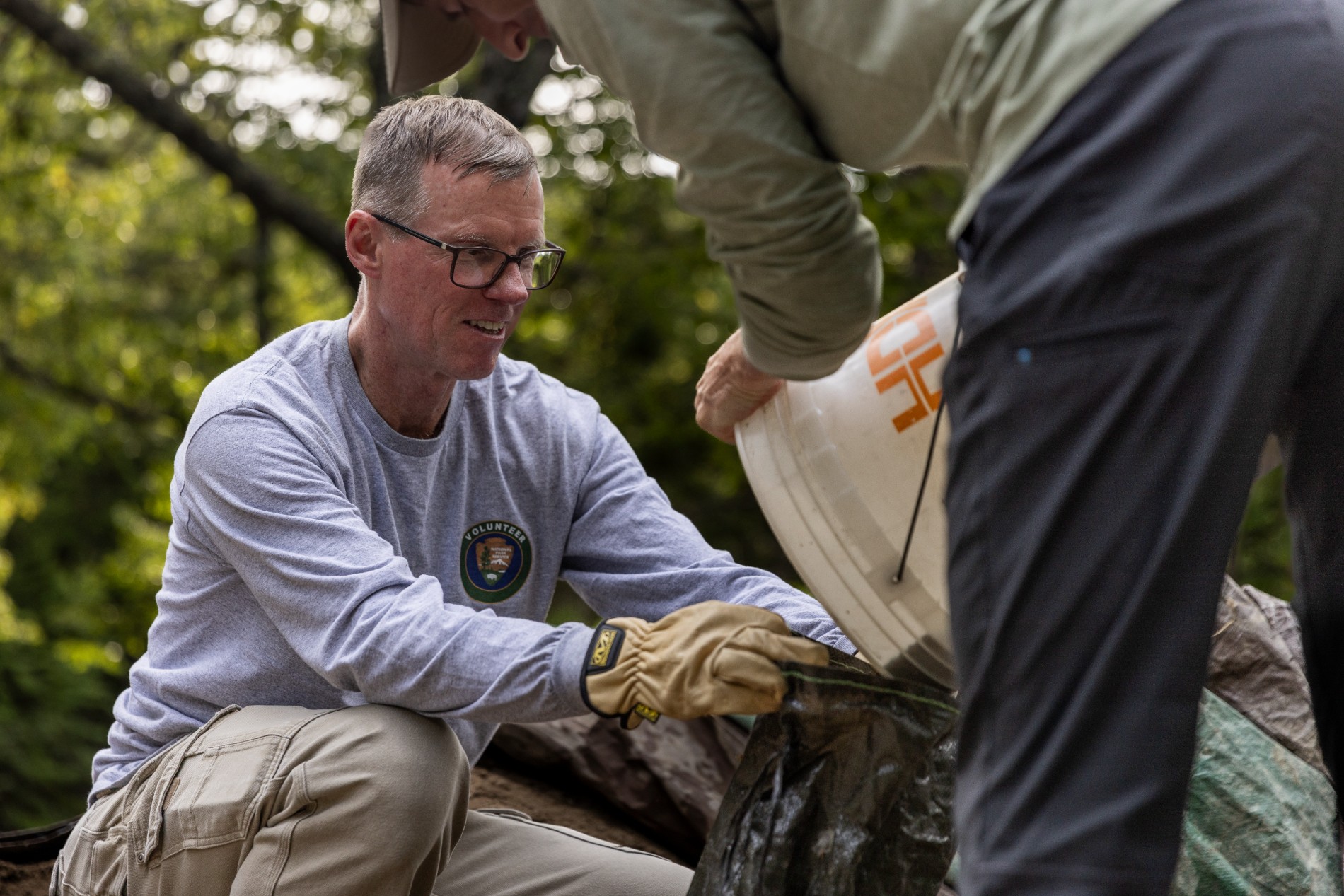
Save Our Summits volunteers fill bags of soil to put into their backpacks before hiking up to the summits of Sargent and Penobscot Mountains to bring that soil to summit restoration plots. (Rhiannon Johnston/Friends of Acadia)
After a short scramble up an open granite face, the group emerges above the tree line and, turning around, are greeted with views of Somes Sound and beyond. Now on the open granite trail, this is a great time for them to exercise Leave No Trace principles. Principle No. 2: Tread on durable surfaces. Granite is a durable surface, meaning it can handle lots of visitor footsteps without degrading. The vegetation growing in its cracks, however, is not durable. Staying on the granite trails helps protect the summits’ plants, which is what SOS is all about.
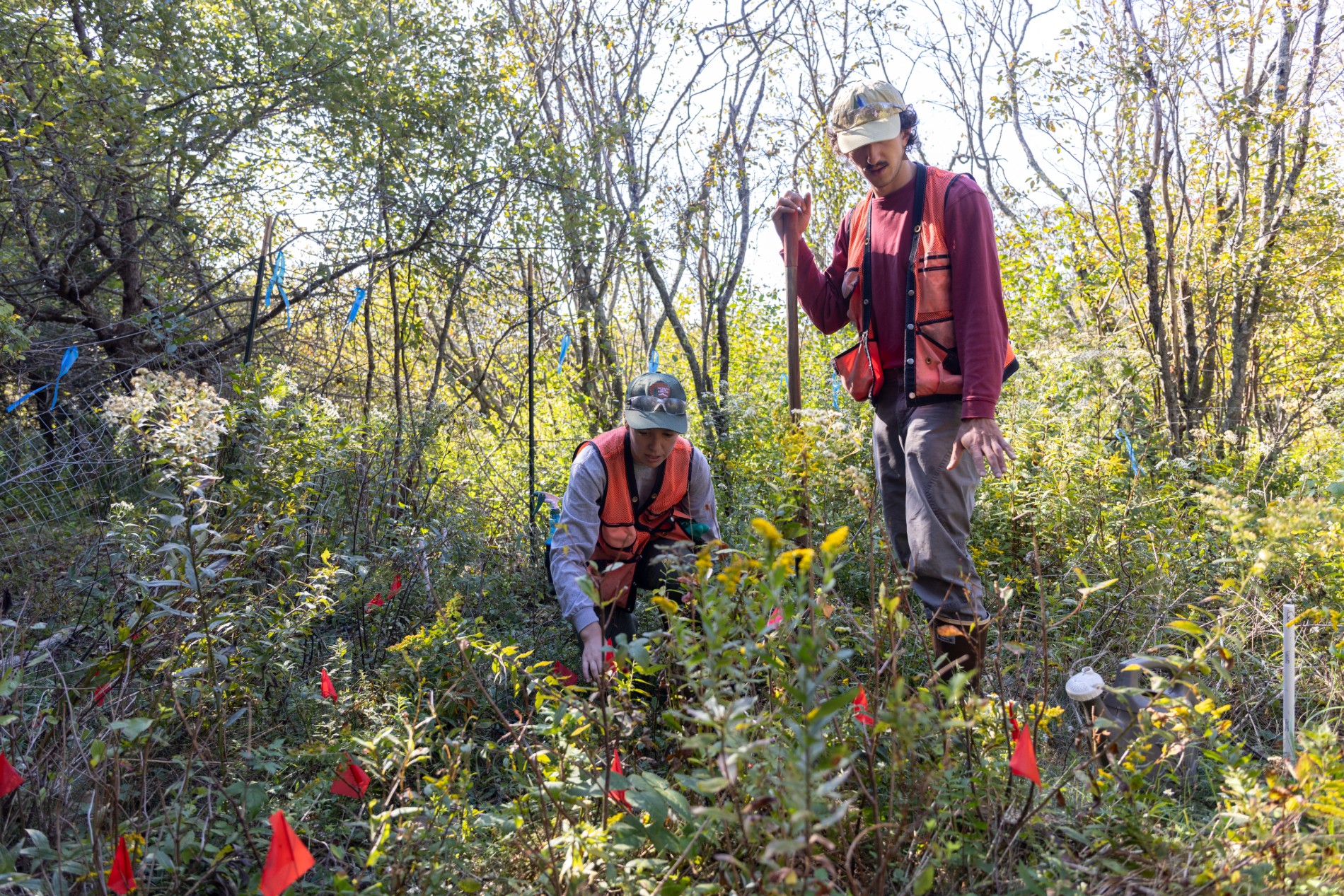
Whether volunteers are heading to Sargent summit or to Penobscot, along the way they’ll find restoration plots, where Schoodic Institute’s restoration crew and ANP’s vegetation crew have turned volunteers’ soil into restored areas.
These areas were once gravelly spots on the outskirts of vegetation but are now home to about four inches of soil, covered and tucked tightly in with biodegradable erosion control fabric.
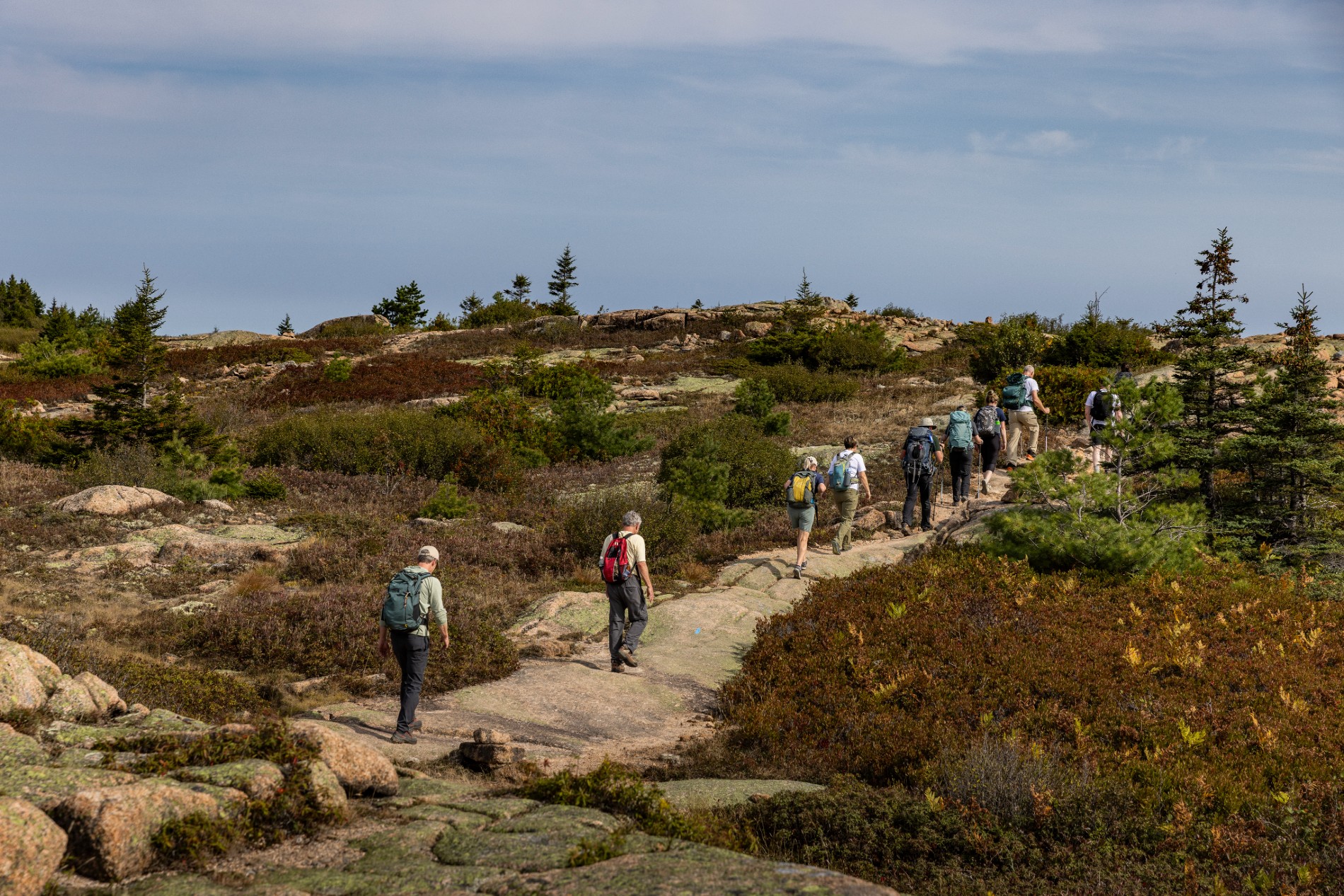
Volunteers with soil in their packs hike up to the summit of Sargent Mountain in 2025. (Rhiannon Johnston/Friends of Acadia)
Scientists, technicians, and resource managers at Schoodic Institute and Acadia National Park continue to look for the most efficient way to restore summit vegetation. They test methods like adding native seeds to some plots, compost to others, or building tiny “dirt castles” to simulate the natural microtopography of the summit. Now with three years of restoration plots to pass along their way, volunteers can see exactly what their hikes up the mountain are helping achieve.
After their quick lesson on summit restoration science, volunteers make one final push toward the summit. Upon reaching the assigned drop-off point, they pull out their soil bags, and after one final challenge to heft the bags over their heads for a victorious group photo, they finally relinquish their soil to the mountain.
Save Our Summits has seen quite the evolution since its first hike in 2023. The program began as a one-day “hike-a-thon,” a single hectic day lugging soil to Sargent and Penobscot. With the addition of scheduled hikes with groups like Boy Scout troops and university students, more than 200 volunteers brought soil to the mountains in 2023.
The 3,750 pounds of soil that year was used to establish 29 restoration plots across Sargent and Penobscot.
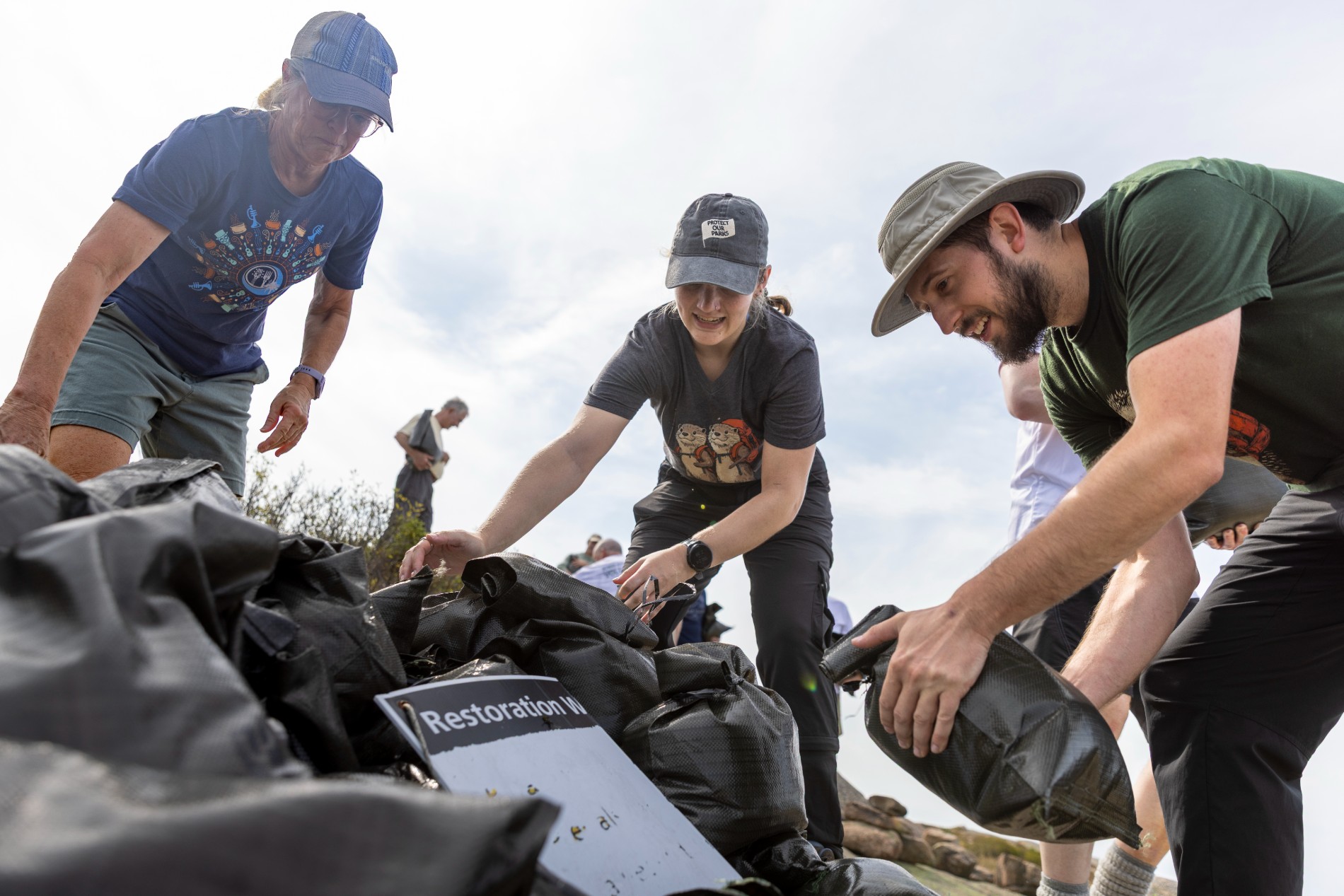
Volunteers add their bags of soil – ranging from five to 25 pounds – to the piles at the summit of Sargent Mountain. (Rhiannon Johnston/Friends of Acadia)
Since then, Save Our Summits has become a regularly scheduled program in Acadia. In 2024, hikes became a weekly summer event, and in 2025 and 2026, doubled to twice per week. With so many new hikes to lead, a new volunteer opportunity arose: the Save Our Summits Volunteer Leader.
In 2025, the first set of SOS leaders stepped into their new roles. These volunteer leaders are essential in making other volunteers feel comfortable and welcome, increasing capacity for National Park Service programs, and most importantly, ensuring no one gets lost down the mountain.
Since that first hike-a-thon in 2023, more than 700 volunteers have helped save a summit and more than 13,000 pounds of soil have been used to restore 151 square meters. The program frequently sees familiar faces, with many volunteers returning throughout the season to share the program with their families, set a new personal record, or to spend the morning doing something good with their community.
After trading their soil for a hard-earned sticker and with their good deed done, 20 new Soil Heroes take a well-deserved break.
LAUREN KNIERIM is the Community Volunteer Ambassador at Acadia National Park
 Join
Join Donate
 Acadia National Park