 Join
Join Donate
 Acadia National Park
Mosses of Acadia
Take a closer look at these resilient yet sensitive tiny wonders.
BY MATTIE VANDIVER
March 27th, 2026
Take a closer look at these resilient yet sensitive tiny wonders.
BY MATTIE VANDIVER
March 27th, 2026
In the depths of winter, it can be difficult to catch sight of green leaves in the blanketed, snowy world. But look a little closer and you’ll see tiny ecosystems peeking out of the frozen ground, hiding within rock crevices and growing on tree trunks: mosses.
According to the 2016 “Mosses, Liverworts, and Hornworts” field guide by Ralph H. Pope, mosses have existed for more than 400 million years, beginning when they diverged from algae and made their way onto land. Mosses are nonvascular, meaning they do not have roots that allow for water conduction, so they are reliant on access to water to grow, thrive, and reproduce. They can, however, survive long periods of being dried—they have a “desiccation tolerance”—and once they find water again, they revive.
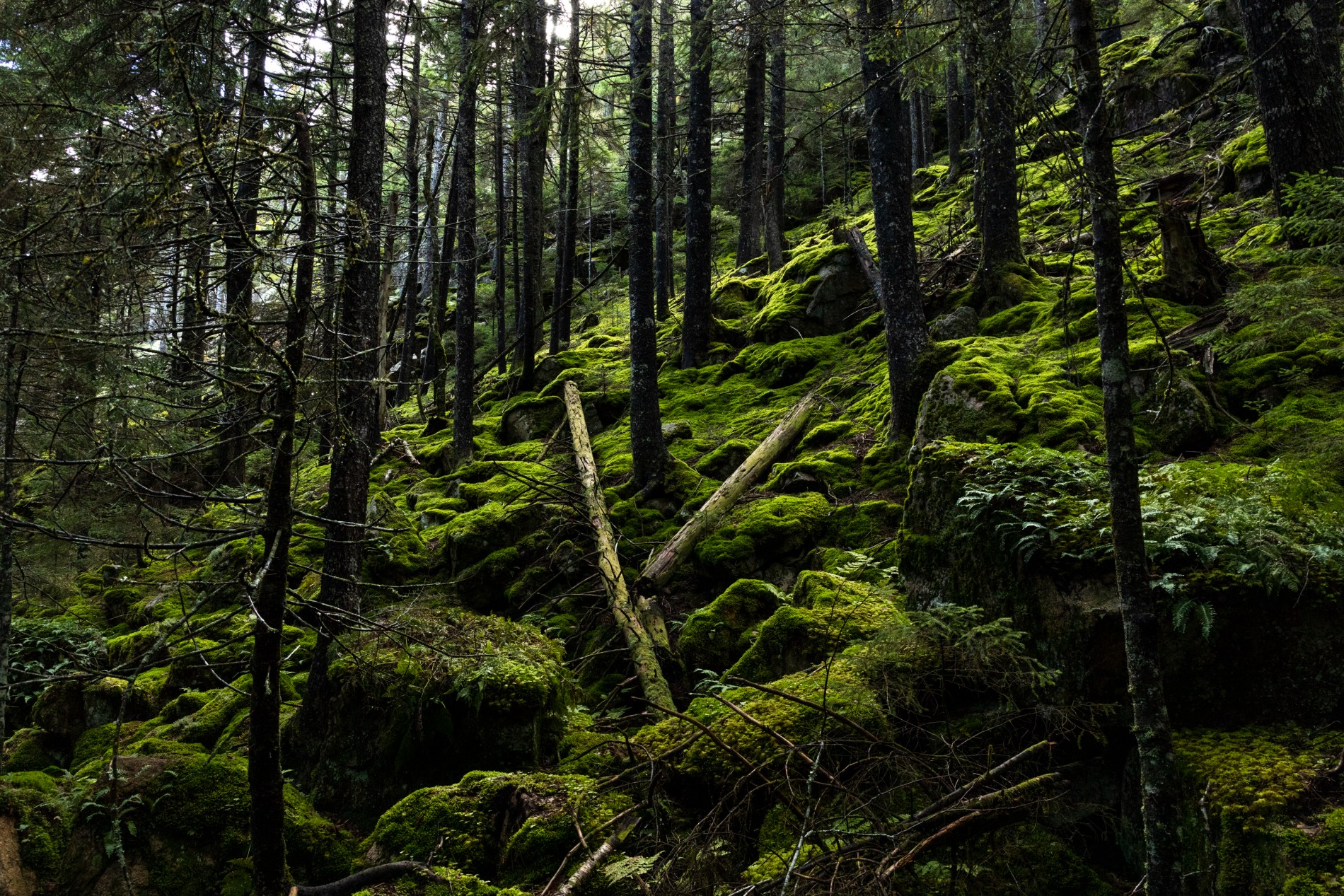
Moss covers the slope next to the Sluiceway Trail in Acadia National Park. (Photo by Lily LaRegina/Friends of Acadia)
There are more than 12,000 identified moss species in the world, found on every continent, including Antarctica, according to the National Park Service. Though they are resilient to temperature and environmental changes, they are sensitive to pollutants and can be used as indicator species for environmental toxicity, including air pollution, heavy metals, pH levels, salt levels, and changes in climate.
Mosses are an important water-absorbing component of wetland habitats in Acadia. That moisture is then slowly released into the ecosystem. They also help stabilize soil, reducing erosion in areas where they grow. Small animals find shelter amid mosses, and some, like slugs and snails, like to eat it.
But mosses are also fragile and can be harmed when stepped on, making it important to watch where you are walking.
In Acadia, an important moss genera, or taxonomic category, is Sphagnum. Dead, partially decomposed Sphagnum is also known as peat moss. Sphagnum mosses are extremely important in a larger context as, according to a 2024 paper by Tolunay et al., 30-45% of the world’s carbon is sequestered by peatlands, even though peatlands only cover about 3% of the Earth’s surface.
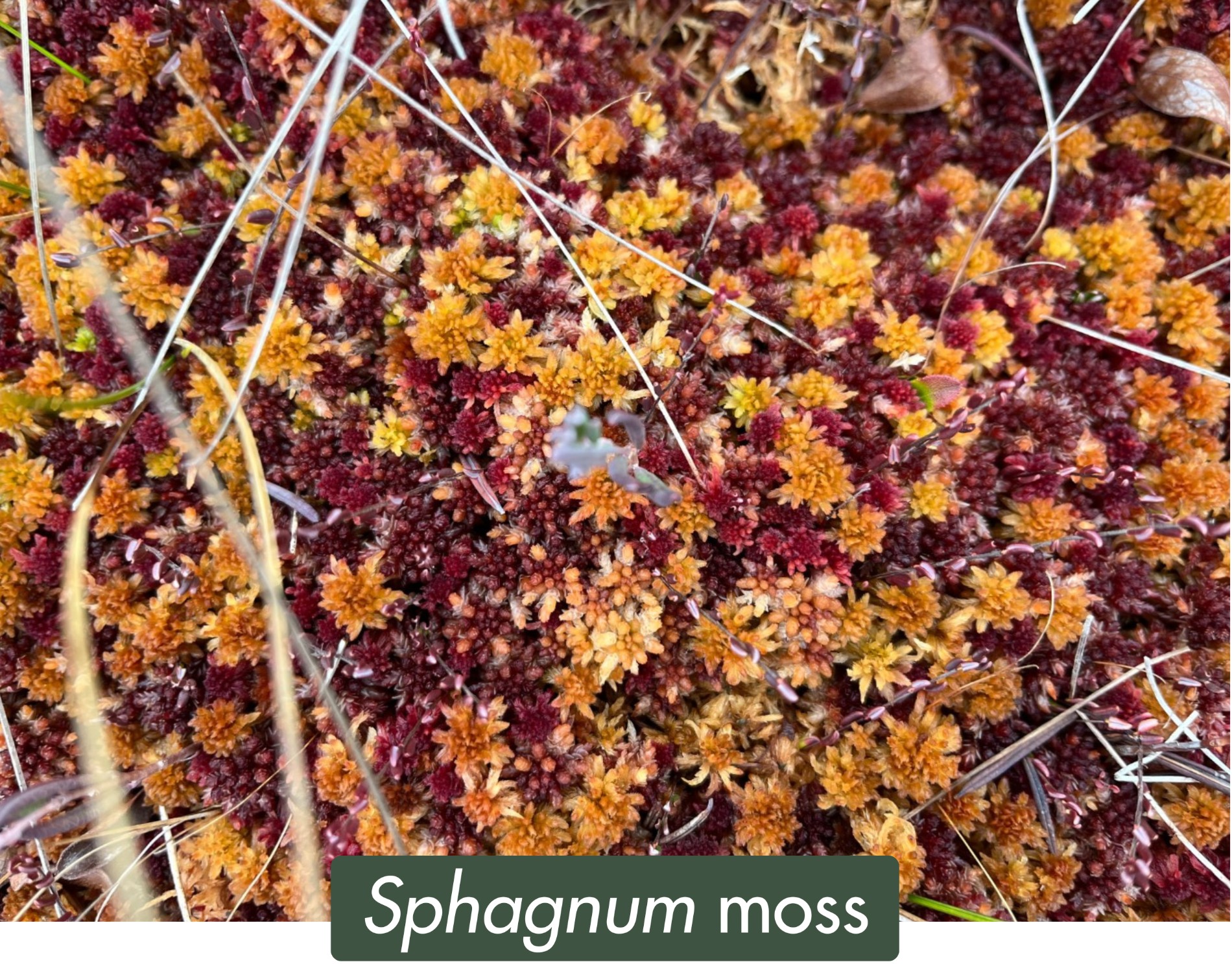
Sphagnum moss (Photo courtesy Mattie Vandiver)
Although almost indistinguishable from each other without the use of a microscope, around 40 species of Sphagnum are found throughout the woods and bog ecosystems of Acadia. Hikers are sure to see it from nearly any forest trail, as well as places like the Schoodic Forest on the Schoodic Peninsula and the bog at Wild Gardens of Acadia. In the Great Meadow Wetland, efforts to improve the hydrology there will support the growth of Sphagnum.
Other moss species are more easily identifiable. The first thing to look for is whether the moss is an acrocarp or a pleurocarp, meaning is it single stemmed (acrocarp) or branching (pleurocarp).
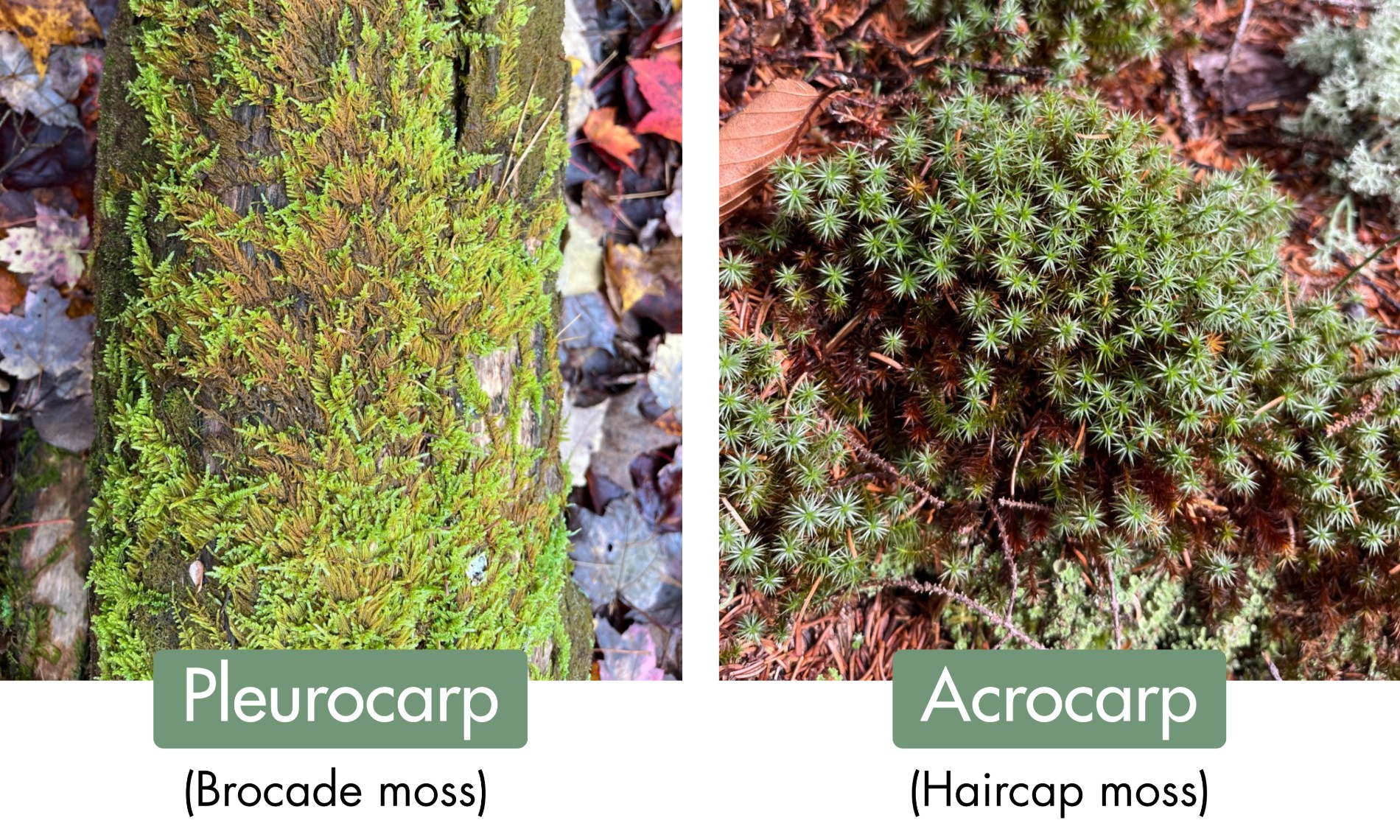
(Photos courtesy Mattie Vandiver)
A single-stemmed acrocarp moss will have one stalk from the soil to its top, usually with a star-like shape at its crown. A branching pleurocarp moss will have a main stem with additional stems shooting off from the central stalk, like those of tree branches. Acrocarps grow more vertically and upright while pleurocarps grow more horizontally, against a surface. A hand lens is helpful when identifying mosses to see features such as the midrib (a line of thickened cells running down the center of the leaf, resembling a midrib in vascular plant leaves) and how much of the leaf it occupies, as well as individual leaf edges, which could be wavy, smooth, toothed, sickle-tipped, or other variations.
Another key feature that can help with identification is the sporophyte. The sporophyte is the stalk that rises out of the moss tufts, holding a capsule on its end. This capsule contains spores that are dispersed by wind once the hood (the calyptra) falls off and the lid (the operculum) of the capsule opens.
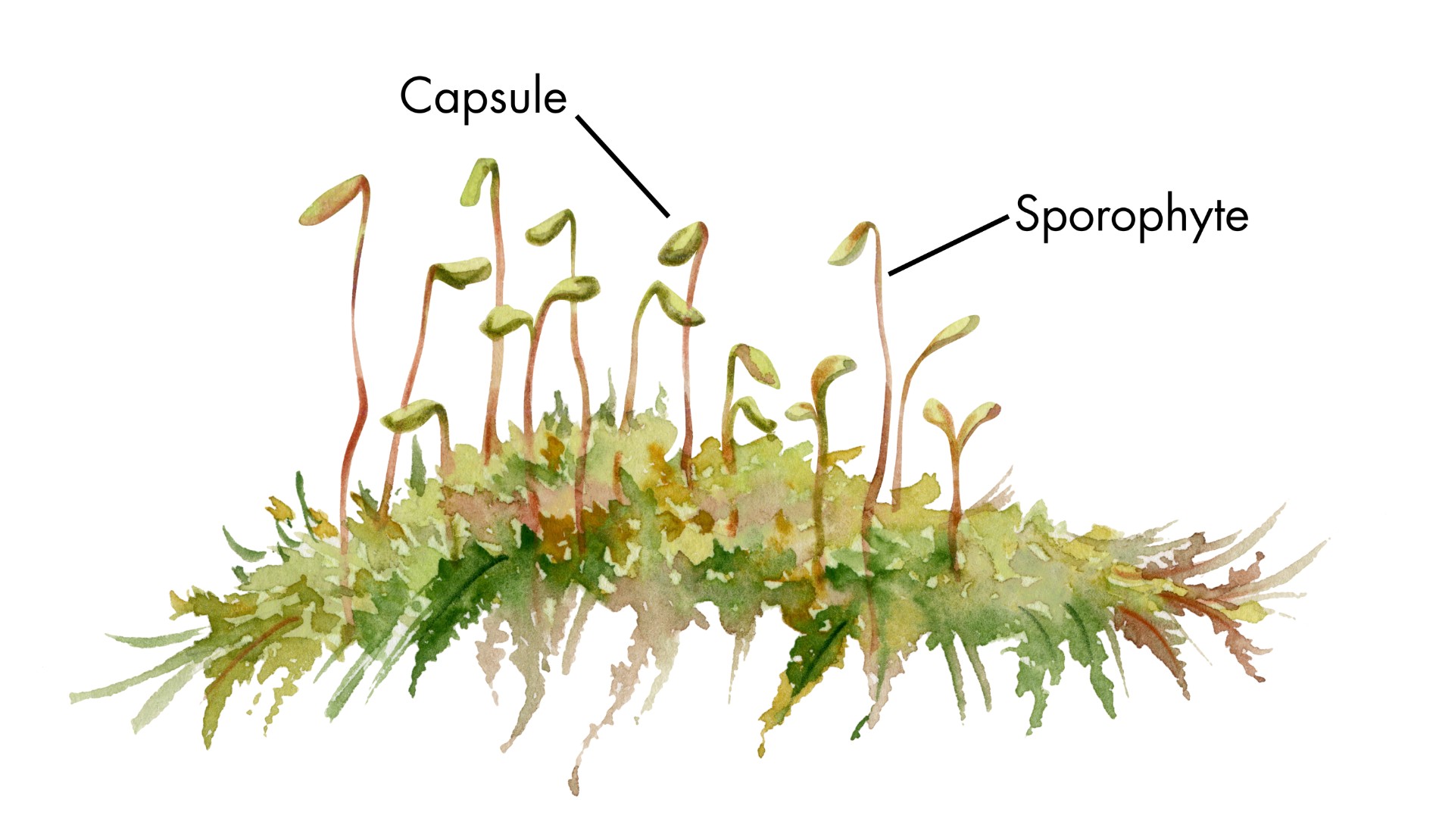
botanical bryophyte illustration hand drawn in watercolor by target=”new”>Elena
Spores help mosses reproduce by traveling to new places and growing into new moss plants when conditions are right. The shape of this capsule can be an important distinguisher in identifying the species. Distinguishing factors include its width and length, if it has flattened, geometric sides and how many, and what it looks like both with its calyptra and when uncovered.
When hiking in Acadia, there are many mosses that can be identified with the naked eye. Keep your eye out for these bryophyte friends as the winter snow fades.
pincushion moss (Leucobryum glaucum)is named for the stalks that grow in dense clumps, giving them a round cushion shape, hence the “pincushion” common name. This moss can appear a light mint green color when dry.
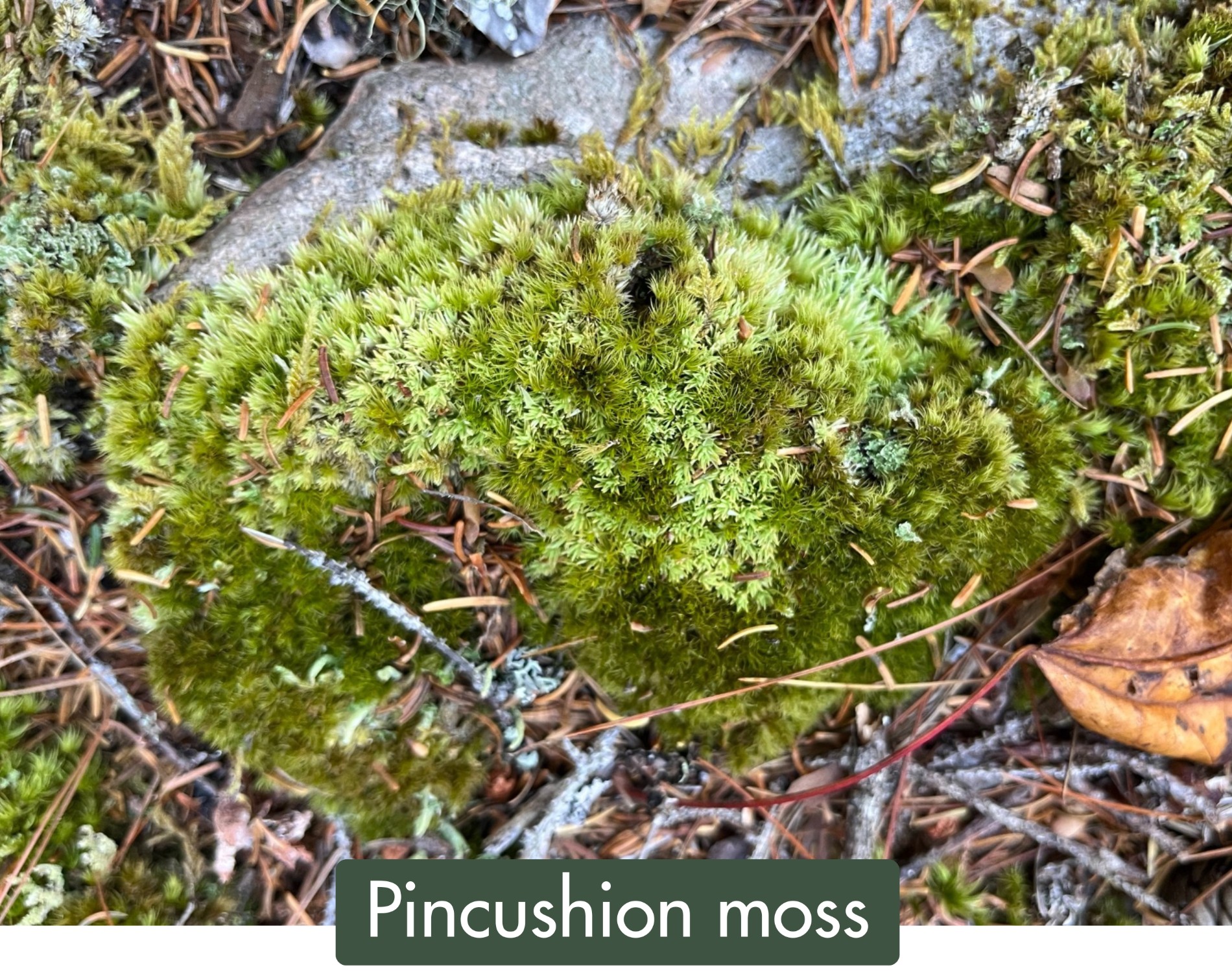
Leucobryum glaucum (Photo courtesy Mattie Vandiver)
Another common species is tree moss (Climacium dendroides), a distinctive, erect, tree-like moss. Feathery clumps shoot off at the top of each stalk, giving it a similar appearance to the tuft of a palm tree. Its color can range from dark green to yellow.
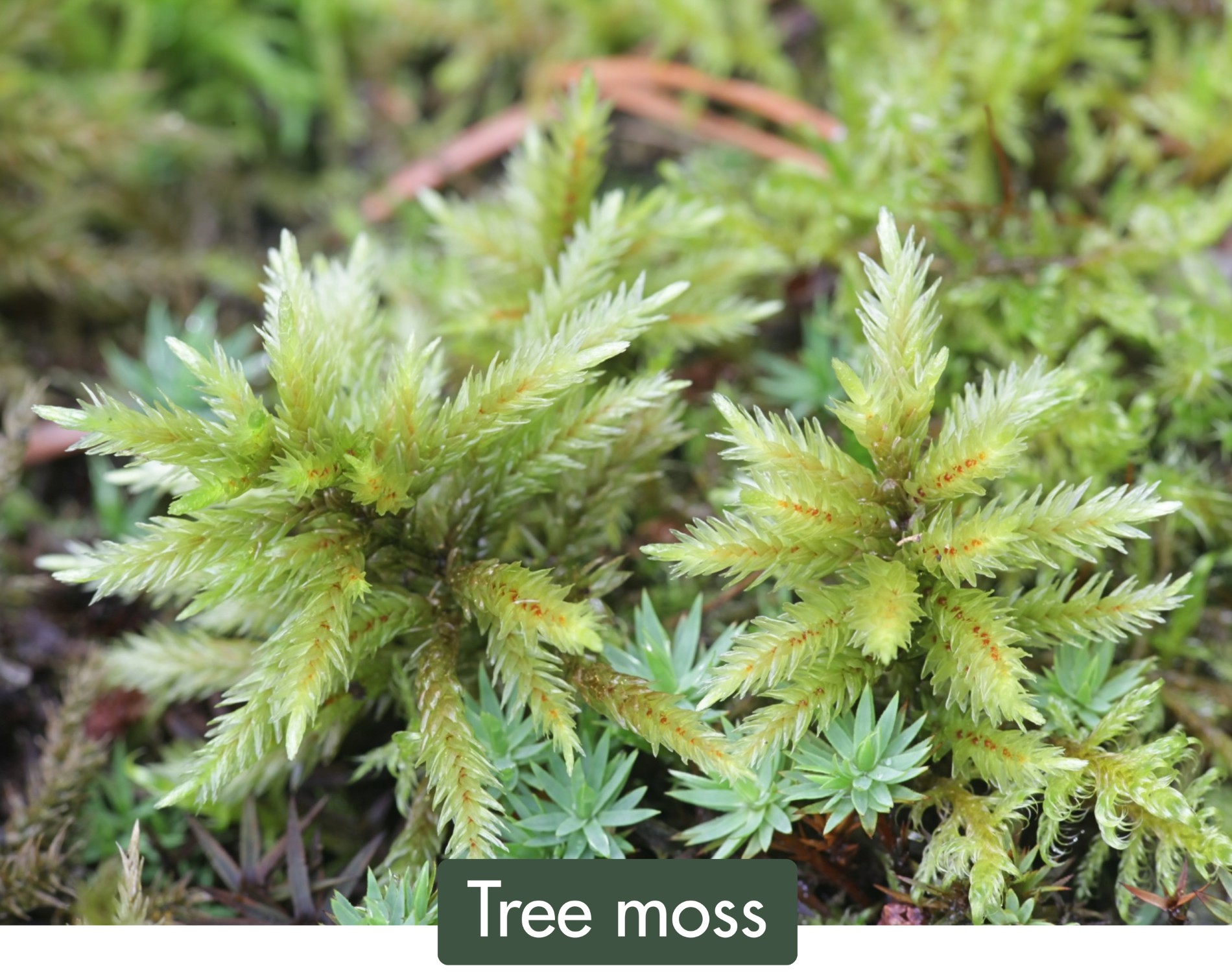
Climacium dendroides (Photo by Henri Koskinen)
A species that is identifiable based on the habitat it grows on is Hedwigia ciliata, or medusa moss, a drought-tolerant, mat-forming moss found on dry, sun-exposed, nutrient-poor rocks, boulders, and sometimes roofs. It has distinguishable white tips at the ends of its thin branches.
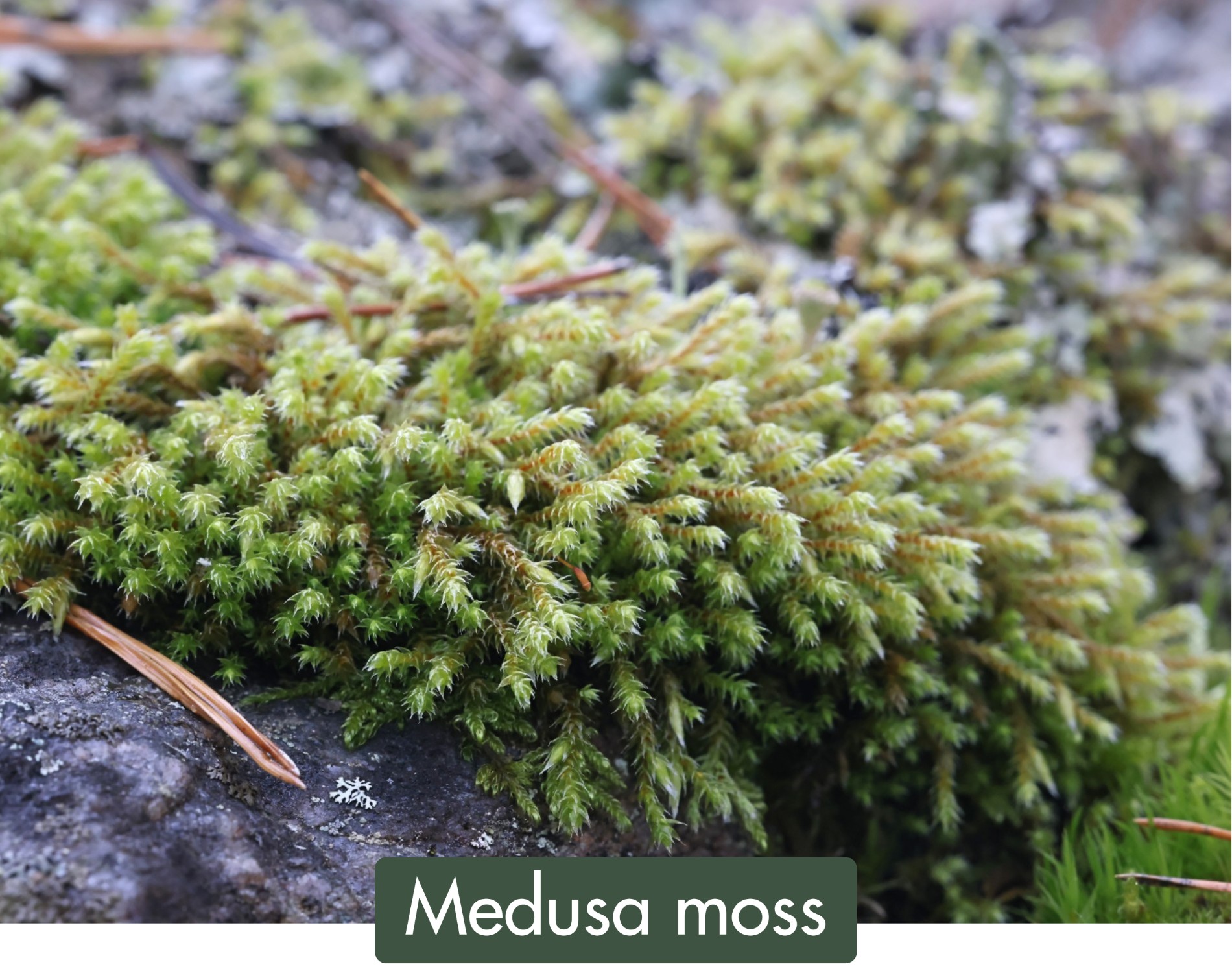
Hedwigia ciliata (Photo by Henri Koskinen)
“Mosses, Liverworts, and Hornworts” by Ralph Pope Princeton Field Guides, “Common Mosses of the Northeast and Appalachians” by McKnight et al.
“Mosses of the Northern Forest: a Photographic Guide” by Jerry Jenkins
“Ecological Guide to the Mosses and Common Liverworts of the Northeast” by Sue Alix Williams
MATTIE VANDIVER is a freelance writer and former Wild Gardens of Acadia Intern.