 Join
Join Donate
 Acadia National Park
Glossy buckthorn
(Frangula alnus)
Help support a diverse and thriving Mount Desert Island by taking action in your backyard!
Help support a diverse and thriving Mount Desert Island by taking action in your backyard!
Glossy buckthorn (Frangula alnus or Rhamnus frangula) is a fast-growing invasive shrub or small tree that poses a serious threat to Maine’s forests and wetlands. It forms dense thickets that can completely displace understory habitats. In wetlands, glossy buckthorn disrupts the delicate ecosystem that preserves water quality, stores floodwaters, and nurtures an entire food web of insects, fish, birds, mammals, and other important organisms. Its rapid growth and high seed production allow it to spread aggressively, particularly in disturbed areas, forest edges, and wet areas.
Glossy buckthorn can be found in mixed deciduous/conifer forests and wetlands. It may grow up to 20 feet tall and is recognizable by its smooth, dark gray bark with light-colored lenticels (mottled, pore-like markings). Its leaves are shiny, oval-shaped, and toothless, with deeply grooved veins. It leaves out at the same time as native shrubs and trees, shading out shorter native plants. In spring and summer, small yellow-green, five-petal flowers appear (contrasting the four-petal flowers on common buckthorn), followed by clusters of berries that transition from green to red to black as they ripen.
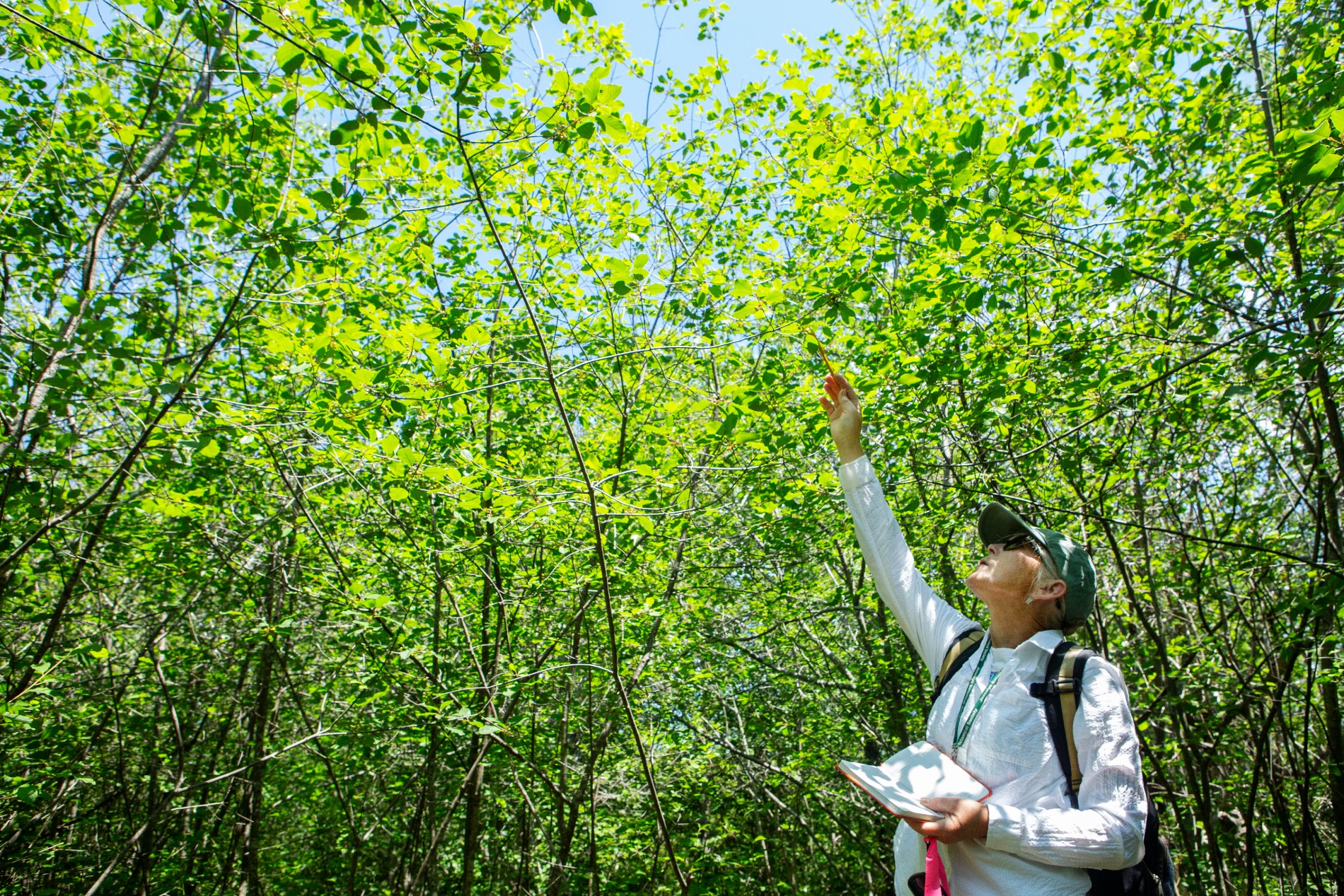
Botanist Jill Weber stands under a full canopy of glossy buckthorn. (Photo by Ashley L. Conti/Friends of Acadia)
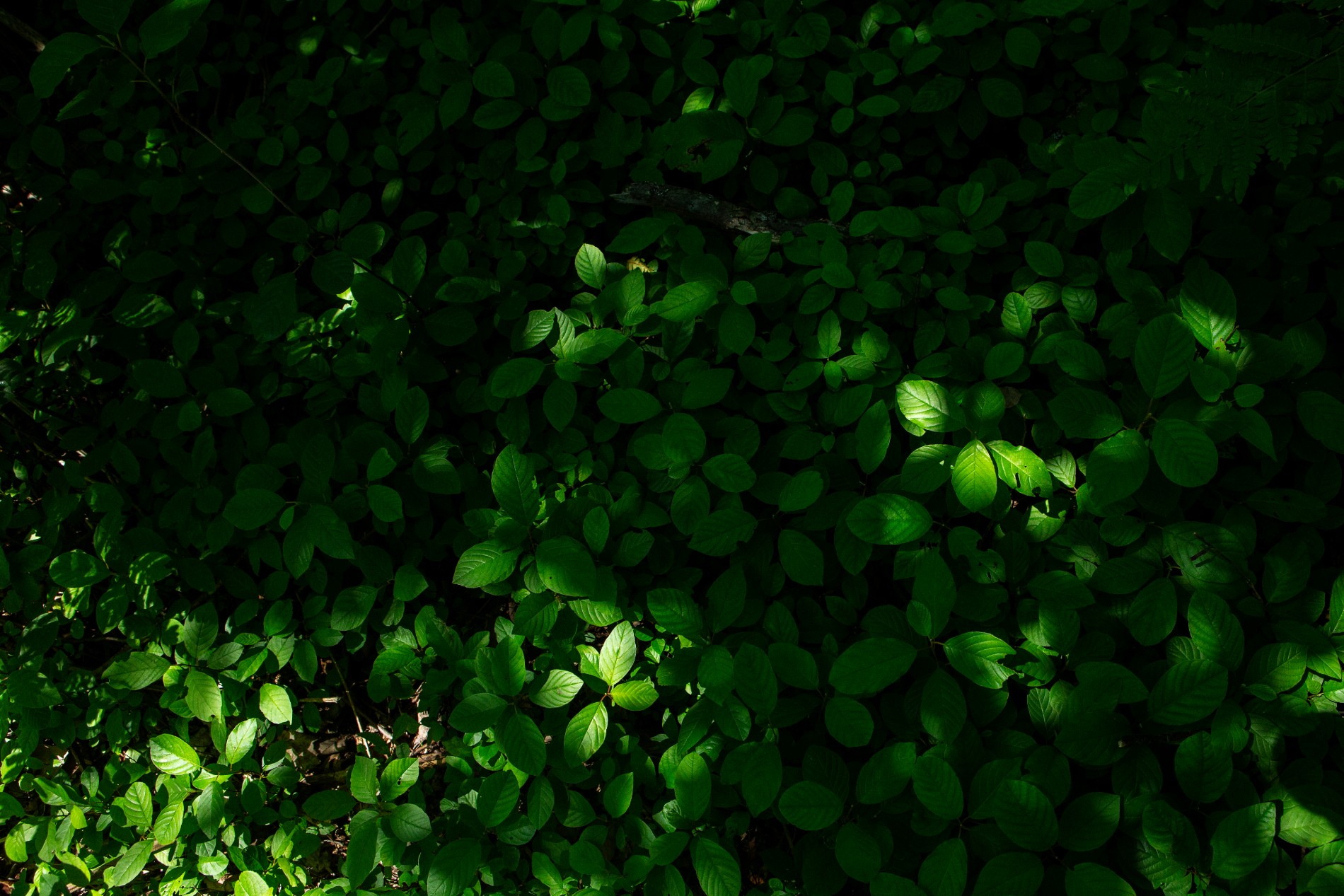
Glossy buckthorn, like many invasive shrubs, leafs out early in the spring and retains its leaves late into fall, increasing its energy production and shading out native plants. (Photo by Ashley L. Conti/Friends of Acadia)
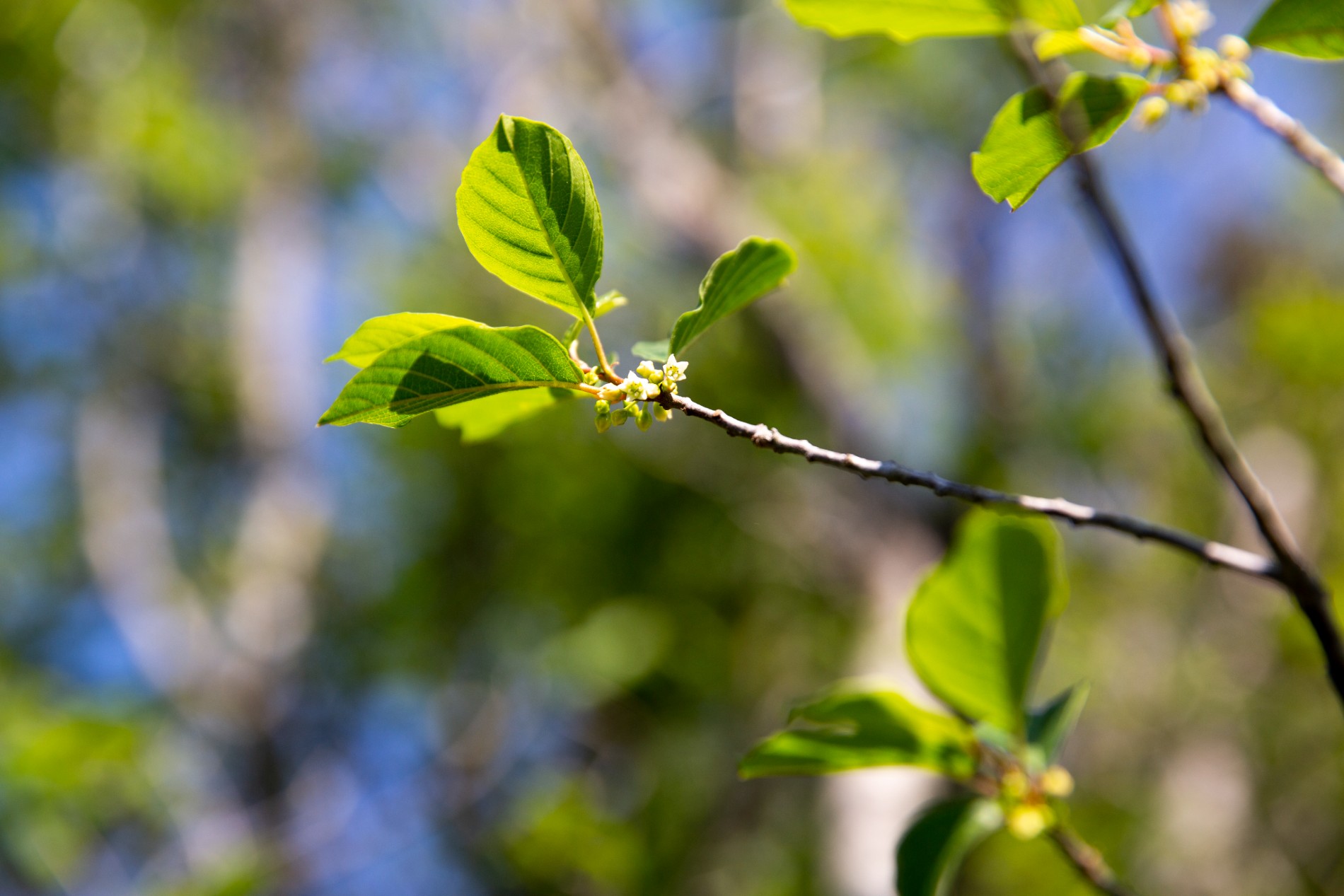
Glossy buckthorn has green to brown bark, simple, alternate leaves, small white five-petaled flowers. (Carolyn Rogers/Friends of Acadia)
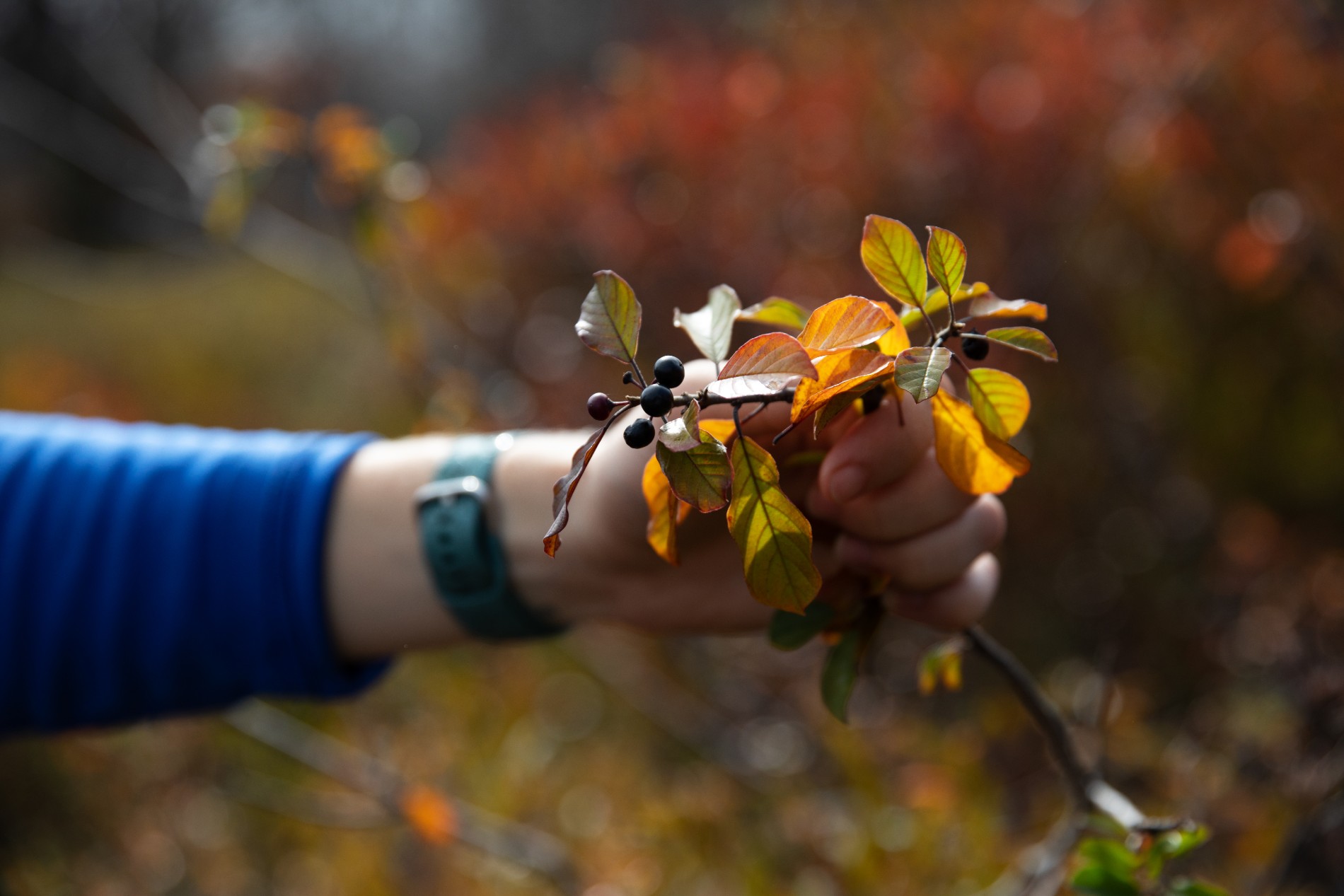
Glossy buckthorn as seen later in the season, with berries that darken. (Photo by Julia Walker Thomas/Friends of Acadia)
Remove any time after leaf-out in early spring.
Dispose of plants responsibly.
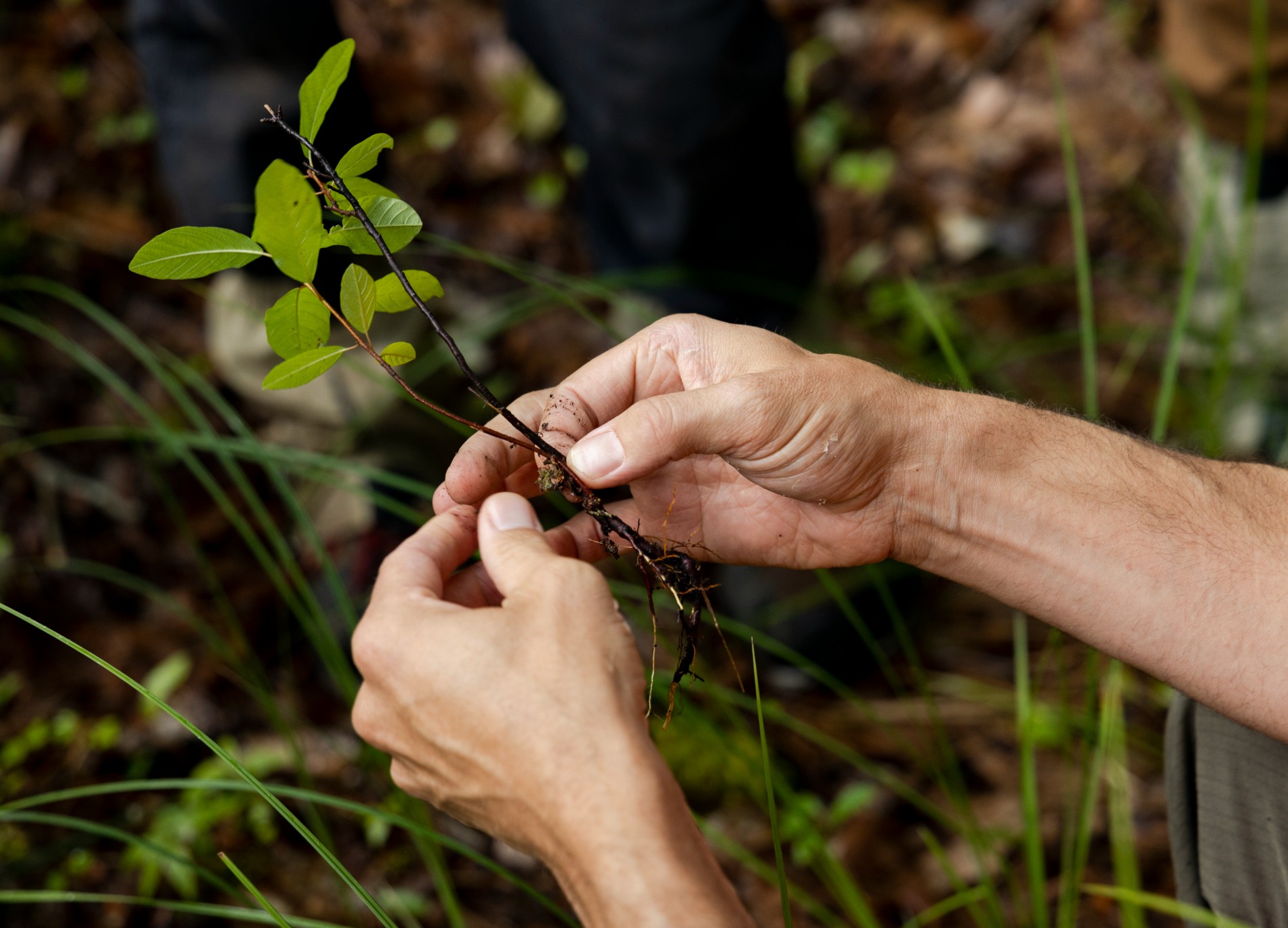
A young glossy buckthorn plant pulled from the ground. (Photo by Lily LaRegina/Friends of Acadia)
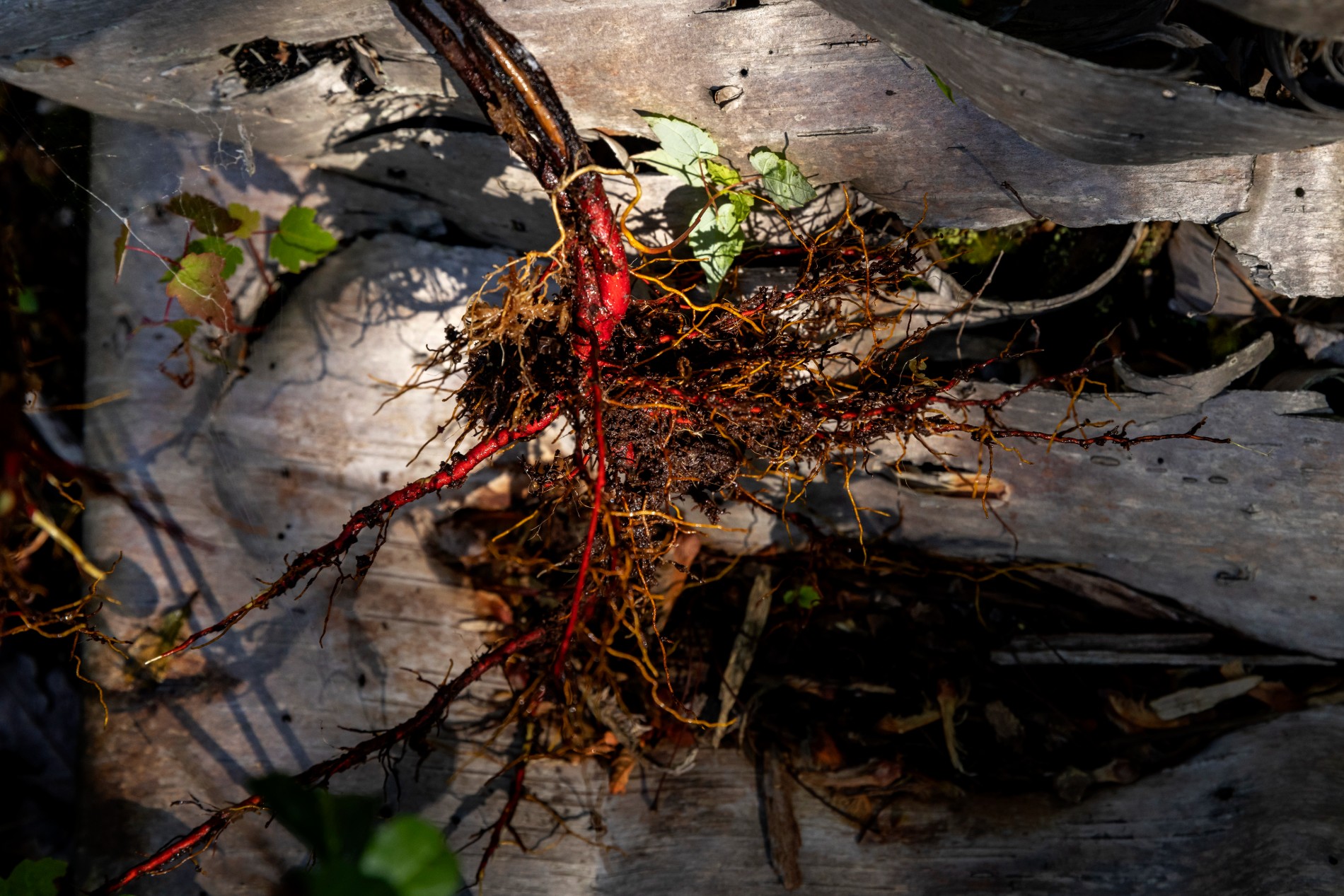
Freshly plucked invasive glossy buckthorn. (Photo by Ashley L. Conti/Friends of Acadia)
Glossy buckthorn is likely to re-sprout. Repeat the above methods as needed to eliminate plants from your property.
Consider replacing with native woody shrubs like choke cherry (Prunus virginiana) or alternate-leaved dogwood (Swida alternifolia)
Learn even more about glossy buckthorn on the maine.gov website: glossy buckthorn