 Join
Join Donate
 Acadia National Park
Japanese barberry
(Berberis thunbergii)
Help support a diverse and thriving Mount Desert Island by taking action in your backyard!
Help support a diverse and thriving Mount Desert Island by taking action in your backyard!
Japanese barberry (Berberis thunbergii) is a highly invasive, shade-tolerant shrub capable of dominating forest floors. Its dense growth crowds out native plants, reduces biodiversity, and creates a habitat favorable to ticks, including those that carry Lyme disease. The shrubs also alter soil chemistry, making it harder for native species to reestablish. Japanese barberry’s ability to thrive in various conditions, from sunny gardens to shady forests, allows it to spread aggressively across the state.
Japanese barberry typically grows 2 to 4 feet tall and has smooth, spoon-shaped leaves that turn bright red or orange in the fall. It is easily recognized by the single, thin, needle-like spine that grows from each of its nodes (where leaves attach to the woody stem). They also have noticeably deep grooves along the stems and clusters of small, creamy yellow flowers that blossom in spring. In late summer, they grow groups of barrel-shaped, red berries, which persist into winter and are spread by birds. The combination of thorny stems, distinctive red berries, and bright fall foliage makes Japanese barberry highly recognizable. Removing it promptly helps protect Maine’s forests and reduce tick populations.
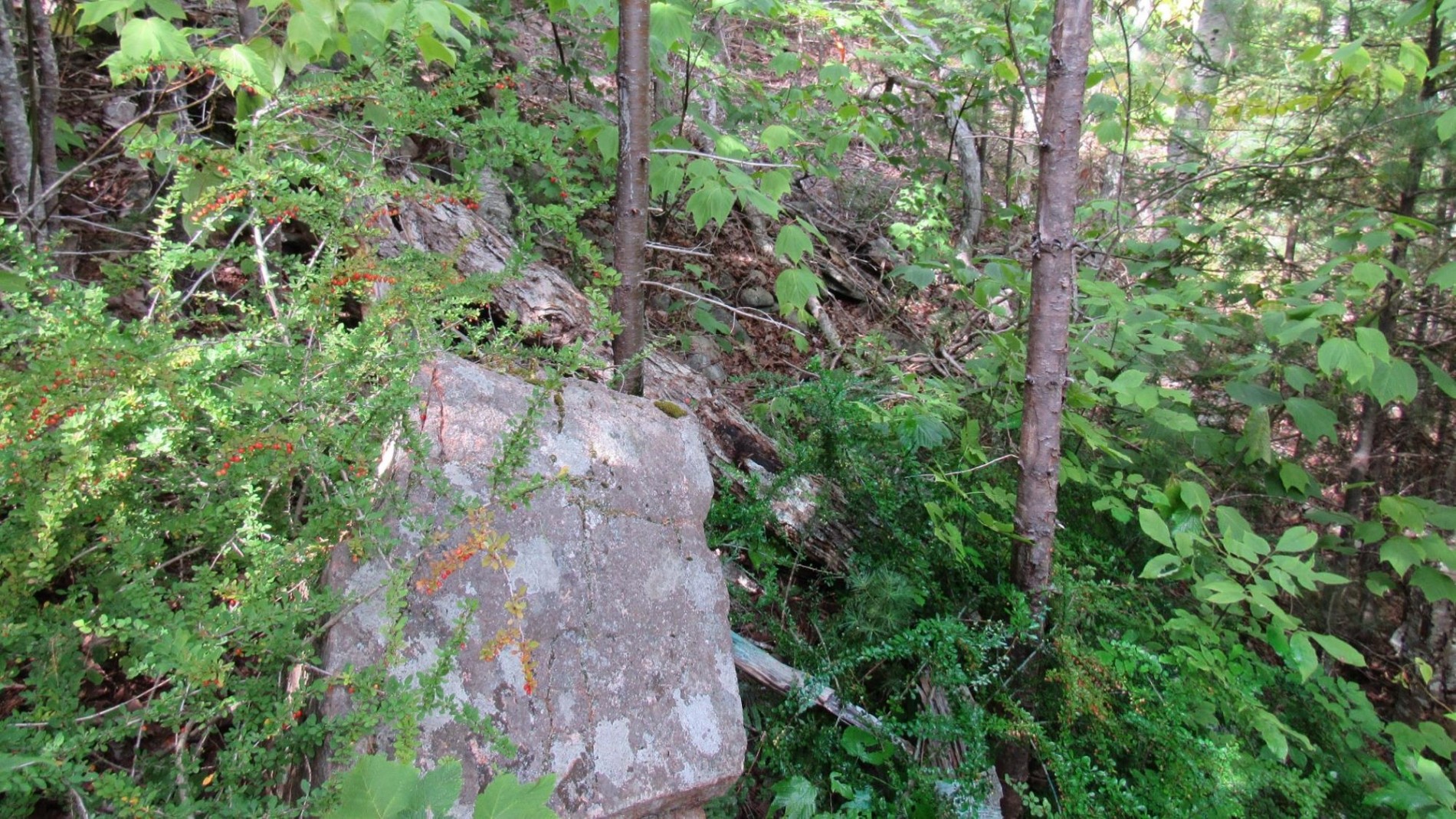
Japanese barberry (Berberis thunbergii) is a thorny shrub often planted as a hedgerow, but it has spread to forests, forest edges, fields, and disturbed areas.
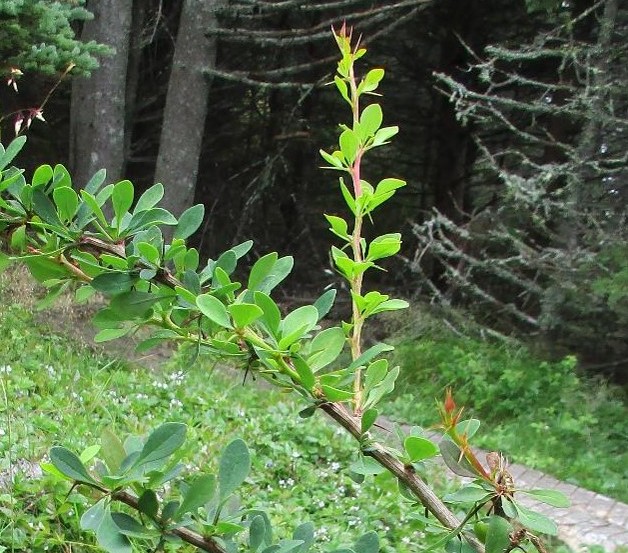
Unlike common barberry, Japanese barberry has single thorns that alternate along their stems.
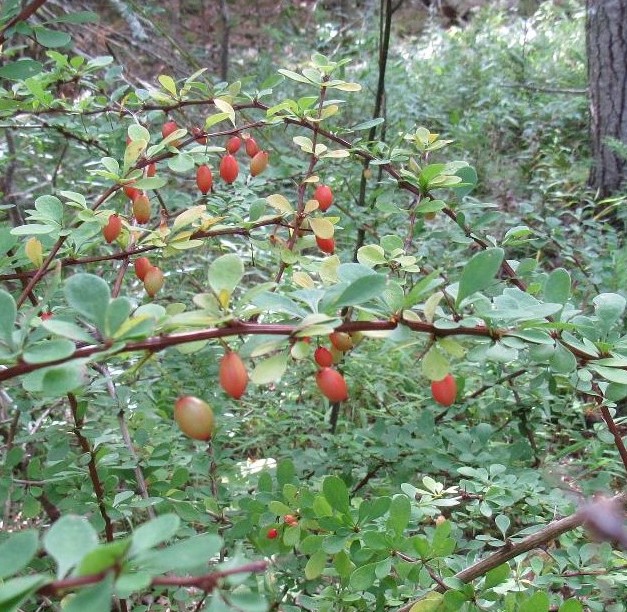
Japanese barberry has small, pale yellow flowers and red, oblong berries. Their simple, alternate leaves turn red in fall.
Remove mechanically after leaf-out in early spring.
Dispose of plants responsibly.
Japanese barberry is likely to re-sprout. Repeat the above methods as needed to eliminate plants from your property.
Consider replacing with native woody shrubs with distinct berries like common winterberry (Ilex verticillata) or nannyberry (Viburnum lentago)
Learn even more about Japanese barberry on the maine.gov website: Japanese barberry