 Join
Join Donate
 Acadia National Park
Burning bush/winged euonymus (Euonymus alatus)
Help support a diverse and thriving Mount Desert Island by taking action in your backyard!
Help support a diverse and thriving Mount Desert Island by taking action in your backyard!
Burning bush (Euonymus alatus), sometimes called winged euonymus, is a popular ornamental shrub that has become a significant invasive species in Maine. Valued for its striking red fall foliage, it has escaped cultivation and now invades forests, fields, and roadsides. Burning bush forms dense thickets that outcompete native plants, reducing biodiversity and altering habitats for wildlife. Its seeds, dispersed by birds, allow it to spread rapidly, particularly in disturbed areas and forest edges.
Burning bush grows as a shrub or small tree that is typically 10 to 15 feet tall at maturity. It is easily recognized by its bright red fall foliage and distinctive “winged” branches, which have corky ridges running along their sides. The leaves are oval-shaped, smooth to fine-toothed, with an opposite branching pattern. It has miniature green-yellow flowers in late spring that produce reddish-orange berries persisting from summer through winter.

(Photo by Famartin – Own work, CC BY-SA 4.0)
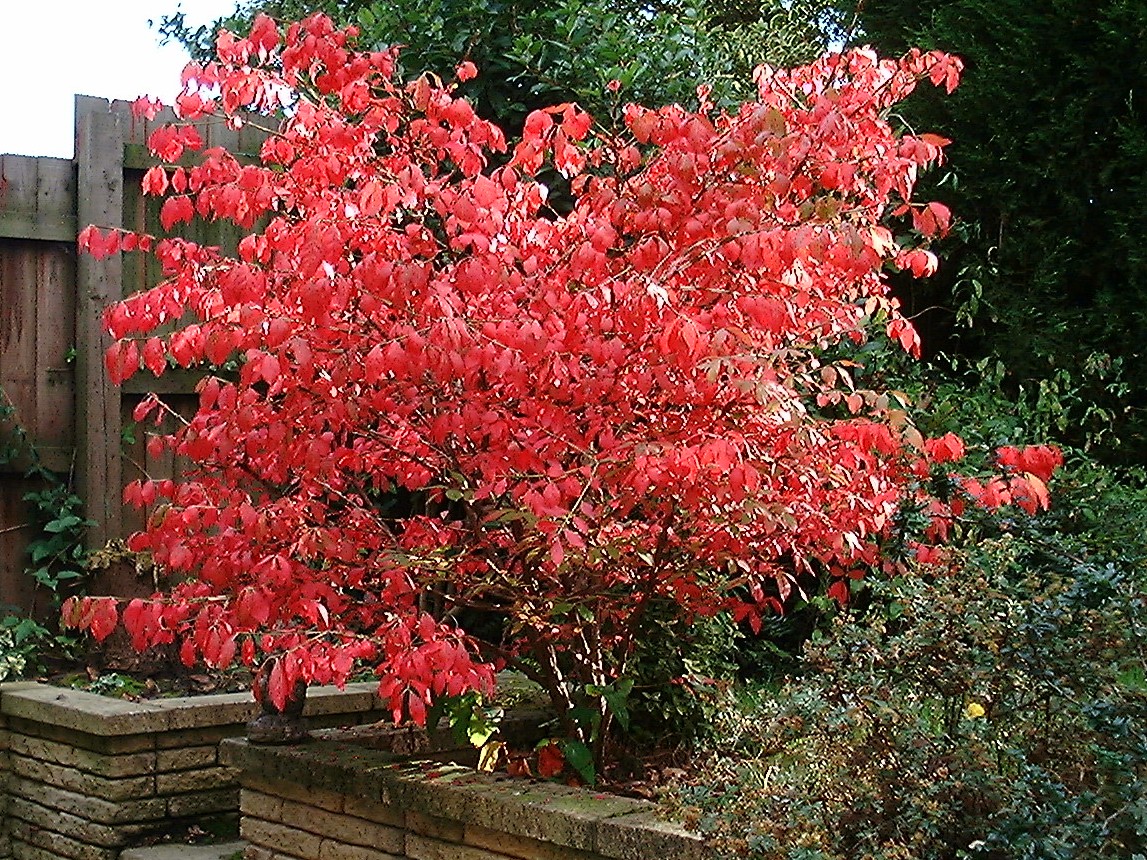
Burning bush/winged euonymus (Euonymus alatus) (Photo by Chris Barton/Gif absarnt – Own work, CC BY-SA 3.0)
Remove any time after leaf-out in early spring.
Dispose of plants responsibly.
Burning bush is likely to re-sprout. Repeat the above methods as needed to eliminate plants from your property.
Consider replacing with native shrubs with bright fall color like highbush blueberry (Vaccinium corymbosum)
Learn even more about burning bush on the maine.gov website: burning bush