 Join
Join Donate
 Acadia National Park
Morrow’s honeysuckle
(Lonicera morrowii)
Help support a diverse and thriving Mount Desert Island by taking action in your backyard!
Help support a diverse and thriving Mount Desert Island by taking action in your backyard!
Morrow’s honeysuckle (Lonicera morrowii) is an invasive shrub that is the most problematic in Acadia’s younger forests and old fields, including the outer islands. They block sunlight to native plants and potentially release a toxin into the soil from their roots, causing a loss in biodiversity and degrading habitats for birds, insects, and other wildlife. The berries of Morrow’s honeysuckle are spread by birds, facilitating its quick expansion across the landscape. This plant poses a serious ecological risk, especially in meadows, disturbed areas, and forests.
Morrow’s honeysuckle can grow up to 10 feet tall, with opposite leaves that are oval, slightly hairy, and pale green. Its white or yellowish, tubular flowers bloom in late spring — about a month after native honeysuckles bloom —often turning yellow as they age. By late summer, it produces small bright red berries in pairs along its stems. The stems of morrow’s honeysuckle have hollow centers (pith), whereas native honeysuckles all have solid pith. Canada honeysuckle (Lonicera canadensis) is a native honeysuckle that has similar leaves to Morrow’s honeysuckle, but it can be distinguished by its solid pith and tubular flowers with short, triangular petals.
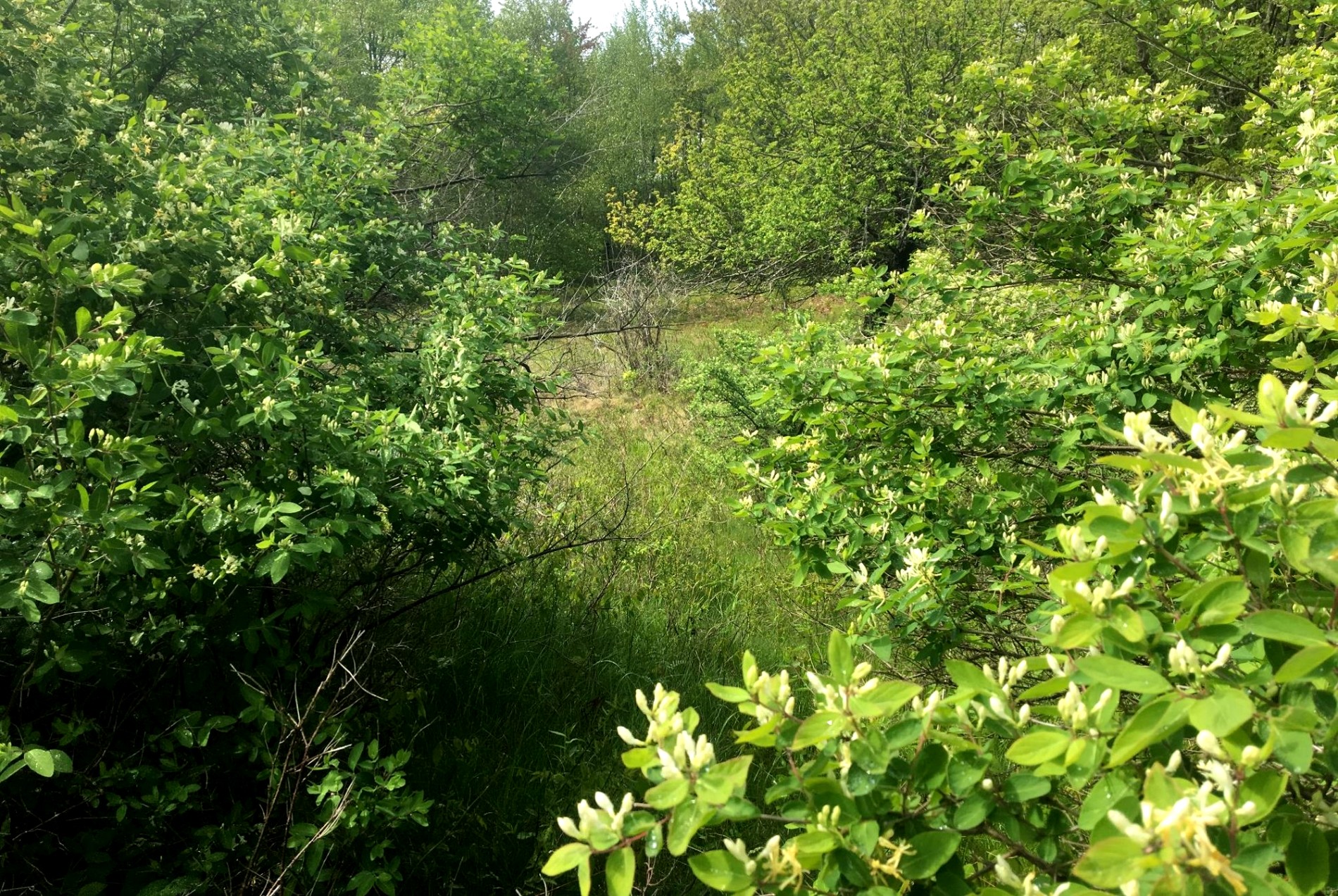
Morrow’s honeysuckle flowers are white, yellow, or pink and upturned, while Maine native honeysuckles have pairs of drooping, funnel-shaped yellow flowers.
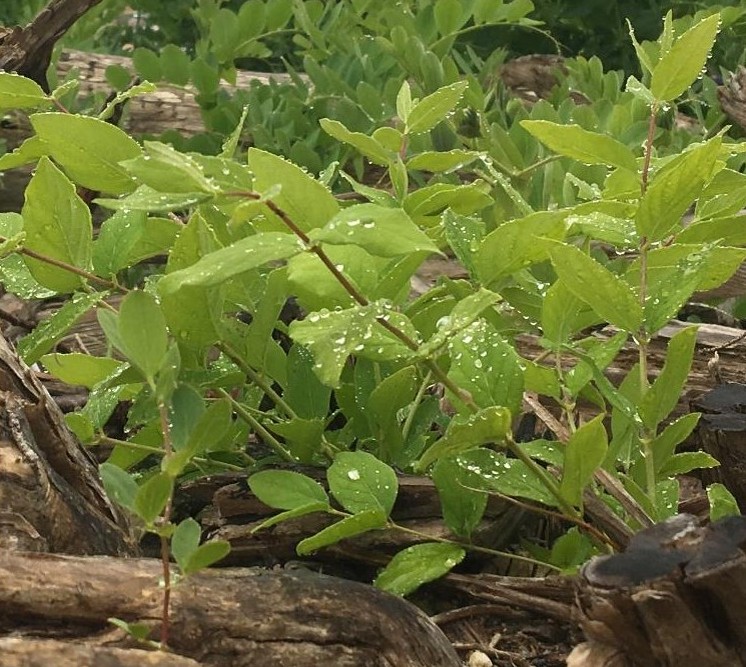
Morrow’s honeysuckle (Lonicera morrowii) twigs have a hollow interior (pith), while native honeysuckle twigs are solid.
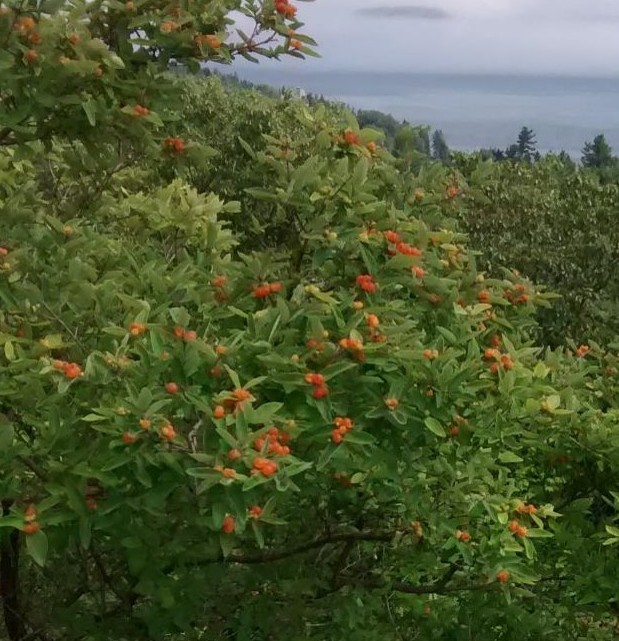
Morrow’s honeysuckle (Lonicera morrowii) is an ornamental shrub that thrives in a wide range of landscapes and soil types.
Remove any time after leaf-out in early spring.
Dispose of plants responsibly.
Morrow’s honeysuckle is likely to re-sprout. Repeat the above methods as needed to eliminate plants from your property.
Consider replacing with native woody shrubs with similar flowers like Canada serviceberry (Amelanchier canadensis) or a native honeysuckle species like American honeysuckle (Lonicera canadensis)
Learn even more about Morrow’s honeysuckle on the maine.gov website: Morrow’s honeysuckle