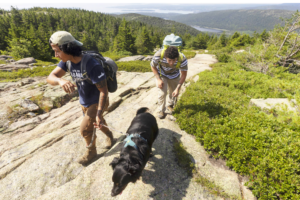
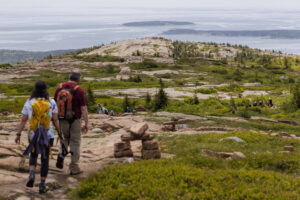
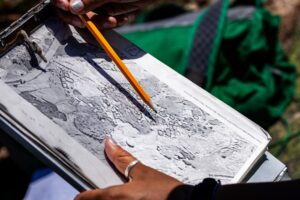
After making numerous treks to the summit of Sargent Mountain during the summer, Community Volunteer Ambassador Lauren Knierim and I wanted to experience the hike and see the summit in the winter. More specifically, we wanted to check on the vegetation restoration plots that were established there during the fall of 2025.
2025 was a very successful season for the Save Our Summits (SOS) program. A total of 4,338 pounds of soil was carried to the summit through the power of volunteers. That soil was used to establish 51 new restoration plots on Sargent and Penobscot, covering a total of 52.7m².
Acadia’s summit vegetation restoration efforts date back as early as 2015, but recently park management has accelerated that work with the help of Schoodic Institute and Friends of Acadia. These efforts are helping to restore low-lying vegetation in areas damaged by inadvertent trampling, social path usage, and more frequent weather events.
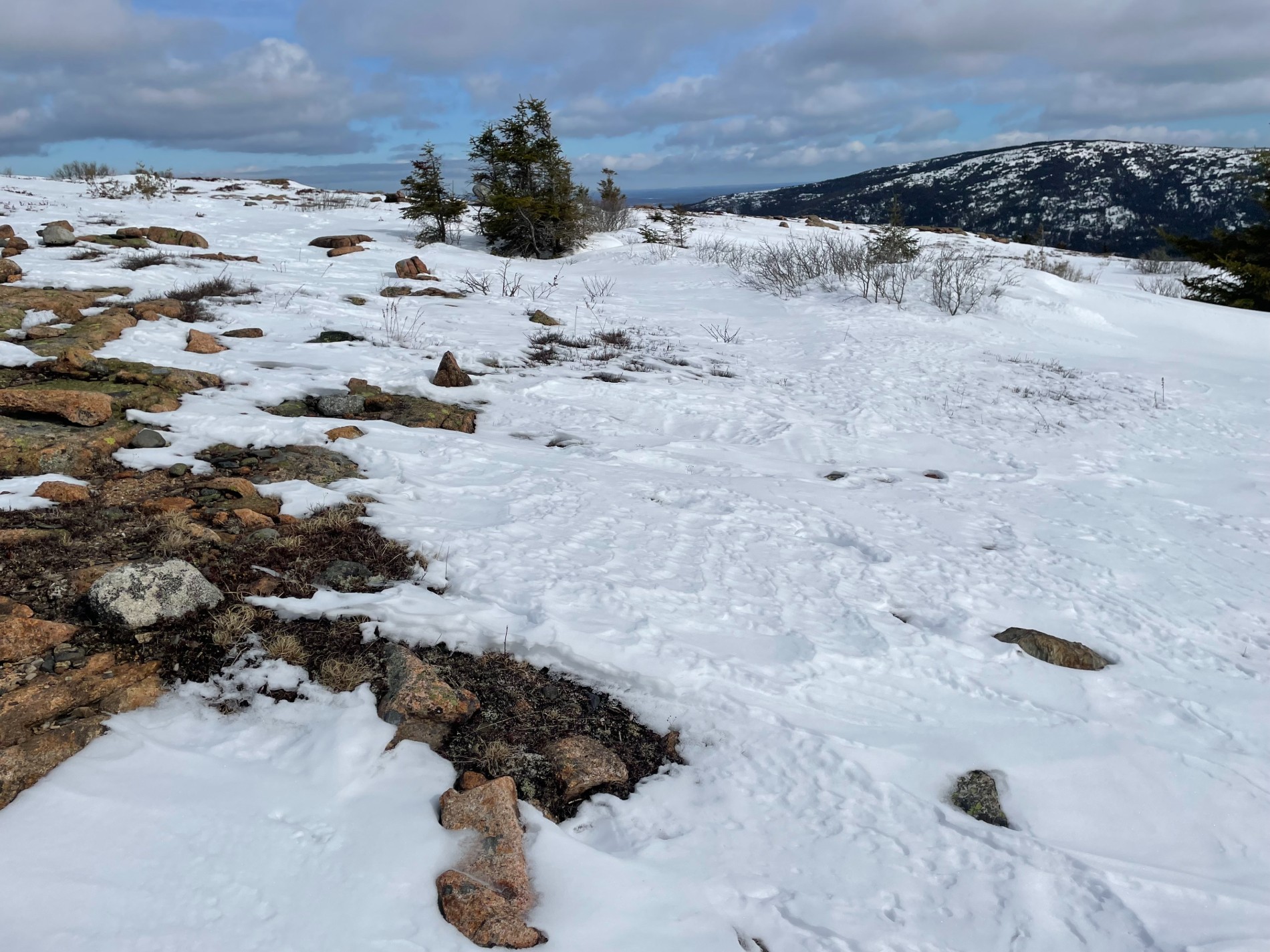
Rocks poke through the snow during a winter trek to the summit of Sargent Mountain to check on vegetation restoration plots. (Lauren Gibson/Friends of Acadia)
The compact snow on the trail, along with the microspikes covering our boots, made for a comfortable hike up the mountain. The ascent was quiet, and the contrast of the snow-covered evergreens against the blue sky was breathtaking. It was enjoyable and beautiful, yet different; the hike that had become so familiar during the summer was changed by the snow. During the summer SOS hikes, you recognize the same tree, the same granite slope, the same stretch of trail, but in the winter, many landmarks become covered. We were experiencing a favorite hike in a new way.
However, we couldn’t help but wonder what awaited us above the treeline, where we would find the restoration plots. The summit of Sargent Mountain can be a harsh place in the winter. Snow, ice, and wind make the summit a dynamic environment affecting vegetation and wildlife during the winter months. The high winds can keep parts of the summit bare while other parts are covered under feet of drifting snow.
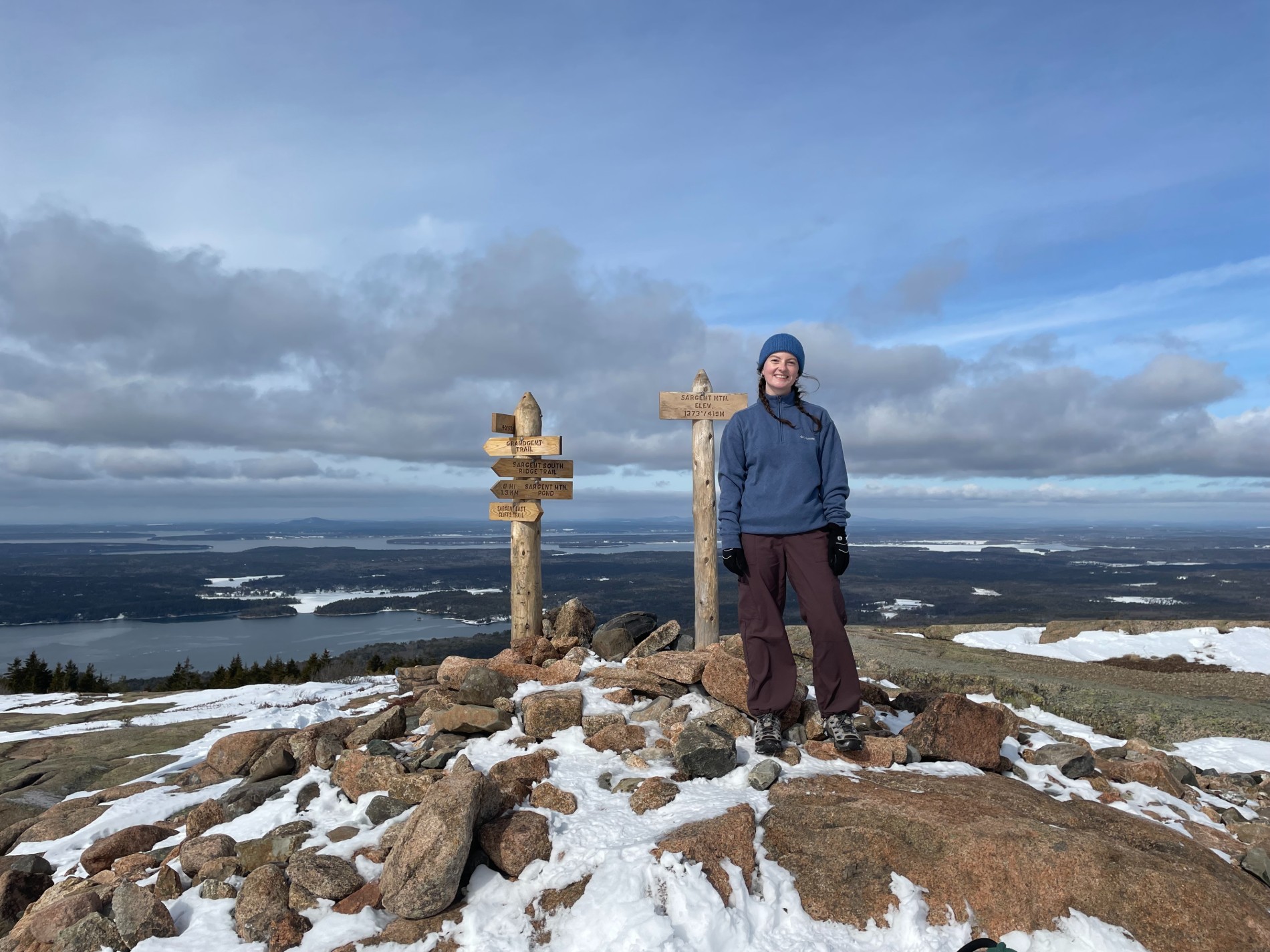
Lauren Knierim, community volunteer ambassador at Acadia National Park, stands near the Sargent Mountain summit sign.
(Lauren Gibson/Friends of Acadia)
One might think that it’s harder for vegetation to survive under a lot of snow. However, snow acts as an insulator for the dormant plants and seeds underneath. Beneath the snow, it is warmer than the air temperature and fluctuates less since the ground is not exposed to strong sunlight in the day and freezing temperatures at night. What state would we find the restoration plots in? Would we come upon erosion control fabric flapping in the strong summit winds, or would the plots and seeds be tucked away safely under a blanket of snow?
We made it above treeline and continued along the trail until we could really survey our surroundings. First, we pulled out our binoculars to see if we’d be fortunate enough to spot a snowy owl in its winter habitat. No luck. But as we looked around, there was snow everywhere, covering the trail and most of the summit. Only large rocks and tall vegetation poked up out of the deep snow.
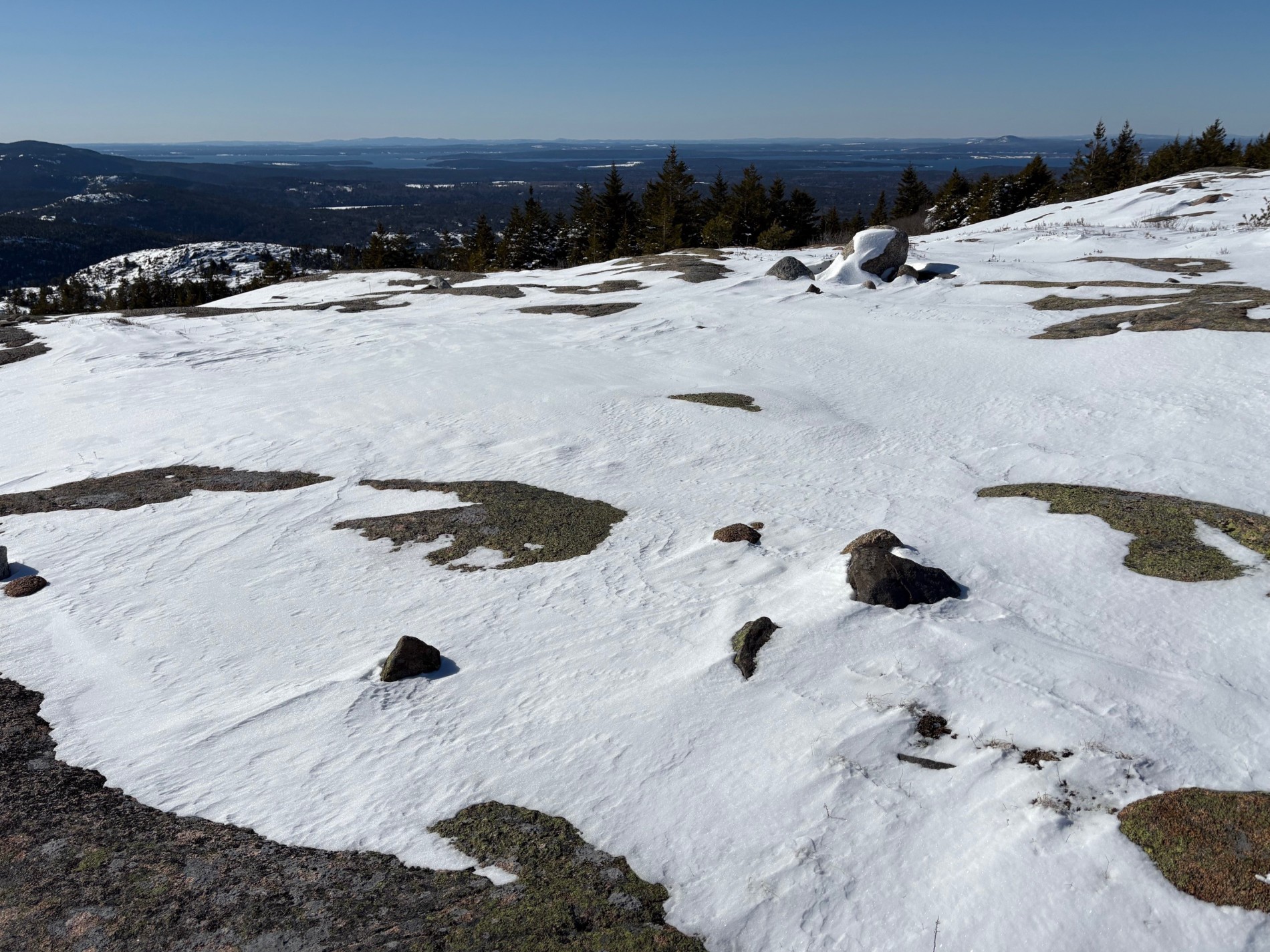
While winter conditions on Acadia’s summits can be harsh, snow acts as an insulator for the dormant plants and seeds underneath.
(Lauren Gibson/Friends of Acadia)
As we approached the location of the restoration plots, we found the same: snow and a few tall rocks peeking out. If we didn’t know where the restoration plots were located based on GPS coordinates, we wouldn’t know they were there at all.
We were thrilled to see this.
The seeds planted in the fall are all tucked in and protected by snow as they wait for spring. In addition, the snow melt will be a great start for the growing season, offering the new native plants an adequate dose of water as they emerge this spring on the summit of Sargent Mountain.
Lauren Gibson is Friends of Acadia’s Wild Acadia Coordinator.
 Join
Join Donate
 Acadia National Park