For 65 years, the Wild Gardens of Acadia has showcased the native plants of Acadia National Park in 13 plant
communities—communities of native plants similar to those visitors encounter as they walk or bike the carriage roads or hike seaside and mountain trails. But the gardens’ beginnings were inauspicious and serendipitous.
In 1960, Janet TenBroeck was intrigued by lists of flowers “not to be picked,” lists with names of native plants. Subsequently, she sponsored two competitions for local garden club members and others to grow these plants.
As she noted in her handwritten piece, “As I See It,” her desire to display these plants so the public could view them led Hal Hubler, Acadia’s superintendent at the time, to offer her a place to grow those plants in the park. In her remarks at the 25th anniversary of the gardens, Betty Thorndike, another founding member, said Hubler’s “offer of a three-quarter-acre site in the park for our garden came like a burst of fireworks exploding with undreamed-of possibilities. It might be called serendipity.”
In 1961, that three-quarter-acre site at Sieur de Monts Spring that the park chose for the gardens was a mass of tangled blackberries and red maples scarred by the 1947 wildfire, but it did have stands of royal and cinnamon ferns along a brook that flowed through the gardens. While TenBroeck preferred a site farther west, the park preferred this site because of its proximity to the Nature Center, restrooms, and parking lot.
At the suggestion of Dorcas Crary, another of the founders, the Wild Gardens committee, a group of volunteers dedicated to the idea of creating an exhibition garden to showcase the area’s flora, divided the plot into habitats—initially 12 and now 13. The park helped in cutting brush, clearing trees, and laying out paths.
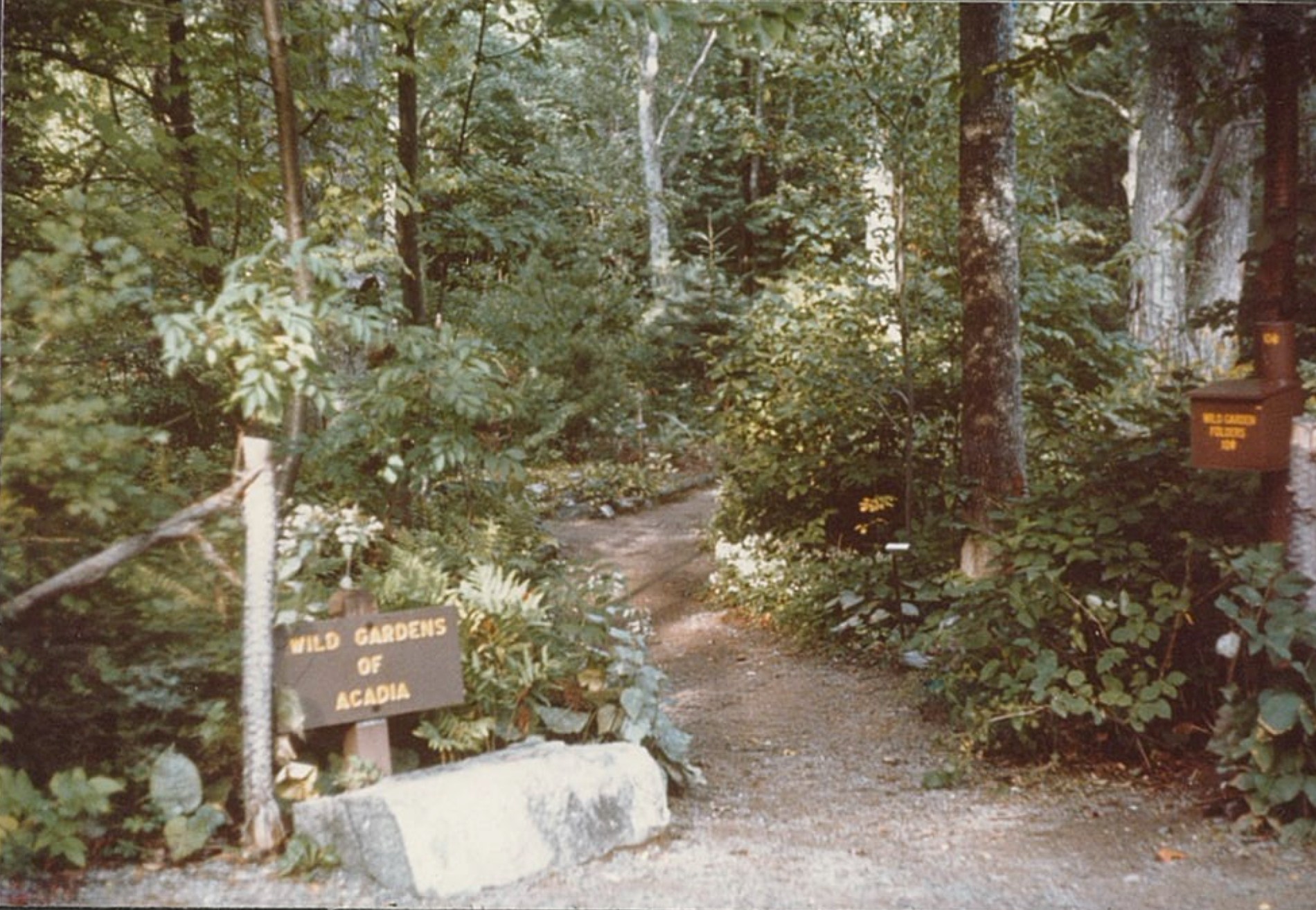
An undated photo of the gardens. (Friends of Acadia)
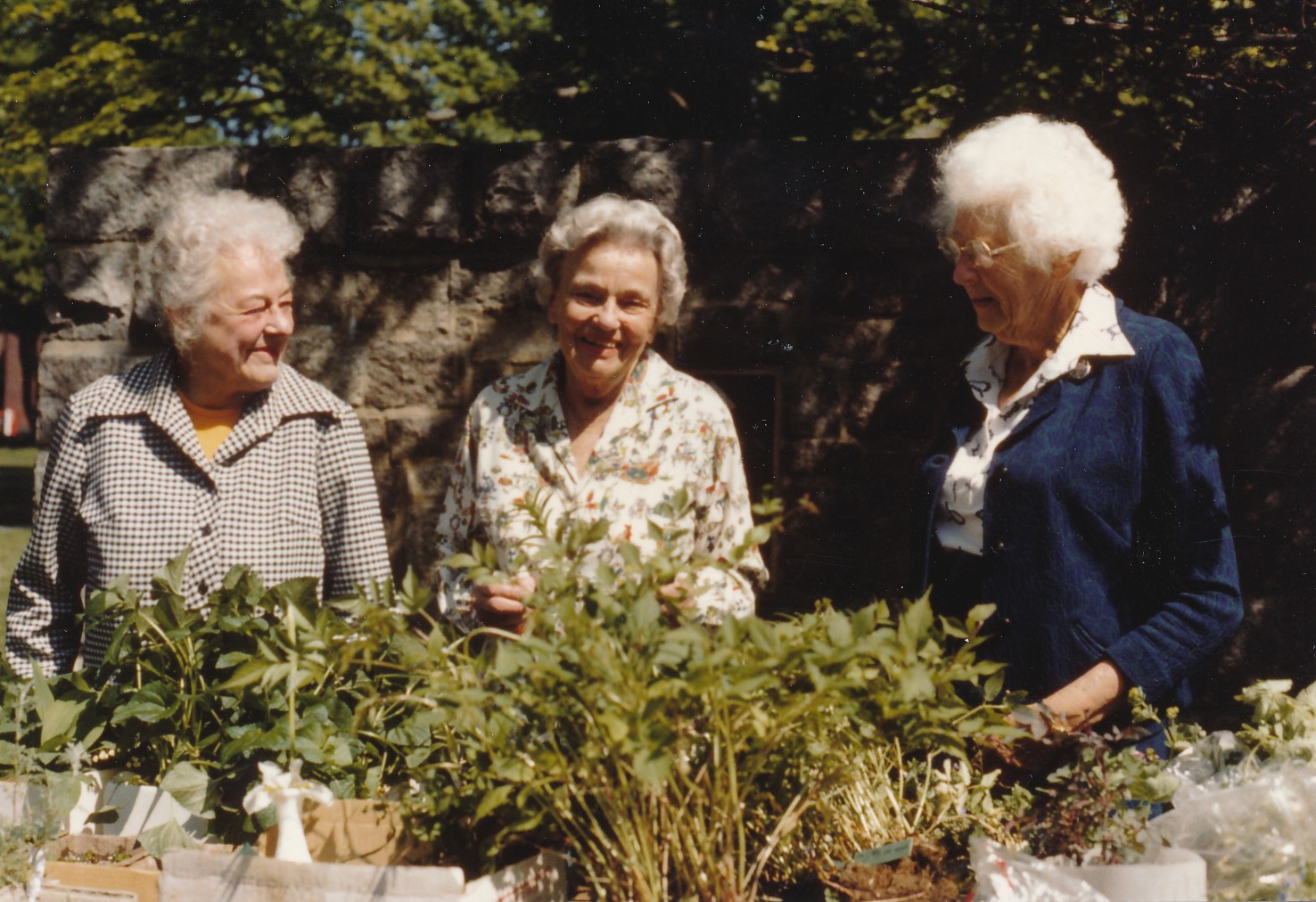
In the gardens’ early years, Elizabeth Thorndike (left), Elizabeth Owens (center), Janet TenBroeck
(right), and other committee members organized plant sales to raise funds for the gardens—a
tradition that continues today. (Friends of Acadia)
Some years later, TenBroeck noted that “we took an undifferentiated piece of land and made it seem as if the deciduous and coniferous woods, meadow, bog, and pond were always there.”
Over the years, the Wild Gardens of Acadia was maintained almost entirely by volunteers, supported by gifts
from committee members, interested individuals, and community groups, as well as from plant sales, postcards, and a garden brochure. As archival notes and Thorndike’s garden diaries show, founding
committee members purchased materials, paid interns in fall and spring, and paid the salary of Ted Mitchell, who each week in the 1960s and 1970s worked in the gardens weeding and preparing beds for the new plantings volunteers collected outside the park.
As Acadia’s season extended and the number of visitors increased, core committee members in the late 1990s realized that they had neither the physical nor financial resources to maintain the gardens and oversee daily operations.
To ensure the gardens’ long-term viability, the committee needed a mechanism that would provide regular funding. The committee raised enough funds annually to support an additional intern, but it did not have the funds to hire a head gardener.
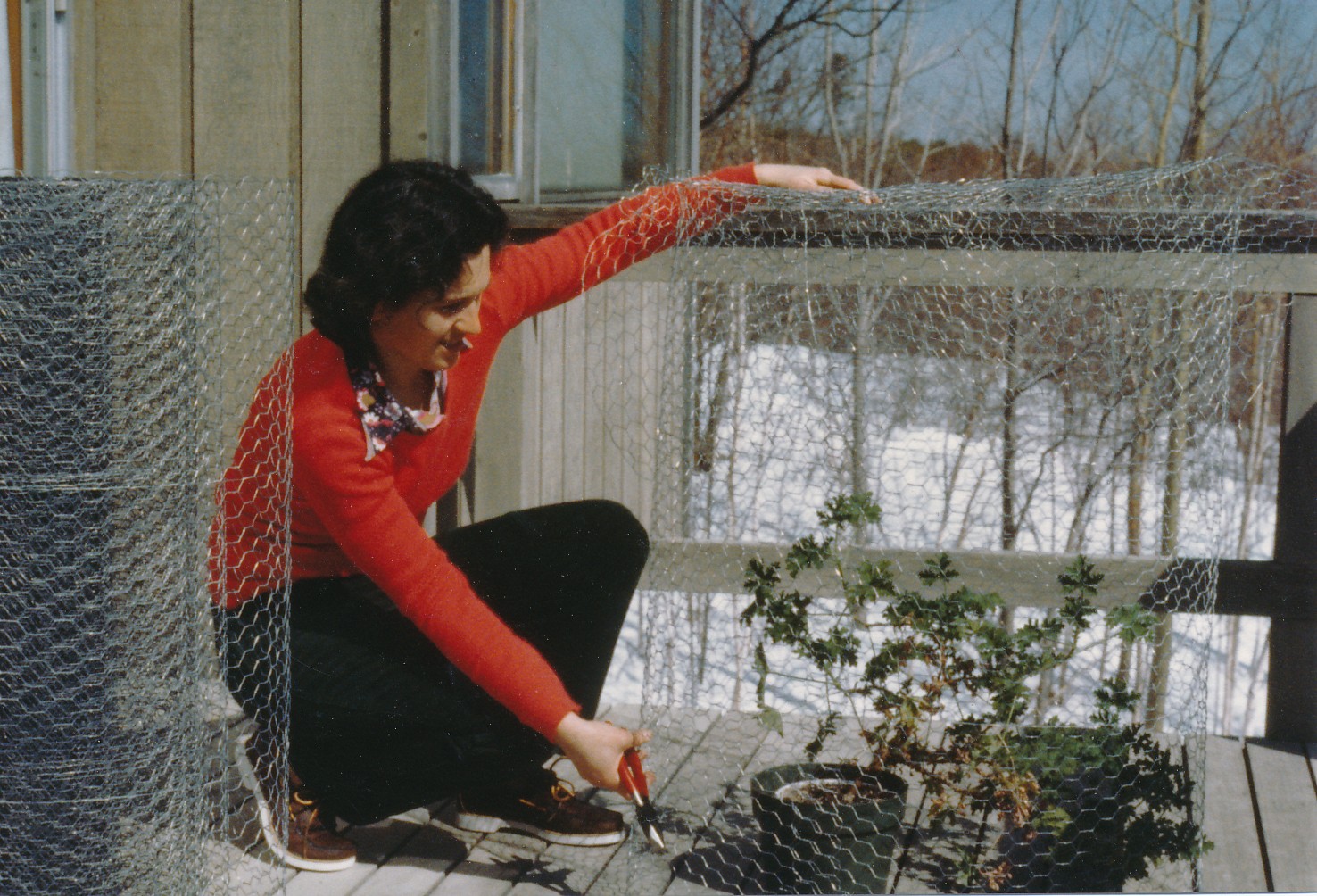
Anne Kozak makes plant cages out
of chicken wire. (Friends of Acadia)
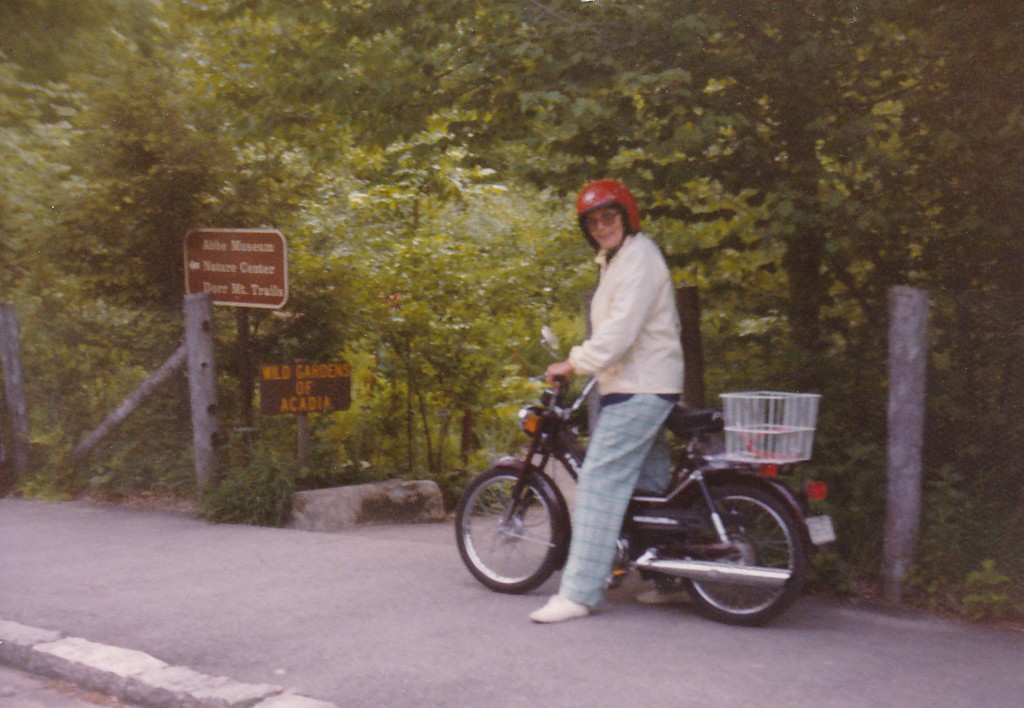
Volunteer Betsy Fenton arrives to
volunteer at the gardens in 1979. (Friends of Acadia)
In 2004, some committee members presented the park and Friends of Acadia’s then-President Ken Olson with three options: The park could assume full responsibility for staffing and operations; the gardens could simply be let go; or the Wild Gardens committee, Friends of Acadia, and the park could work jointly to find a sustained funding source.
Fortunately for the Wild Gardens committee and the park’s many visitors, the park and Friends of Acadia agreed to work with the committee to find a viable financial plan. After six years and the efforts of many, the park and Friends of Acadia entered into an agreement that made the Wild Gardens of Acadia’s volunteer committee part of Friends of Acadia.
In addition to economic security and freedom from many administrative tasks, the merger allowed Wild Gardens
committee members not only to focus more on the plants and visitor interactions but also to hire a head gardener to oversee daily operations. With the help of Friends of Acadia staff, the committee developed an
endowment—the Founders Fund.
Each fall, the co-chairs continue a tradition begun by the original committee—sending a letter describing
the various activities, events, accomplishments, and highlights of the gardens that year. Annual funding from the endowment, which has steadily grown over the last 10 years, supports the salary of the head gardener and educational activities developed by interns—scavenger hunts and coloring pages, both of which are a hit with younger visitors.
The Junior Ranger program, conducted by Acadia’s interpretive staff, takes place on the lawn by the Nature Center, an area within 50 yards of the gardens. To become a Junior Ranger, youngsters complete a workbook centered around typical park experiences. Often, they must identify a specific tree or plant, and those in the gardens are labeled.
Another task requires the children to ask a question of a ranger, and anyone with a name tag, including the gardens’ staff and volunteers, fits that requirement. Once the Junior Rangers are sworn in, many return proudly displaying their newly earned arrowhead badge. And it is not only younger visitors who enjoy the gardens but those adults who come individually or with a tour group.
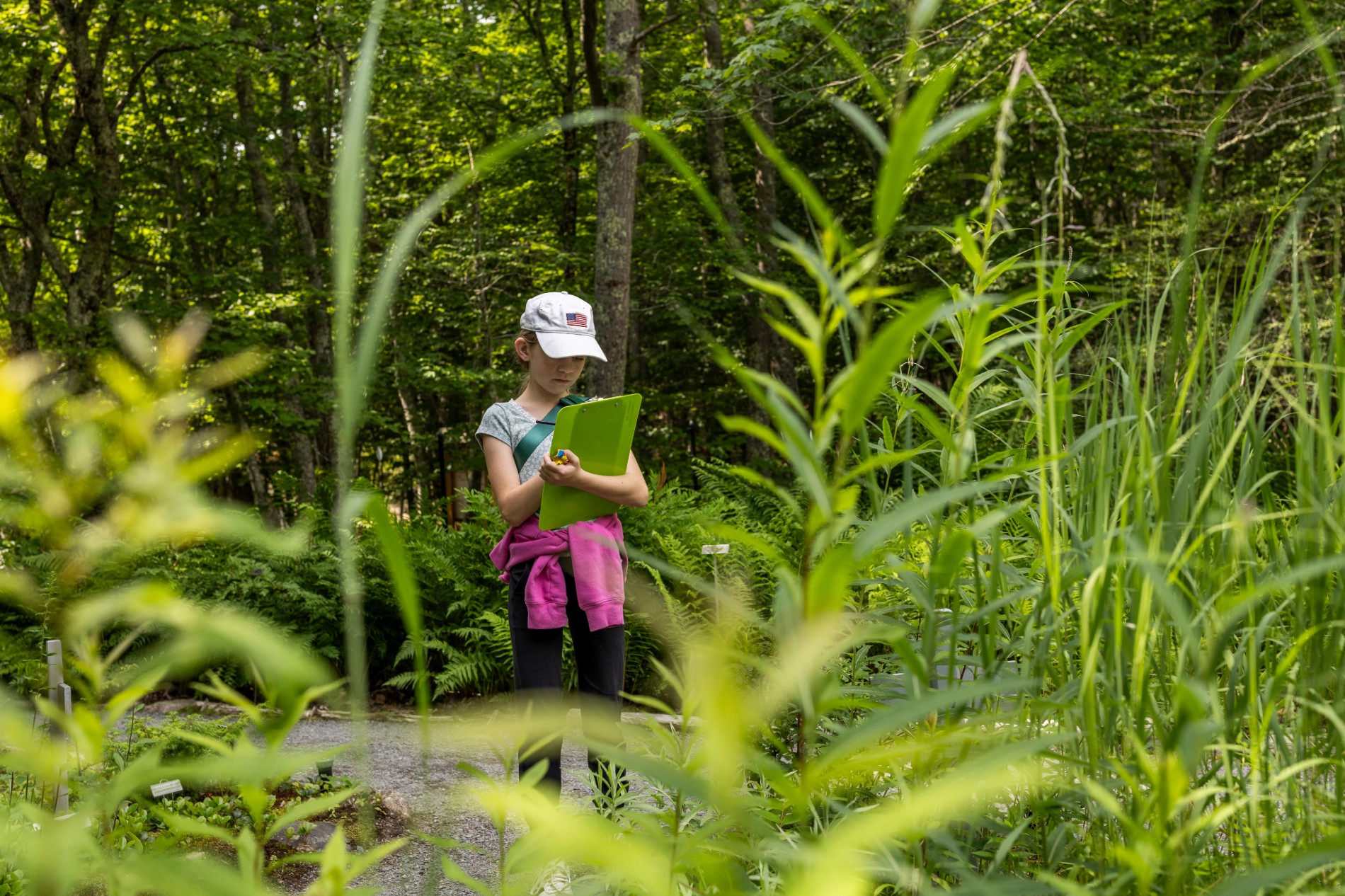
Lydia Neuffer, 10, works to complete the Wild Gardens of Acadia Junior Botanist Scavenger Hunt. (Rhiannon Johnston/Friends of Acadia)
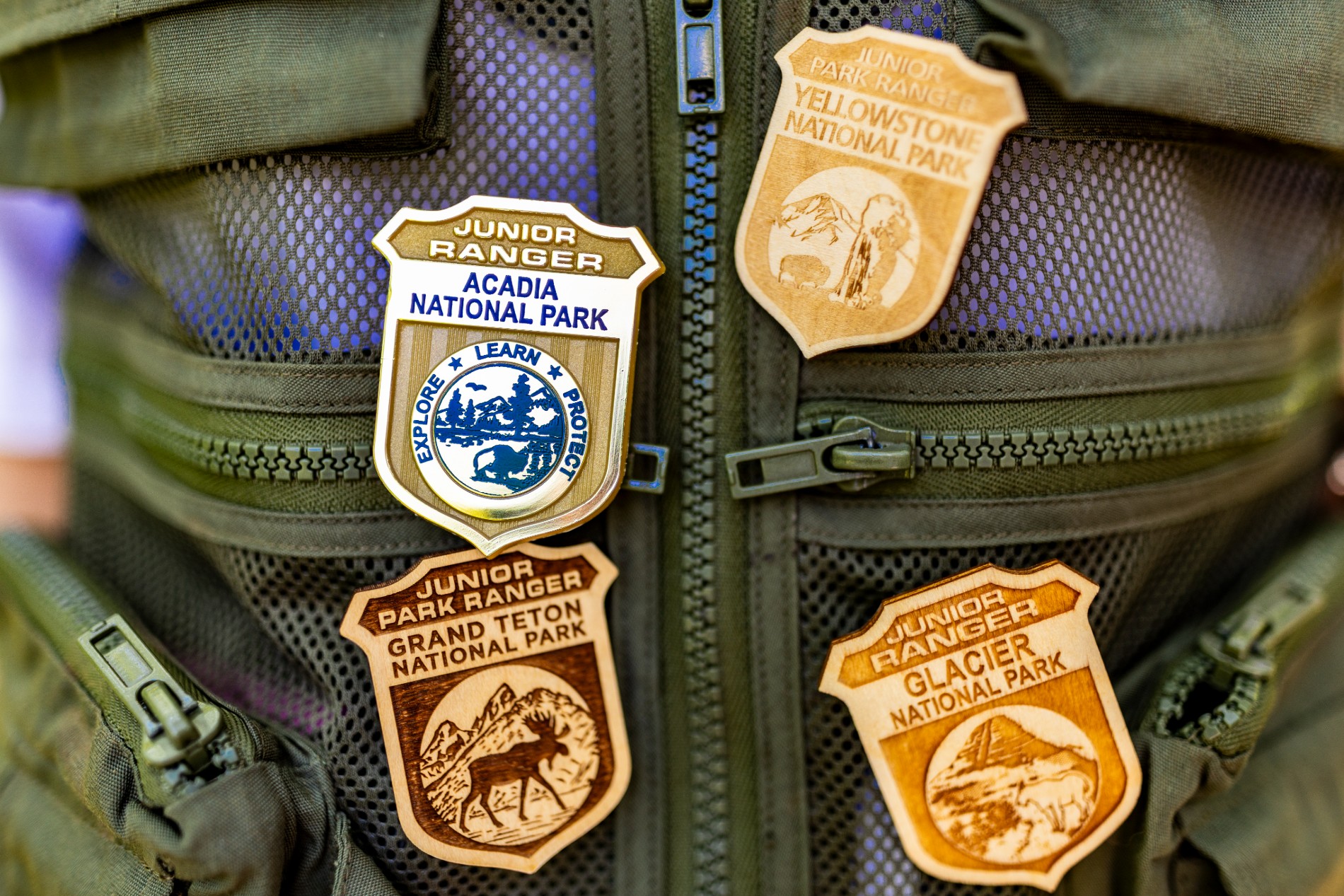
Junior Ranger badges of Emily Nelson, 10, after she was sworn in as an Acadia Junior Ranger near the Wild Gardens of Acadia. (Rhiannon Johnston/Friends of Acadia)
In 2024, visitation crested at just under 100,000; while it appeared the gardens would welcome a similar number in 2025, the government shutdown forced the committee to close the gardens during the peak foliage season—always a period of high visitation. The number of visitors was also slightly lower during COVID, although staff and volunteers created a one-way path through the gardens, and many called it a place they could find respite.
The COVID year brought another benefit. The committee sought greeters; while initially they helped with ensuring groups kept distance between one another, these volunteers highlighted what was currently in bloom and, using the map at the entrance, pointed out the specific habitat where visitors might find these. The greeters still welcome visitors, and visitors often return to ask them specific questions. The greeters, docents, and other volunteers who weed and rake paths all enhance the visitor experience.
For such a small park, Acadia includes an extraordinary variety of plant species, and the gardens offer visitors a unique chance to view and identify hundreds of them within a small space. Visitors can stroll past more than 21 species of native ferns, view carnivorous pitcher plants and sundews from the bog, watch tadpoles dart around pond-lilies, and enjoy the late summer golds and purples of goldenrods and asters. All are marked with both Latin (scientific) and English names, for many visitors are botanists and others are non-English-speaking.
From May to November, there is always something in bloom.
In a 2012 article in Friends of Acadia’s Journal, David Donovan, a seasonal interpretive ranger and volunteer, referred to the gardens as a “unique and wild teacher.” Donovan and his wife have visited countless national parks, “but nowhere [else],” they said, “did we find a perfect, quiet place to learn the names of the plants that call these national parks home.”
ANNE KOZAK is co-chair of the Friends of Acadia Wild Gardens of Acadia Committee, professor emerita and the former director of the College of the Atlantic’s writing program, and a celebrated journalist on Mount Desert Island. She has been volunteering with the Wild Gardens of Acadia for the past 54 years and is the coauthor of “The Wild Gardens of Acadia.”
 Join
Join Donate
 Acadia National Park