The Island Explorer Bus Service Is Riding Into the Future


Island Explorer buses have carried more than 10.6 million passengers since service began in 1999. Combined with the new Acadia Gateway Center, the service is one of the biggest tools to help the park manage visitation over the next 40 years.

BY PERRIN DONIGER

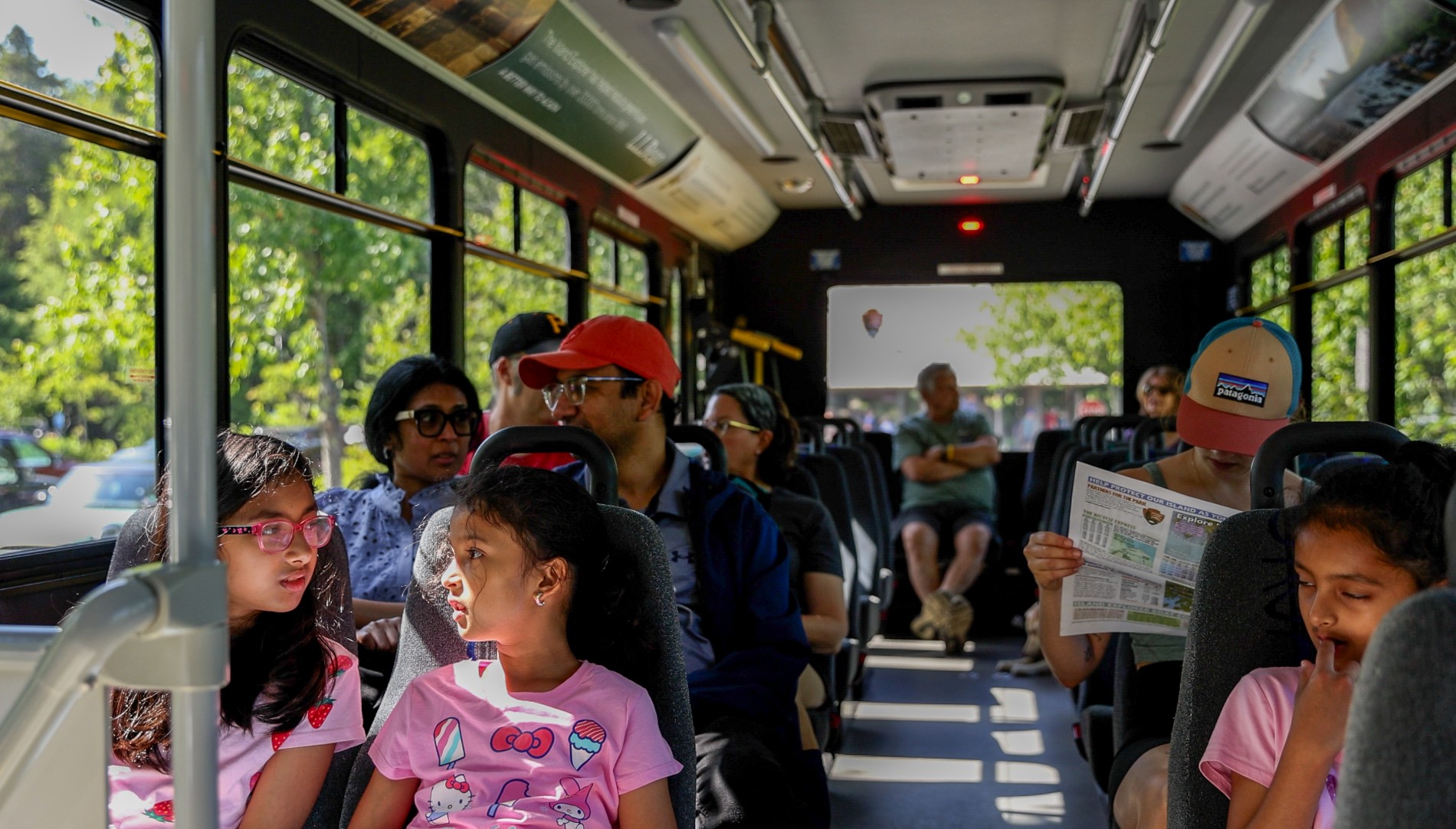
On a bright, sunny day at Hulls Cove Visitor Center, Island Explorer bus ambassadors help first-time park visitors board a bus bound for Sand Beach. Elsewhere in the park, a group of friends looks over a trail map on a bus winding its way toward Jordan Pond. At a village stop, a family with backpacks steps aboard while a cyclist lifts a bike onto the rack. A driver offers directions to a pair of hikers. Someone settles into a window seat and watches the island pass by—spruce and fir, pink granite, a flash of blue water through the trees.

Acadia is one of the smallest national parks in the United States and also one of the busiest. Visitation has climbed steadily over the past decade, reaching more than 4 million visits in 2025—the busiest year in the park’s history. With those crowds come familiar pressures: the circling of cars around packed parking lots and the slow crawl of traffic through village centers and along park roads during the busiest weeks of summer.

Over the last 27 years, the Island Explorer has emerged as one of the most important tools for the park and its surrounding communities to mitigate congestion. Since its start in 1999, the bus system has carried more than 10.6 million passengers, helping to keep an estimated 4 million private vehicle trips off the roads and more than 56 tons of smog-causing pollutants and 37,000 tons of greenhouse gasses out of our air and atmosphere.

“The bus system has become one of the most important tools for protecting both the visitor experience and the character of Acadia and its surrounding communities,” said Stephanie Clement, Friends of Acadia’s vice president of conservation. “Every full Island Explorer bus that you see going by represents 10 to 14 personal vehicles removed from the road. That really adds up.”

(Rhiannon Johnston/Friends of Acadia)

THE ORIGIN OF THE LITTLE BUS THAT COULD

Almost 35 years ago, Acadia’s 1992 general management plan identified alternative transportation as an important part of the park’s future.

“Acadia was one of the first national parks to identify the need for an alternative transportation system,” John Kelly, management assistant at Acadia National Park, told Friends of Acadia in 2024.

“Even back then—imagine that—we were still dealing with huge amounts of traffic and parking congestion.”

Before the Island Explorer officially launched, Downeast Transportation and park leaders tried smaller experiments. One early shuttle linked campgrounds near the head of the island to downtown Bar Harbor and Sand Beach. Riders paid a $2 fare and usage was modest.

Paul Murphy, Downeast Transportation’s executive director, described the moment the idea sharpened into something larger.

“We approached Friends of Acadia with an idea: if we could eliminate the fare, it would increase ridership,” he said.

Friends of Acadia agreed to support the test, offering to cover the $4,000 Downeast Transportation was making in passenger revenue to allow the buses to be fare-free. The result was immediate and striking: ridership increased by 600 percent.

That early success gave the new project legs—or should we say wheels.

In 1999, thanks to a Congestion Mitigation and Air Quality grant from the U.S. Department of Transportation, the Island Explorer launched with eight fare-free, propane-powered buses running on six routes from the end of June through Labor Day.

The following year, the fleet expanded to 17, and ridership rose quickly: more than 142,000 riders in the first season and more than 281,000 by 2002.

From the beginning, the Island Explorer grew through partnerships—with the U.S. and Maine Departments of Transportation, Acadia National Park, Friends of Acadia, and local towns and businesses all coming together to plan and support the new public transit system.

It was a huge partnership effort, Clement explained. “There were 27 organizations that signed the original partnership agreement, and everyone chipped in to help in various ways.”

Friends of Acadia participated both as an early funder and co-planner.

One of the first innovations was the development of a “front-door service,” as park leaders described it. Routes connected inns, campgrounds, and village centers with some of Acadia’s most beloved destinations, making the system easier for visitors to use and providing value to hospitality businesses,
encouraging their support.

It also helped the bus become woven into everyday life on the island.

Some of the bus’s earliest adopters were Mount Desert Island high school students, Clement said. They rode the bus to get to summer jobs, beaches, and gathering places without depending on a car—or parents.

As bus ridership expanded, L.L.Bean became one of the most important private partners supporting its growth. Friends of Acadia helped facilitate the company’s first major sponsorship in the early 2000s, and over the past 24 years, L.L.Bean’s contributions and pledges have totaled $5.5 million.

That support helped sustain operations, add additional bicycle access to buses, and expand service into the fall.

Today, along with L.L.Bean’s significant support, a portion of Acadia National Park entrance fees provides more than 70 percent of the Island Explorer’s annual operating budget.

The remainder comes from grants from the Federal Transit Administration and Maine Department of Transportation, as well as support from local municipalities, businesses, and riders’ onboard donations.

Last year the system carried more than half a million passengers along 12 different routes to more than 100 different destinations, ranging from Seawall to Otter Cliffs to the Schoodic Peninsula.

“It’s made many happy customers,” Clement said. “People can take the bus into the park and truly have that car-free, carefree kind of experience. And to be able to take those one-way hikes over the mountains and hop on a different bus and get back to your destination is really an amazing experience.”

“In the beginning, there was huge skepticism,” Murphy said. “People questioned, ‘All these buses rolling around the island; who’s gonna ride ‘em?’ It was just foreign to the community. But over the course of [more than] 25 years, that question has been turned on its head. And the question now is, ‘What would we do without that bus system?’”
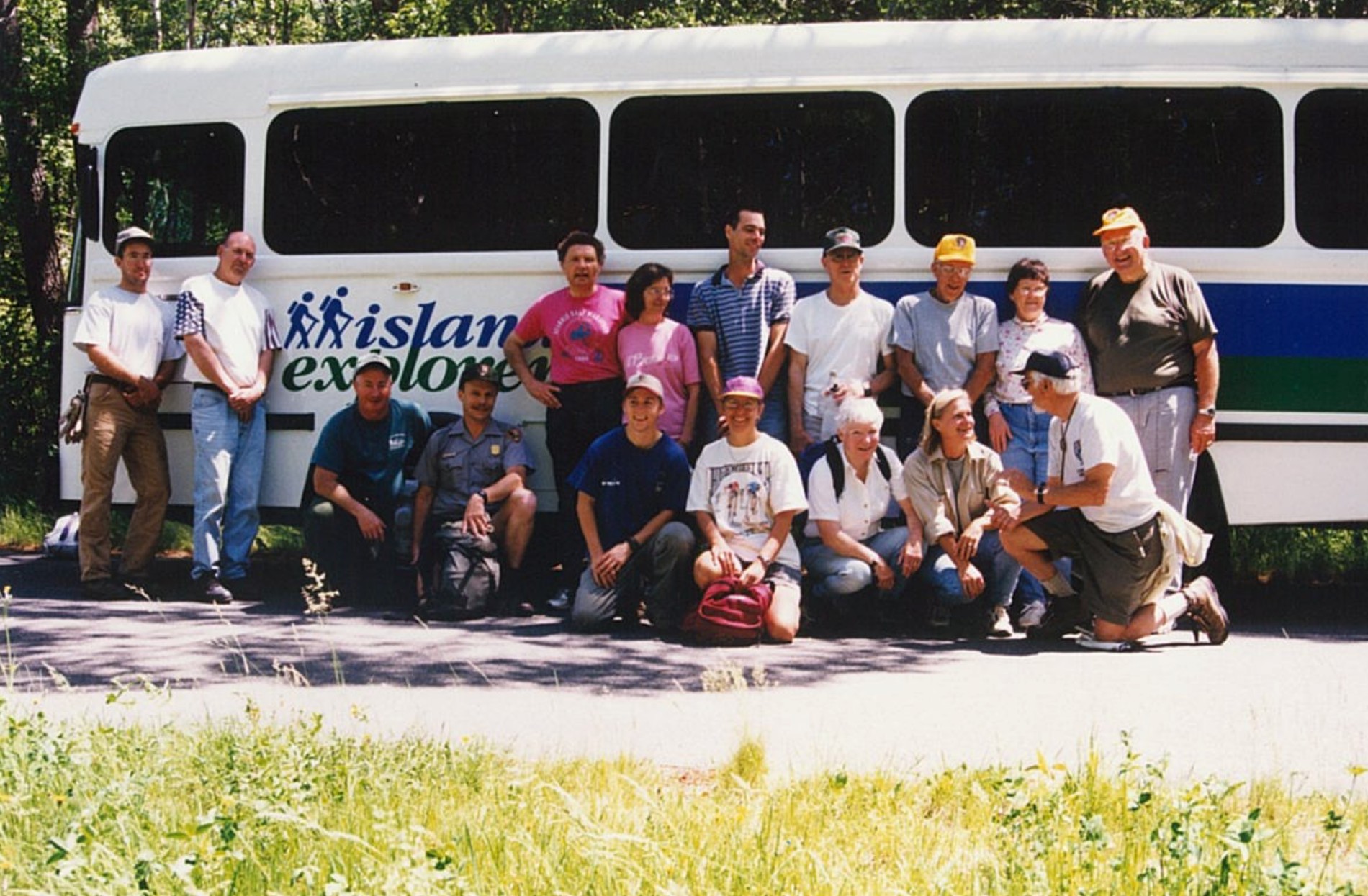
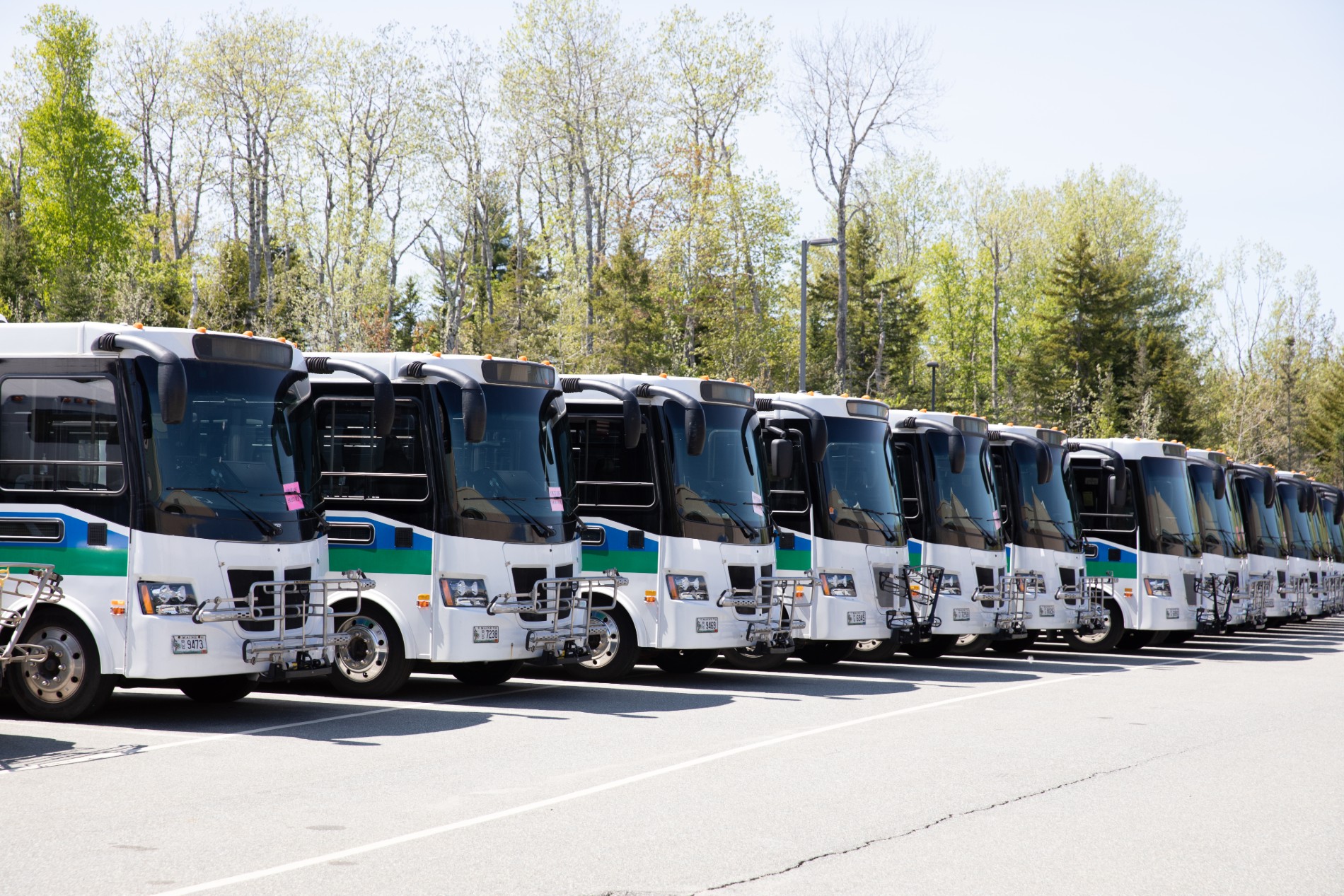
Acadia National Park and Friends of Acadia staff and volunteers pose for a portrait outside of Acadia’s free bus system, the Island Explorer. (Friends of Acadia)
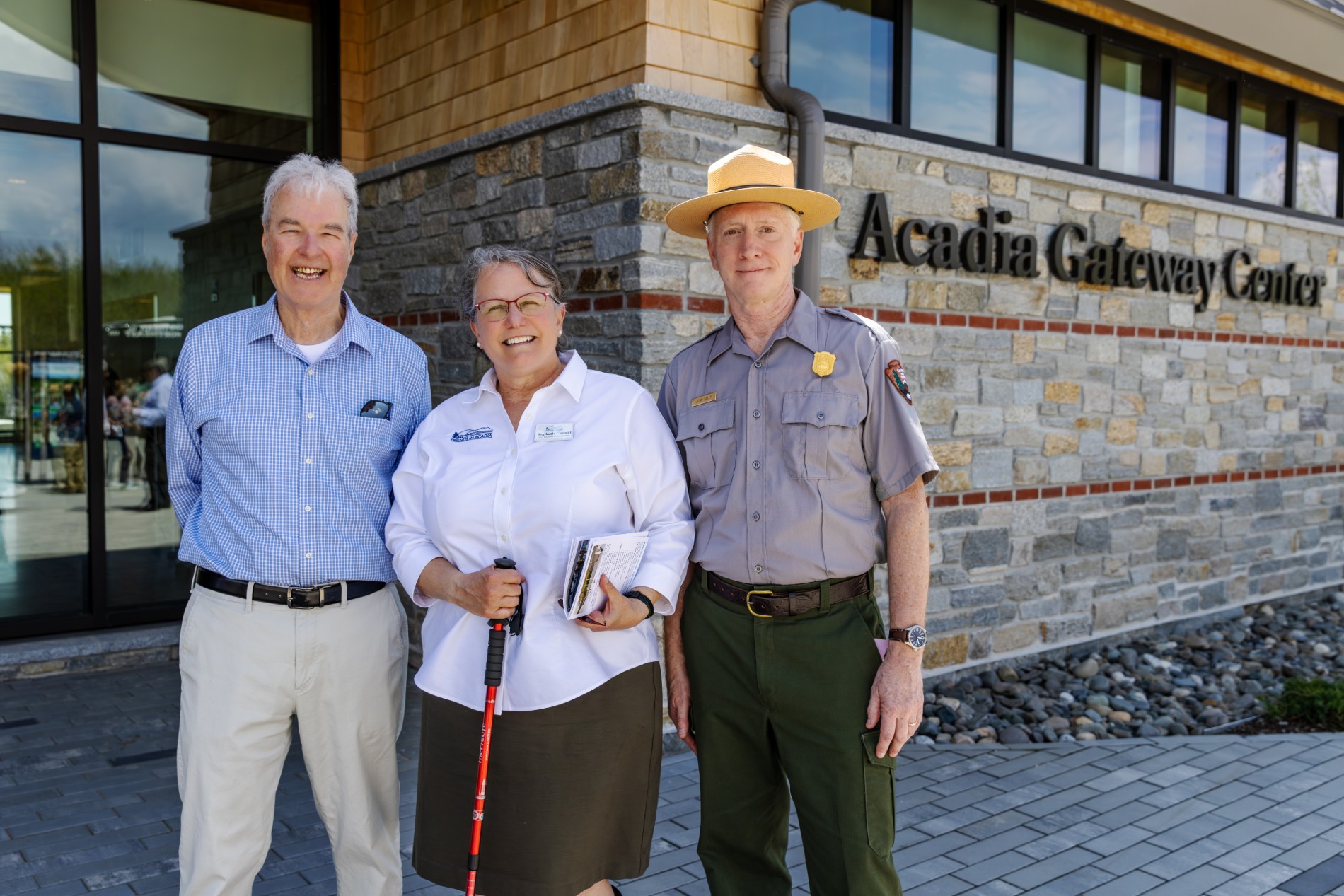
Paul Murphy, executive director of Downeast Transportation; Stephanie Clement, vice president of conservation for Friends of Acadia; and John
Kelly, Acadia National Park management assistant, pose for a photo after celebrating the completion of the Acadia Gateway Center. Murphy, Clement,
and Kelly worked on the project over decades, seeing it go from idea to completion. (Julia Walker Thomas/Friends of Acadia)
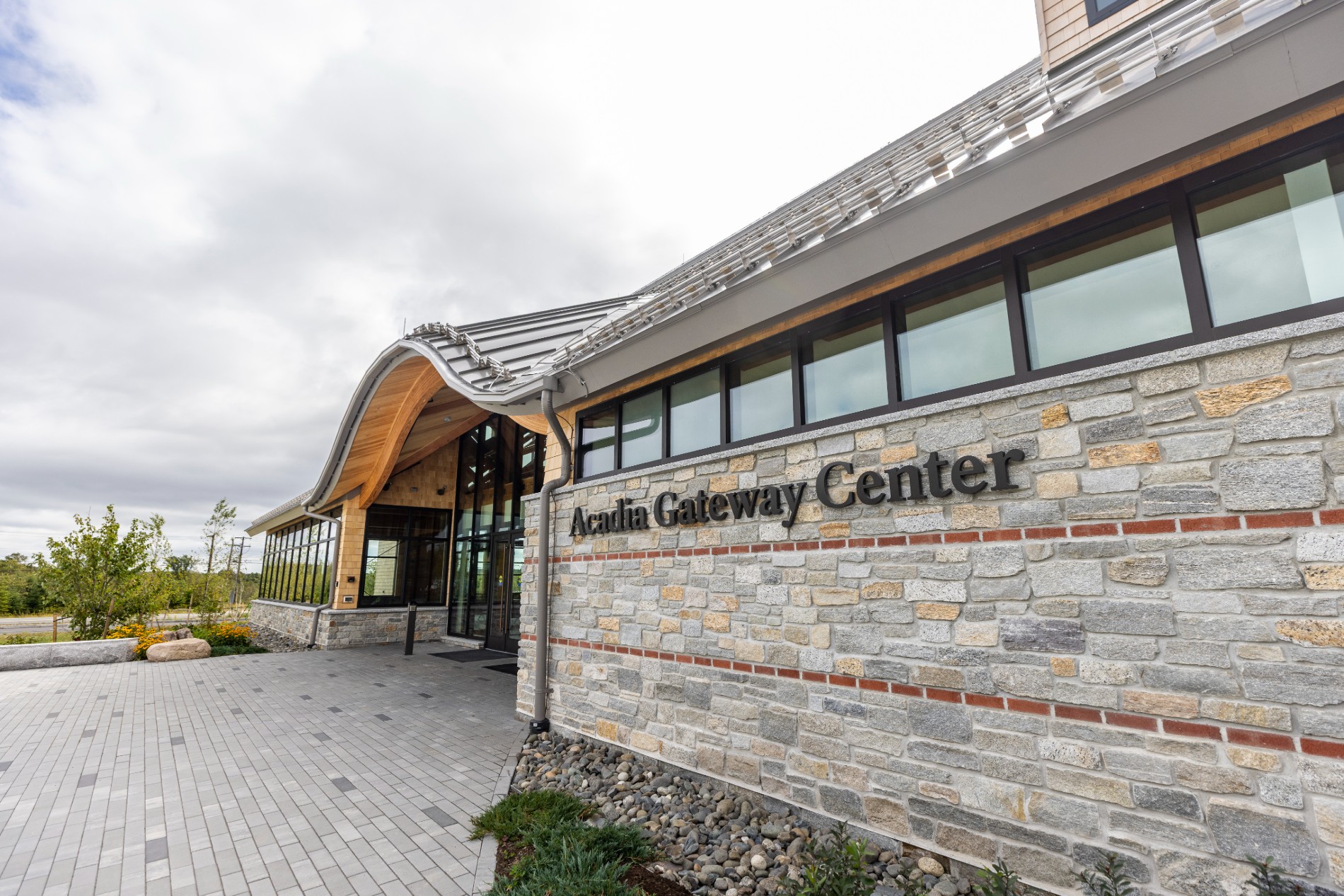
The main entrance of the Acadia Gateway Center. (Rhiannon Johnston/Friends of Acadia)

RIDING INTO THE FUTURE

This season, the Island Explorer service expanded again. Select routes through the park began on May 20, a month earlier than previous years. The new start date aligned with the opening of the Acadia Gateway Center in Trenton, which opened for its first full season this summer. The center offers visitors a new sense of arrival: a place to gather information, buy a park pass, leave their car, and board the Island Explorer for a day in the park without the uncertainty of crowded lots and limited parking at popular destinations.

“The Island Explorer and the Acadia Gateway Center are really the biggest tools that will help the park manage visitation over the next 40 years,” Clement said. “I know I’m a transportation geek, but I really think that the Island Explorer has been one of the best things that has happened over the last 28 years that I’ve been at Friends of Acadia. And it will help us carry forward into future growth.”


PERRIN DONIGER is Friends of Acadia’s Vice President of Communications and Marketing.

(Rhiannon Johnston/Friends of Acadia)

ONE-WAY HIKES IN THE PARK VIA THE ISLAND EXPLORER

In addition to saving you the hassle of finding parking at a favorite trailhead, the Island Explorer makes it easier for hikers and bicyclists to enjoy one-way outings. “People can be dropped off at one trailhead and picked up at another,” said Clement. “This opens up so many more hiking opportunities in the park.” Riders can request a stop or flag down a bus anywhere along a route where it is safe to do so. In summer, most routes run every 30 minutes. Hop on board to explore these memorable one-way hikes:

Ocean Path

Take Bus 3 to Sand Beach. Sunbathe or continue along the path past countless scenic vistas to Thunder Hole and then on to Otter Point. Pick up the bus again there, or at any point along the way.
Total hiking distance: 2.2 miles.

Sieur de Monts to Gorham Mountain

Step off Bus 4 (Loop Road) or 10 (Blackwoods) at Sieur de Monts, hike across Huguenot Head, Champlain Mountain, and Gorham Mountain, and return to Bar Harbor on the Sand Beach bus route.
Total hiking distance: 4.1 miles.

Sieur de Monts to Jordan Pond House

Hop Bus 4 or 10 to Sieur de Monts. Check out the Wild Gardens of Acadia before heading south through the Great Meadow along the Jesup Path. Pick up the Kane Path and watch for birds along The Tarn, then continue southwest across the park on Canon Brook Trail to Jordan Pond House. Your popovers will be well earned, and Bus 4 (Loop Road), 5 (Jordan Pond), or 6 (Northeast Harbor) will take you back to Bar Harbor, Hulls Cove Visitor Center, or Northeast Harbor.
Total hiking distance 5.2 miles.

Brown Mountain to Eagle Lake by Bike

Pop your bike on the rack of Bus 6 (Northeast Harbor) and ride to the Brown Mountain Gate House. From there, bike north on the Brown Mountain Connector and turn right on Hadlock Loop Carriage Road. Take in views of Hadlock Falls and Hemlock Bridge before eventually turning right on Upper Mountain Carriage Road. Follow Seven Sisters/Bridges Carriage Road north to Aunt Betty Pond Carriage Road and past Betty Pond itself. End your ride at Eagle Lake lot and return to Bar Harbor on the Island Explorer’s Bicycle Express or to Northeast Harbor via Bus 6.