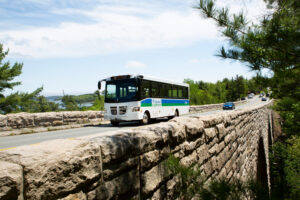
A new federal RAISE grant will help expand the Island Explorer bus fleet by approximately 18 percent over the next several years, creating new opportunities to increase fare-free transit service in Acadia National Park and surrounding communities.
The federal funding will allow the Island Explorer to replace aging buses and grow its fleet from 34 to 40 buses. Supported in part by a $300,000 matching pledge from Friends of Acadia, the investment will lay the groundwork for service improvements across the system, including plans for a new express route connecting the Acadia Gateway Center directly with Hulls Cove and continuing onto Park Loop Road.
“The Island Explorer has transformed the way people can experience Acadia, and this investment gives us an opportunity to build on that success,” said Eric Stiles, president and CEO of Friends of Acadia. “By replacing aging buses and expanding the fleet, we can create more convenient options for people to leave their cars behind and strengthen a transportation system that will serve Acadia for decades to come.”
Ridership since the start of the season is up 20.8 percent through July compared with 2025, driven in large part by expanded early-season service. Two of the Island Explorer’s 12 routes – the Acadia Gateway Center and Park Loop Road routes – began operating roughly a month earlier than usual this year, launching May 20 to coincide with the opening of the Acadia Gateway Center. Full summer service across the Island Explorer began on June 23. July ridership in 2026 was up 6 percent compared to July 2025, even as park visitation remained flat.
“It has been exciting to see solid year over year growth and adoption of the new early-season service,” said Stephanie Clement, vice president of conservation at Friends of Acadia. “We know many routes are at capacity during the peak season and the new federal investment will add capacity to the system.”
The growth continues decades of success for the Island Explorer, which has become one of the region’s most important tools for reducing traffic congestion, parking pressure, and vehicle emissions. Since the system launched in 1999, it has carried more than 10.6 million passengers.
Last year alone, the Island Explorer carried 506,868 passengers, a 2 percent increase over the previous year. By helping visitors explore Acadia without a car, the system removed an estimated 187,500 personal vehicles from park roads and reduced smog-causing pollutants by approximately 2.68 tons and greenhouse gas emissions by an estimated 1,774 tons.
“The Island Explorer plays an essential role in reducing traffic congestion, parking pressure, and emissions while giving visitors a convenient way to experience Acadia and surrounding communities,” Clement said. “Every person who chooses the bus instead of driving helps reduce pressure on a road and parking system that was never designed for the number of people who visit Acadia today.”
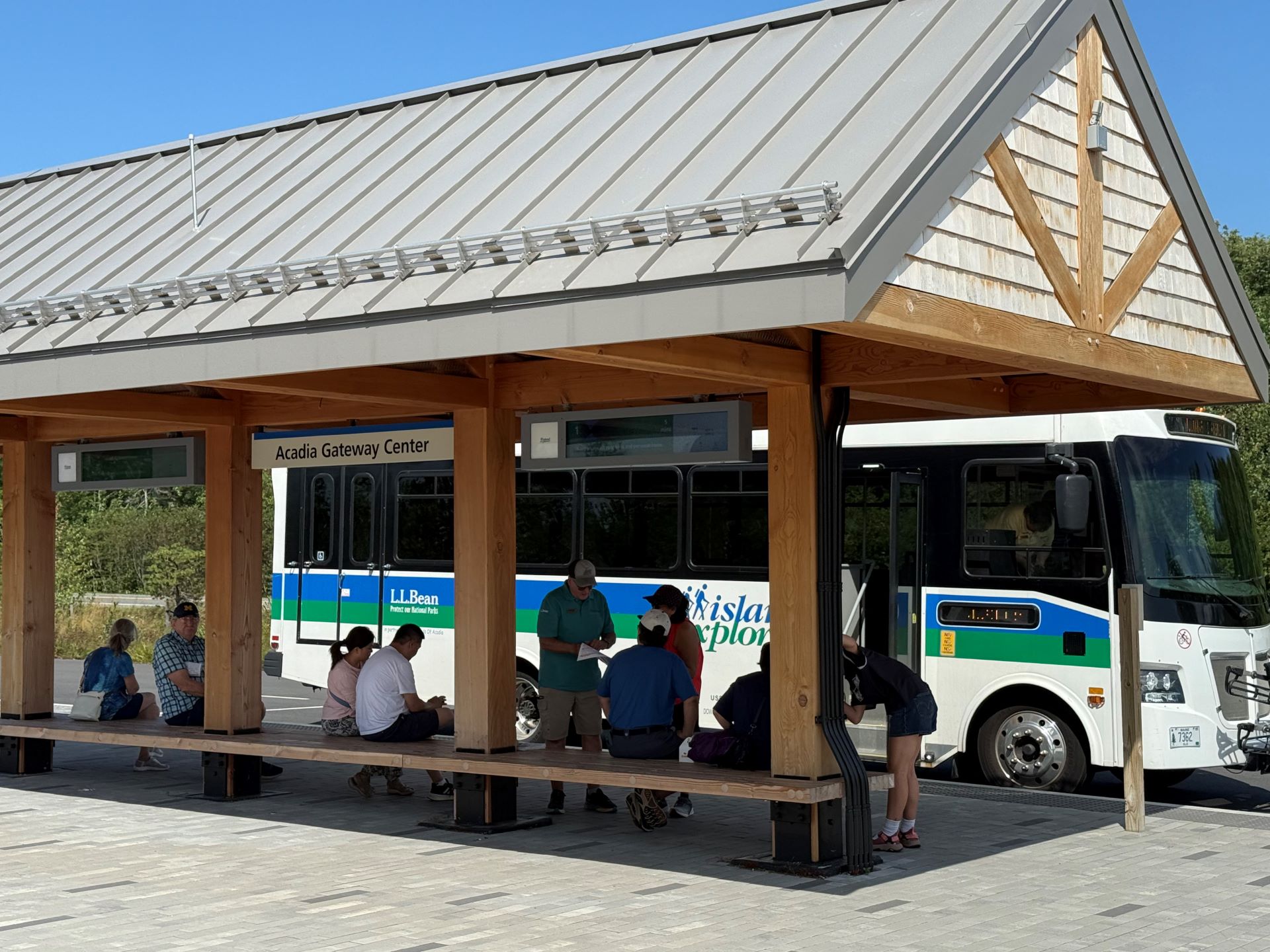
Passengers wait to board the Island Explorer bus from the Acadia Gateway Center on August 19, 2026. (Friends of Acadia)
Building a Transportation System for Acadia’s Future
Last year, Acadia welcomed more than 4 million visits. During peak season, parking areas at many of the park’s most popular trails and destinations fill early in the day, contributing to congestion as drivers circle for spaces and creating frustration for visitors.
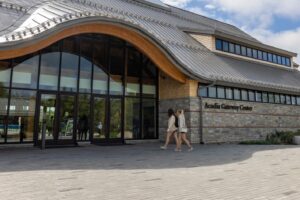
The Acadia Gateway Center in Trenton is an important part of a long-term, multi-part strategy to improve the visitor experience while protecting park resources and preserving quality of life in surrounding communities.
Opened for its first full season this year, the center, which is owned by the State of Maine and operated by the Maine Department of Transportation in partnership with the Maine Office of Tourism, National Park Service, and Downeast Transportation Inc., gives visitors a place to get oriented before arriving on Mount Desert Island.
“Roughly half of Acadia’s visitors each year are visiting the park for the first time,” Clement explained. “So, giving these visitors a place to learn about the park, including trip planning, safety, and stewardship information, is important.”
At the Gateway Center, visitors can talk with a park ranger, purchase a park pass, visit a park store, learn about the Island Explorer, and discover destinations throughout Downeast Maine, helping extend tourism-related economic opportunities to less-visited communities across the region.
The National Park Service has also begun offering visitor orientation talks and pop-up educational programs on topics including loons (“Loonapalooza”), “The Science of Sunrise and Sunset,” and “Bear and Food Conditioning.”
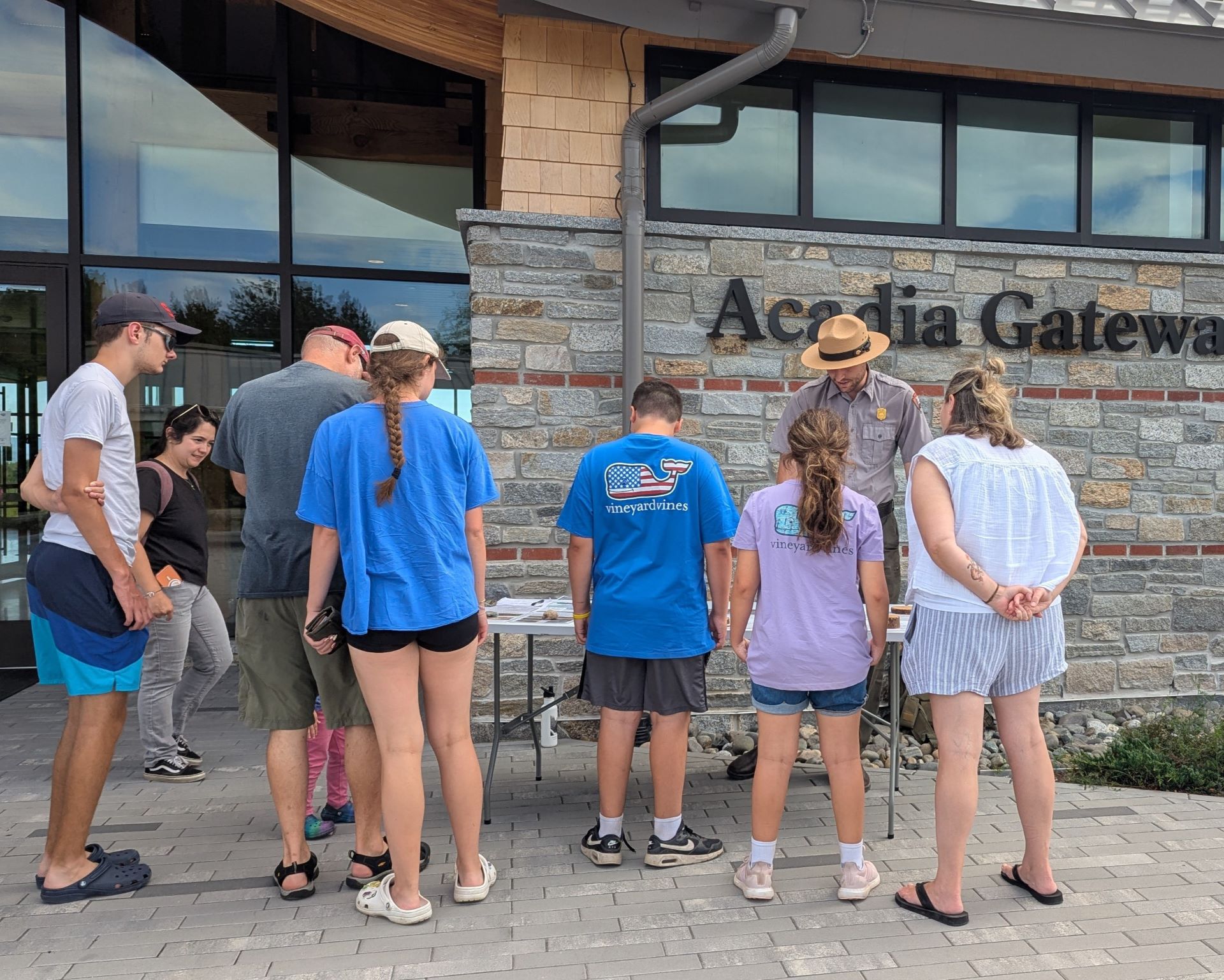
A park ranger leads a pop-up talk about amphibians outside the Gateway Center. (Friends of Acadia)
For day-trippers, visitors staying off-island, and local residents and commuters, the center offers free parking and the opportunity to explore Acadia without searching for a space at the park’s busiest destinations or navigating and paying for parking in busy town centers. A recent Bangor Daily News article found that it took an average of 23 minutes to find a parking spot in downtown Bar Harbor in July.
Visitors to the center staying on the island can learn about Island Explorer pick-up spots near their lodging.
Early visitor surveys from the center have been encouraging.
“Together with the many partners involved in this project, we’re excited about what we’re seeing in this first full season, and we’re learning a tremendous amount,” Clement said. “Feedback from visitors at the Gateway Center has been very positive. We also know that awareness and new travel habits take time to build. This center was designed to give Acadia the transportation capacity and flexibility it will need 20, 30, and 50 years from now.”
Continued improvements to wayfinding, marketing, and transit service—including future express bus service made possible by an expanded fleet—will help the center and Island Explorer system reach more visitors over time.
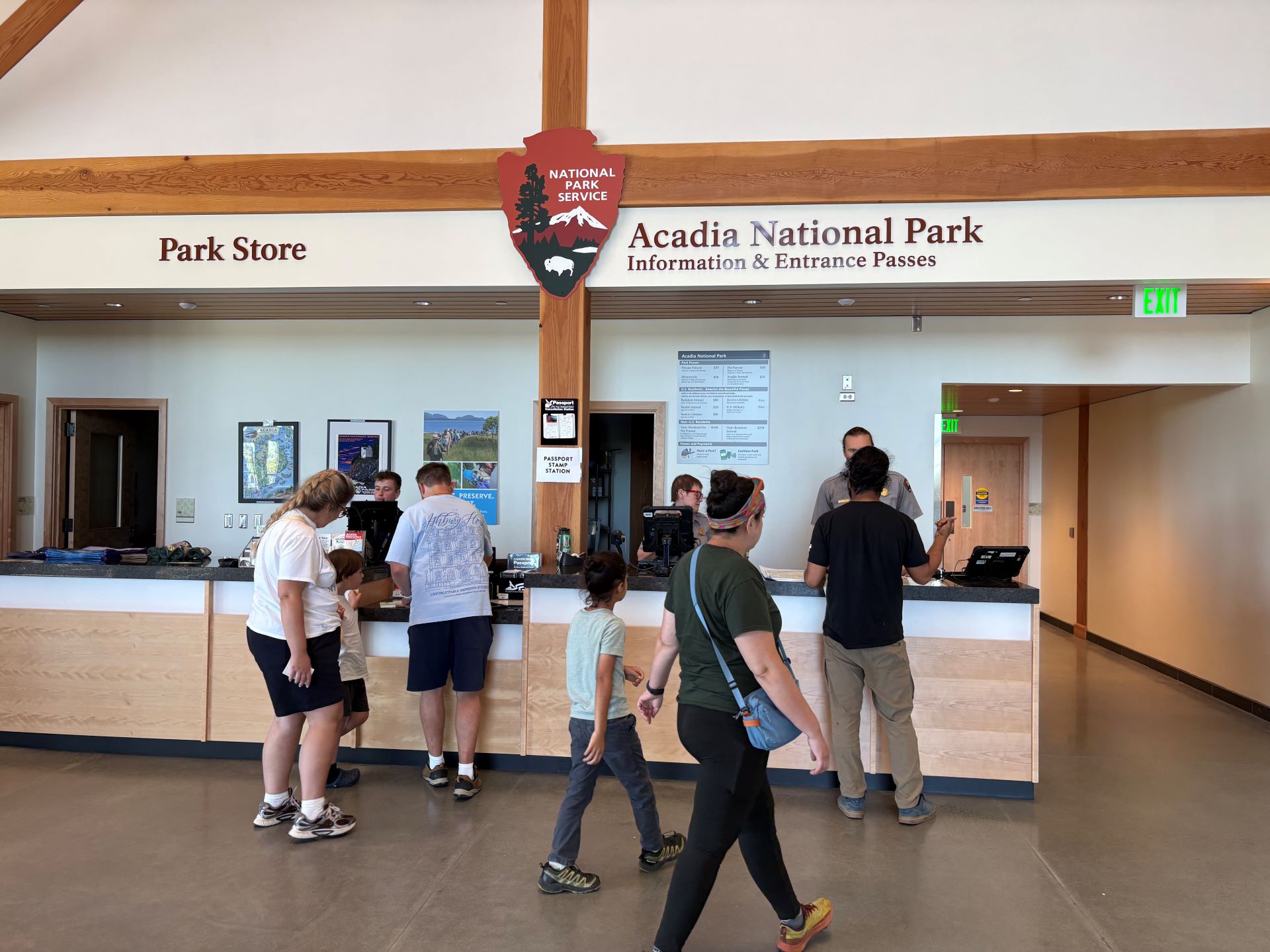
Visitors get trip planning suggestions and purchase park passes at the Acadia Gateway Center. (Friends of Acadia)
A Multi-Decade Transportation Strategy
The Gateway Center represents the latest phase of a transportation strategy developed beginning in 1999 by transportation agencies, community leaders, and Acadia National Park managers to reduce congestion on Route 3 and throughout Mount Desert Island.
The first phase established the fare-free Island Explorer and created the transit hub at the Village Green in Bar Harbor. A second phase expanded the bus fleet, added routes and service frequency, and extended the operating season into the fall.
The third phase created the Acadia Gateway Center campus, including a centralized operations and maintenance facility for Downeast Transportation with space for bus maintenance, fueling, and storage, as well as the new visitor welcome center and transportation hub. Together, these facilities provide the infrastructure needed to support additional Island Explorer growth in the decades ahead.
Developed in collaboration with numerous federal, state, local, and community partners, these investments are part of a broader portfolio of transportation initiatives designed to address congestion from multiple angles.
“Addressing congestion will require a range of complementary solutions,” Clement said.
Expanding the Island Explorer will also require continued investment in the people and infrastructure needed to operate it.
“We know that growing the Island Explorer will require more than additional buses — it will require more operational funding and more drivers,” Stiles said. “In addition to housing currently available to bus drivers near the Gateway Center at Jordan River Road in Trenton, we’re working with the park to explore opportunities to expand RV accommodations at White Birches Camp within Acadia. Many Island Explorer drivers travel seasonally by RV, and the existing sites have been in high demand.”
With new federal investment, an expanded fleet, growing ridership, and the Acadia Gateway Center now in its first full season, the pieces are coming together to support the next phase of the region’s transportation strategy.
“Tackling congestion is one of the park’s biggest and most complicated challenges,” Stiles said. “We’re encouraged by the progress we’re seeing and excited about what these investments can make possible in the years ahead.”
 Join
Join Donate
 Acadia National Park