 Join
Join Donate
 Acadia National Park
Trails That Will Last Forever
BY KATHERINE PERKINS
July 14th, 2011
BY KATHERINE PERKINS
July 14th, 2011
With the help of Friends of Acadia, Acadia National Park is making great strides in the restoration of its network of hiking trails, much like the renaissance experienced when Friends of Acadia helped spearhead restoration of the carriage roads years ago.
In 2000, Acadia Trails Forever was proposed as a fundraising campaign to be conducted by Friends of Acadia in collaboration with the park. The goal was to set a 10-year plan in motion and establish a legacy to “rehabilitate the 130-mile trail system, restore 11 miles of lost or unmarked trail, and create five village connector trails.”
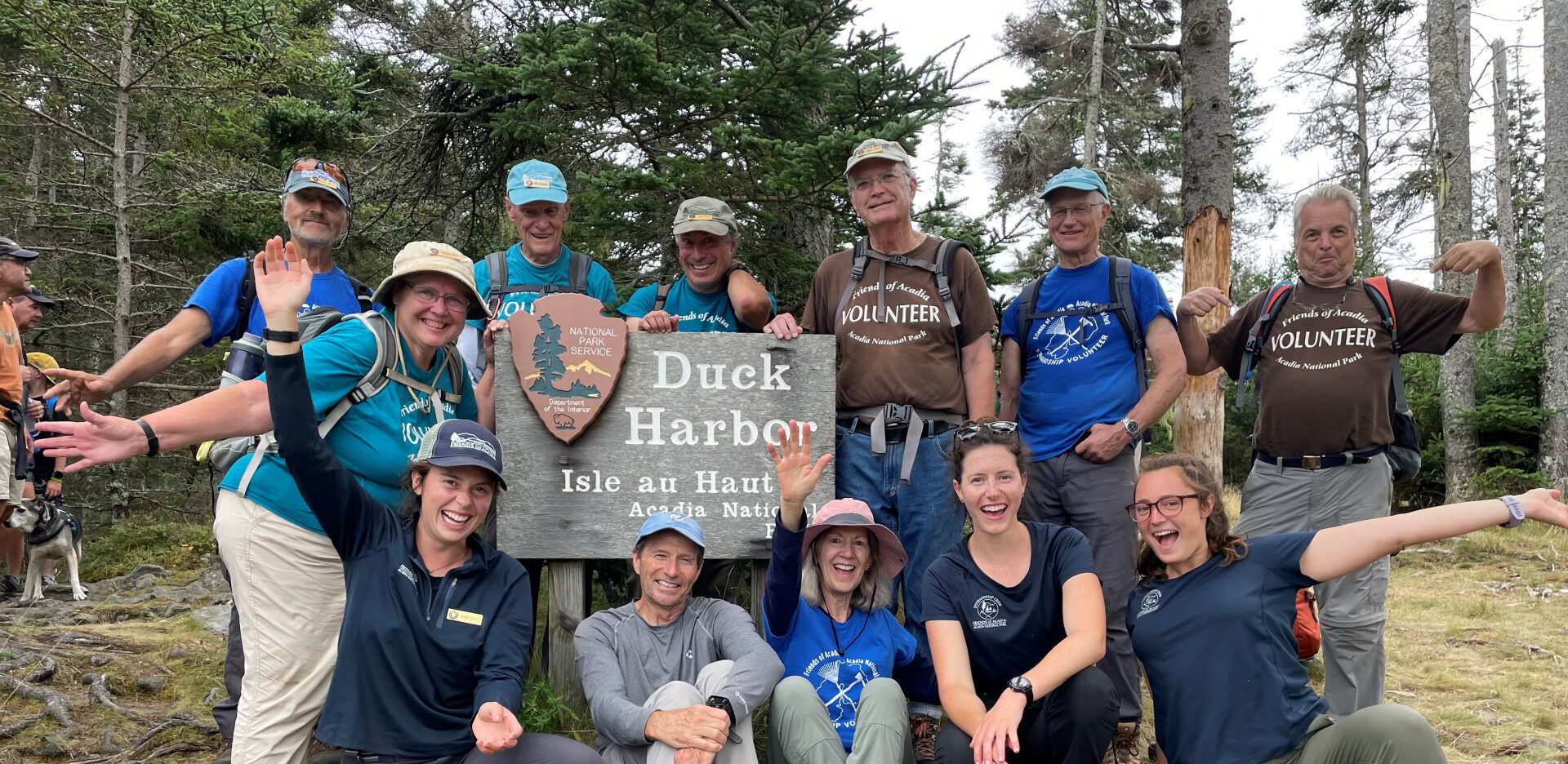
Friends of Acadia also pledged to establish a substantial base of volunteer worker and to create a private endowment for the maintenance of the work done on those roads and trails.
Anyone who has spent time in Acadia in the past few years likely has noticed some of the changes and improvements. The Jesup Path, accessible from Sieur de Monts, the Great Meadow Loop or Hemlock Road, now features more than 2,000 feet if boardwalk through birch forest, elevated above grassy wetland. The Canada Cliffs Trail has been revamped and fortified with 460 feet of hardened raised tread and the resetting of adding of nearly 200 stone steps. Work from last summer can also be seen on the Schiff Path, the Emery Path and Valley Trail.
Projects this season are similarly ambitious as crew work to bring old abandoned paths back to life.
According to Chris Barter, park ranger and trail crew leader, the 1940s and ‘50s marked a shift in local interest in trail and carriage roads. The network languished after the Great Fire of 1947.
“After the fire, you couldn’t even find them – it was just burnt landscape,” he said. Unmaintained trails started to disappear from maps. Barter estimates that about 100 trails were closed.
Now, part of the work involves deciding which trails are most practical to restore.
“There are ghosts [remnants of paths] everywhere,” he says. “If we were to open them all it would just be too redundant.”
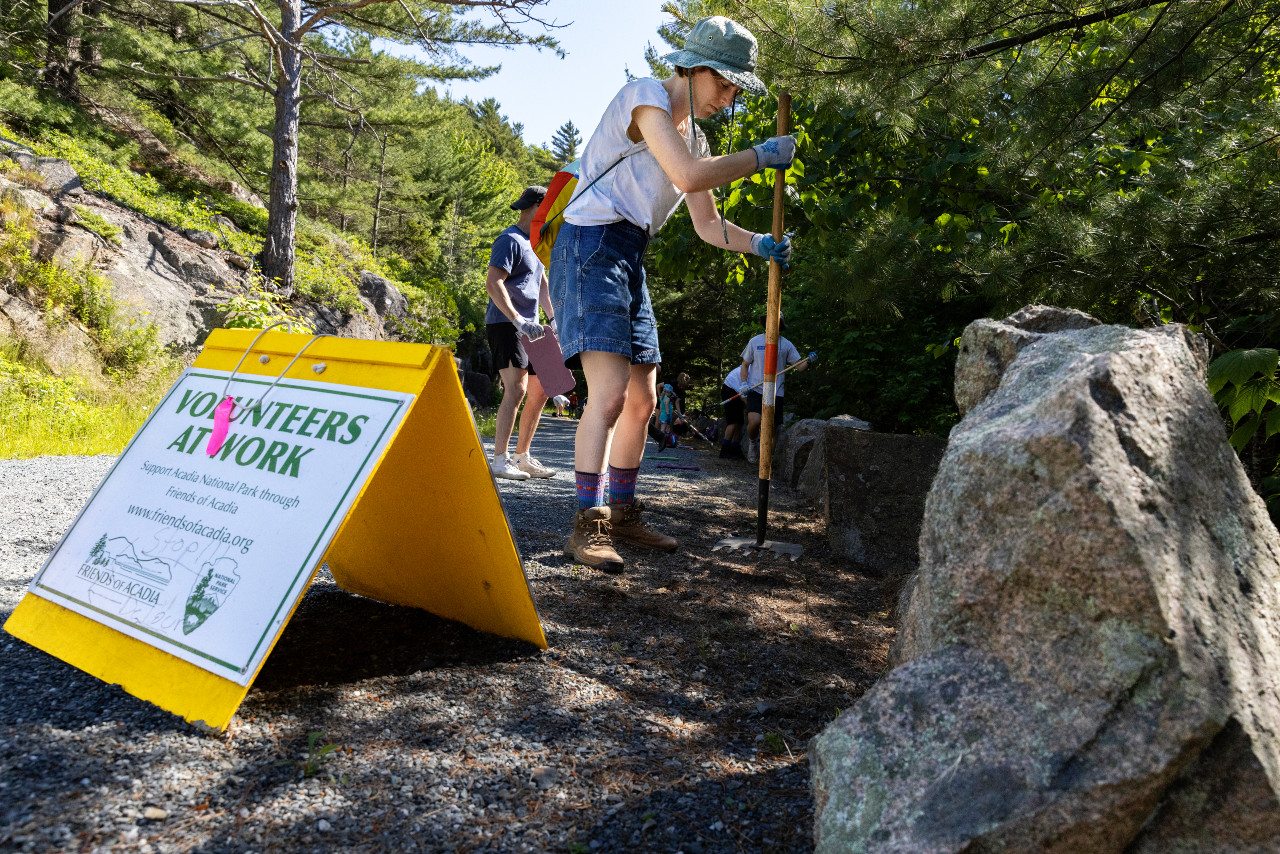
The emphasis now is on sustainability. Crews are working with keen attention to details of how to avoid erosion and potential damage to wetlands.
“We’re using gravel so that it will last – hopefully hundreds of years,” Barter said.
In a marked departure from the days of the early rusticators when only the very wealthy could invest in the park, it’s now a shared domain, said Stephanie Clement, who has been a coordinator for Friends of Acadia for 14 years.
“It’s not just the big names anymore. A lot of smaller donors wanted to give because they love to use them,” she said. “I think trails are starting to come back into fashion.”