The sun made its long-awaited appearance this Monday! After a foggy week of rest, the raptors are on the move again through clear skies with the winds at their backs. A cool northern breeze seems to have inspired some of the later migrants to set south. This week was a bit chillier on top of Cadillac Mountain, and we spotted a few of the first Red-Tailed Hawks on their migration.
Maine’s largest bird of prey, Bald Eagles, were flying over Hawk Watch nearly all week. They dwarf all the other raptors over Cadillac with their nearly 7-foot wingspans! Bald Eagles are opportunistic, so they eat whatever prey is available to them. Northern Bald Eagles, which we see migrating through Acadia, often live near water and mostly eat fish. They don’t tend to migrate until late fall when lakes and rivers start to freeze over, restricting their access to food. This makes sense with what we’ve seen so far; cooling temperatures have pushed more Bald Eagles south as Autumn progresses in Acadia.
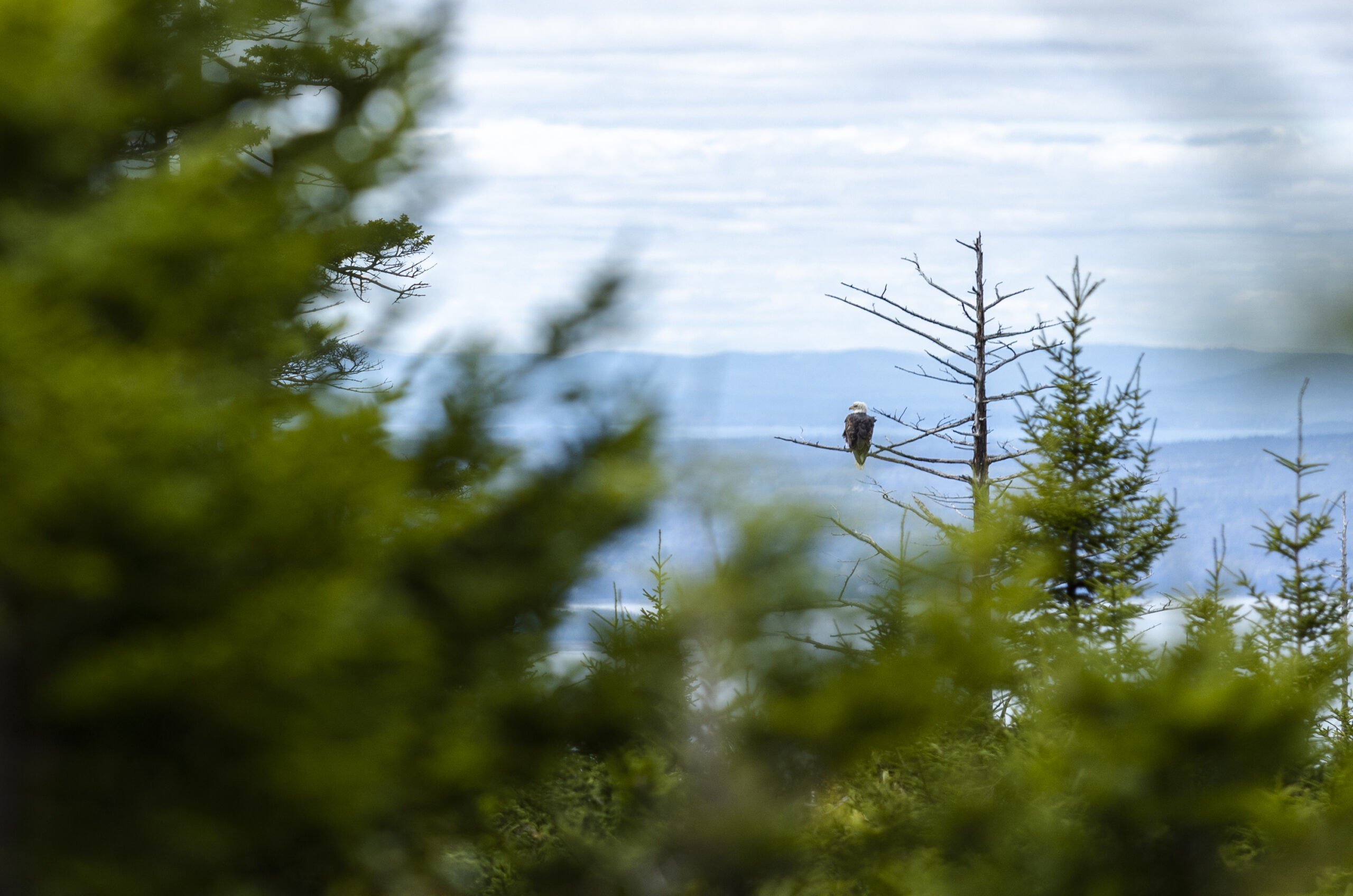
A bald eagle perches on a dead tree near the summit of Bernard Mountain in 2022. (Photo by Lily LaRegina/Friends of Acadia)
Raptors typically migrate individually, but we saw a group of four adult Bald Eagles flying over the Hawk Watch site together on Monday. They were likely taking advantage of the good weather after such a rainy week. We heard them before we saw them, loudly whistling at each other as they soared away. Just when it seemed like the sky couldn’t get any more crowded, the four Eagles attracted a territorial, local Peregrine Falcon to fly through the group and attempt an attack. When the Peregrine grew weary of the Eagles, it continued flying north and eventually dove towards a local Turkey Vulture over Frenchman’s Bay.
Also on the move this week were the Turkey Vultures. Although they aren’t true raptors, their migratory behavior is still recorded on Hawk Count because of their important role as carrion feeders. By consuming dead animals, they prevent the spread of diseases and harmful bacteria, so they’re key in sustaining ecosystem health. Interestingly, though, Turkey Vultures weren’t always included in the Cadillac Mountain Hawk Count, because when the program first began, no Turkey Vultures were migrating as far North as Acadia.
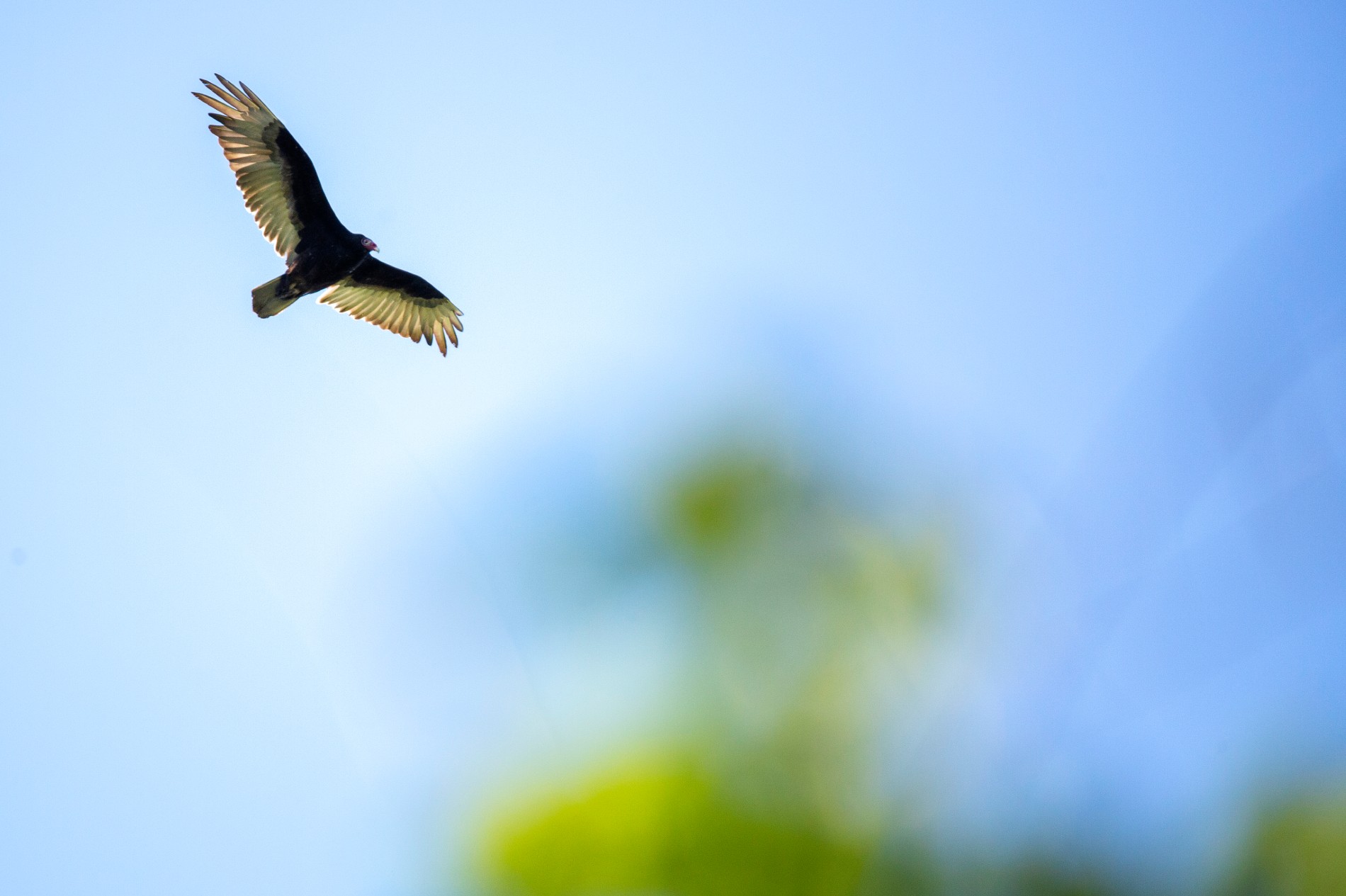
Didn’t capture photos this season, but here’s a turkey vulture soaring over Acadia a few years ago. (Photo by Ashley L. Conti/Friends of Acadia)
Since the early 2000s, Turkey Vultures have been spotted migrating south over Cadillac Mountain, and some breeding pairs have even been found as far north as Quebec. Their shifting range and breeding presence are among the many environmental changes that we’ve been able to track as a result of Hawk Watch!
Though my time with the raptors is ending, migration season is far from over, which is made clear by the well over 300 migrating raptors we spotted this week. Volunteers will continue to monitor the site until early November, and their continued efforts will contribute greatly to this fantastic, collaborative, community science project. You can continue to stay up to date with Fall migration on the Hawk Count website for the rest of this season and in years to come! It’s been an amazing experience to spend my days observing the raptors, both local and migratory.
Contributing to the public’s knowledge about the behavior and importance of these winged apex predators has only grown my appreciation for birds of prey and Acadia’s amazingly interconnected ecosystems.
Just as fantastic has been the wealth of community and perspectives I’ve encountered as a result of Acadia’s interpretive programs! There’s truly no replacement for being immersed in natural resources with people from all different places, backgrounds, and enthusiasms. Thank you to all the collaborators, partners, organizations, and visitors who granted me this opportunity and for shaping my wonderful season at Acadia National Park!
 Join
Join Donate
 Acadia National Park