Acadia Trails Forever:
Bringing Acadia’s Trails Back to Life


In 1999, Friends of Acadia and Acadia National Park undertook a $13 million campaign to restore Acadia’s trail system and establish the first privately endowed trail system in national park history.

BY SHANNON BRYAN

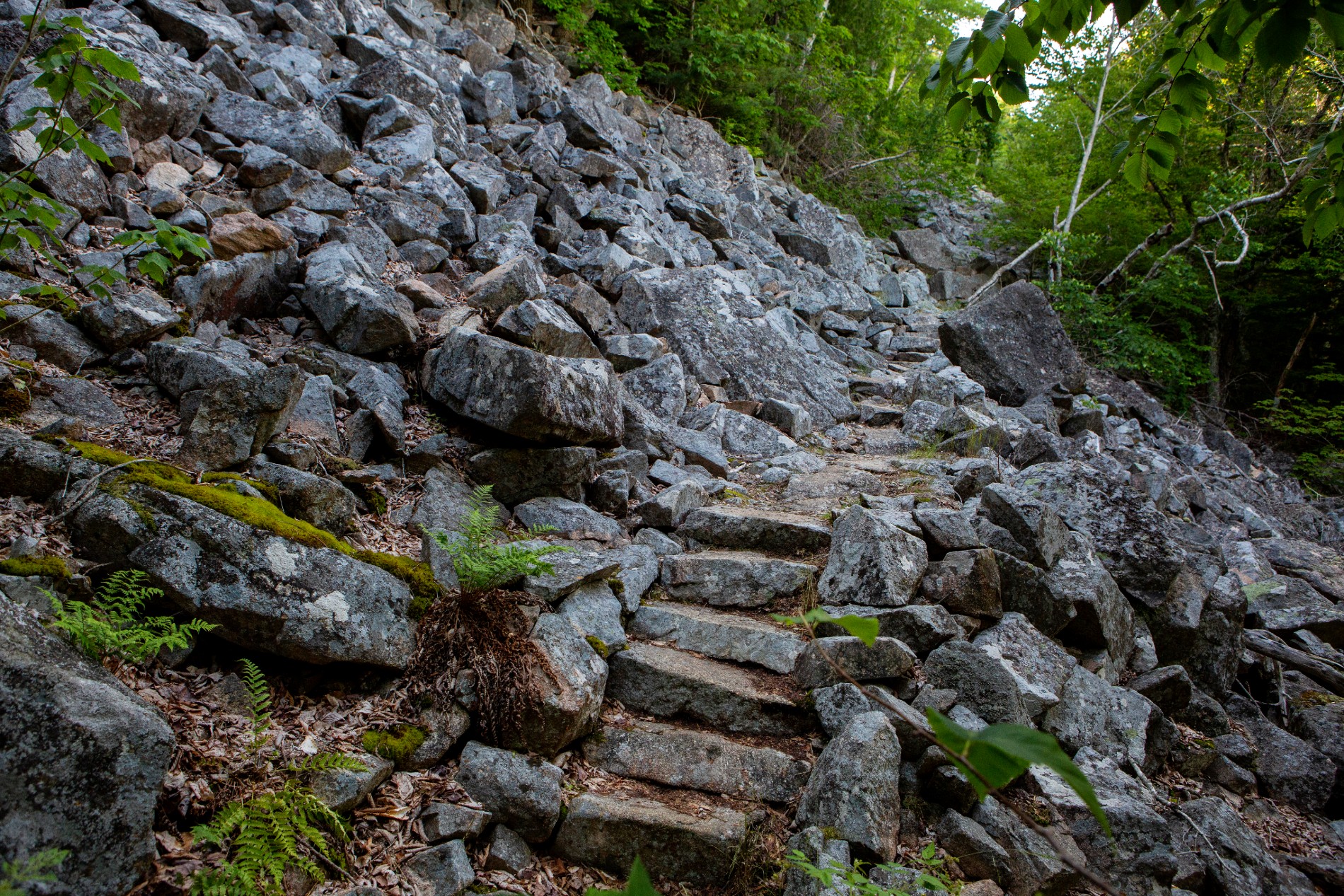
Acadia’s Perpendicular Trail feels like a lucky rock-spilling accident. Amid a massive tumble of granite blocks, artfully positioned boulders and rock steps—more than 300 of them—welcome hikers along the gratifyingly steep route up Mansell Mountain.

Well blended on the talus slope, the trail’s granite steps look so right in their place, as though the stones themselves plotted the route. Higher up, the trail enters the woods, stealing by lichen-covered rockface, over a mountain stream, and past moss-topped glacial erratics seemingly left there by ancient giants.

Although trails like this feel almost naturally occurring, they’re a testament to expert human hands.

Maintaining trails that are so deeply historied and intertwined with the landscape, while also ensuring they stand up to time, weather, and increasing boot traffic, is an art form and a balancing act for the park.

“We want the park to stay the living history that it is, but also accommodate today’s visitation,” said Dave Schlag, Acadia National Park’s trails foreman. “Why was the trail here in the beginning, and why are we rebuilding it? We want to honor those parts of it.”

This nuanced work takes resources: Dedicated staff with trail-building expertise and institutional knowledge; a cadre of extra hands to assist crews in tackling an array of projects and upkeep; and reliable annual funding that supports consistent maintenance and heavier lifts when needed, materials and equipment included.

Today’s approximately 158 miles of well-maintained trails—on Mount Desert Island, the Schoodic Peninsula, and Isle au Haut—are also a testament to the collaborative effort of an interdivisional team that includes staff well-versed in the park’s wildlife, resource management, and cultural history. Together, they consider historic and environmental factors when assessing when and how any trail work will be completed.

But rewind a handful of decades, and Acadia’s trails told a very different story.

Granite steps lead the way up the Perpendicular Trail on Mansell Mountain. (Ashley L. Conti/Friends of Acadia)

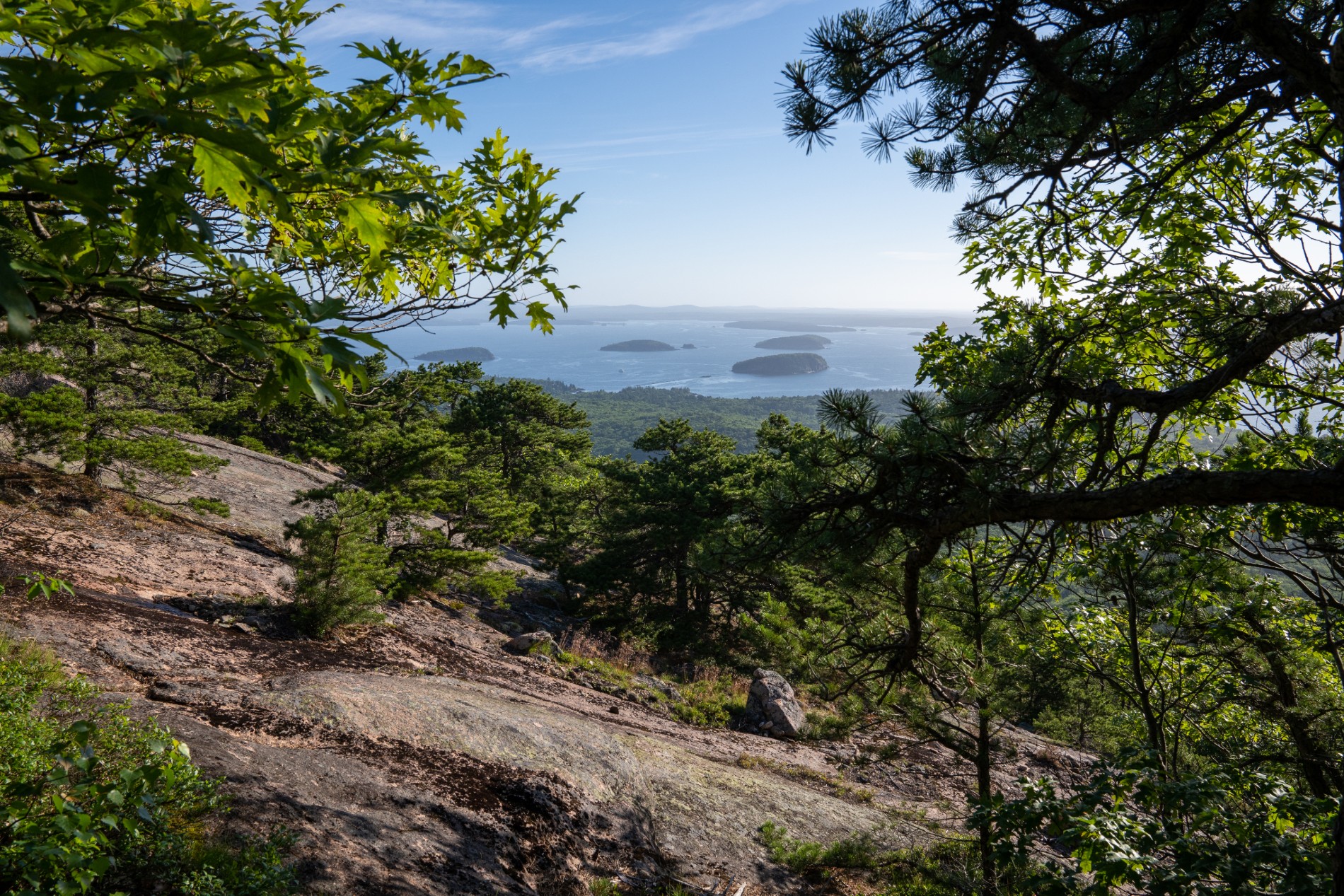
A view of the Porcupine Islands from the Schiff Path on Dorr Mountain. (Emma Forthofer/Friends of Acadia)

Languishing Trails

Acadia’s trail system evolved over the course of centuries. The Wabanaki created early trails on this land while hunting, fishing, gathering, and trading. Beginning in the 1880s, before Sieur de Monts National Monument was established, Village Improvement Associations in Bar Harbor, Seal Harbor, and Northeast Harbor built and maintained trails, as did the Civilian Conservation Corps (CCC) a handful of decades later.

But the 1940s and 1950s marked a shift in focus away from the park’s trails and carriage roads.

The Mount Desert Island Fire of 1947 burned 10,000 acres of park land, forcing park leadership to dedicate a great deal of their budget to addressing the devastation left behind.

That shift, coupled with decreased visitation, led to the abandonment of around 100 miles of trail in the early
1950s. Prioritization of automobiles and inconsistent funding through the 1960s and 1970s only exacerbated the funding shortages, and Acadia’s trails, like the carriage roads, fell into disrepair.

Gary Stellpflug, retired Acadia National Park trails foreman, first started in the park in 1974 as a seasonal. “When I got there, [the trail crew] was minimalist,” he said. “You could get all of them into a crew cab.”

By the 1980s, Acadia’s trails and carriage roads were showing serious signs of neglect.

Park staff maintained what they could, but in the 1980s, the trail crew dropped down to only one permanent position—Stellpflug—and a few seasonals each summer. They did their best to remove fallen trees, blaze trails, and trim back vegetation, but didn’t have the resources for more. Seasonal crew sizes fluctuated greatly.

“One year I had one guy,” Stellpflug said. “It was me and one guy.”

Those work-study seasonals were typically brand new each year and their seasons didn’t last very long; as students, they needed to hustle back to school come August. They were limited in what they could accomplish.

“It was a trail crew, but it was nothing like today,” Stellpflug said.

“The trail system was in really sad shape. It was so dilapidated,” said Chris Barter, recently retired trail crew supervisor who started in Acadia National Park in 1989 as a seasonal trail worker under Stellpflug. “It was kind of like visiting ruins. There was all this old stonework that had been built, some of it 100 years earlier, which was in
varying states of falling apart.”

“On all the signature stone paths we have, like on the east face of Dorr Mountain, there were loose steps or whole staircases piled at the bottom,” he said. “There were collapsed walls. And anything that had a gravel surface on it, it was pretty much gone.”

When hiking Acadia’s trails in the 1990s, Barter said, you could spy remnants of old routes and stonework.

“There were these isolated pieces that were perfectly intact, and you could really see what the whole system had been like,” he said. “But those were really the exception.”

Witnessing the troubled state of Acadia’s trails, volunteer groups stepped in to assist with trail maintenance. In 1986, Friends of Acadia was officially formed as an all-volunteer organization dedicated to restoring and preserving Acadia National Park.

But despite ardent efforts by Acadia National Park’s small crew and dedicated volunteers, the park simply did not have the resources and staff to keep up with continuing deterioration. In August 1991, Backpacker magazine included Acadia’s trail system on a list of the most endangered trails in the country, illustrating the story with a photo of Jesup Path so overgrown with vegetation that the trail is invisible under clumps of weeping grasses.

“It was no problem for me to walk around the park and identify projects,” Stellpflug said. “I couldn’t go more than half an hour and say, ‘God, we’ve got to fix that.’”

Acadia needed a game-changing solution.
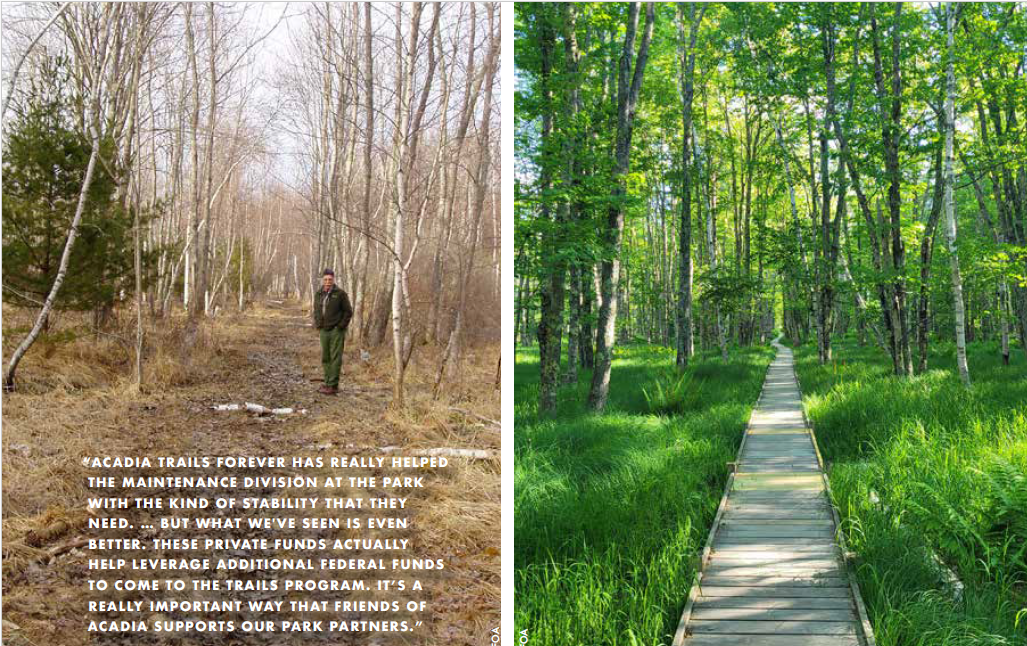
Jesup Path before and after renovation.
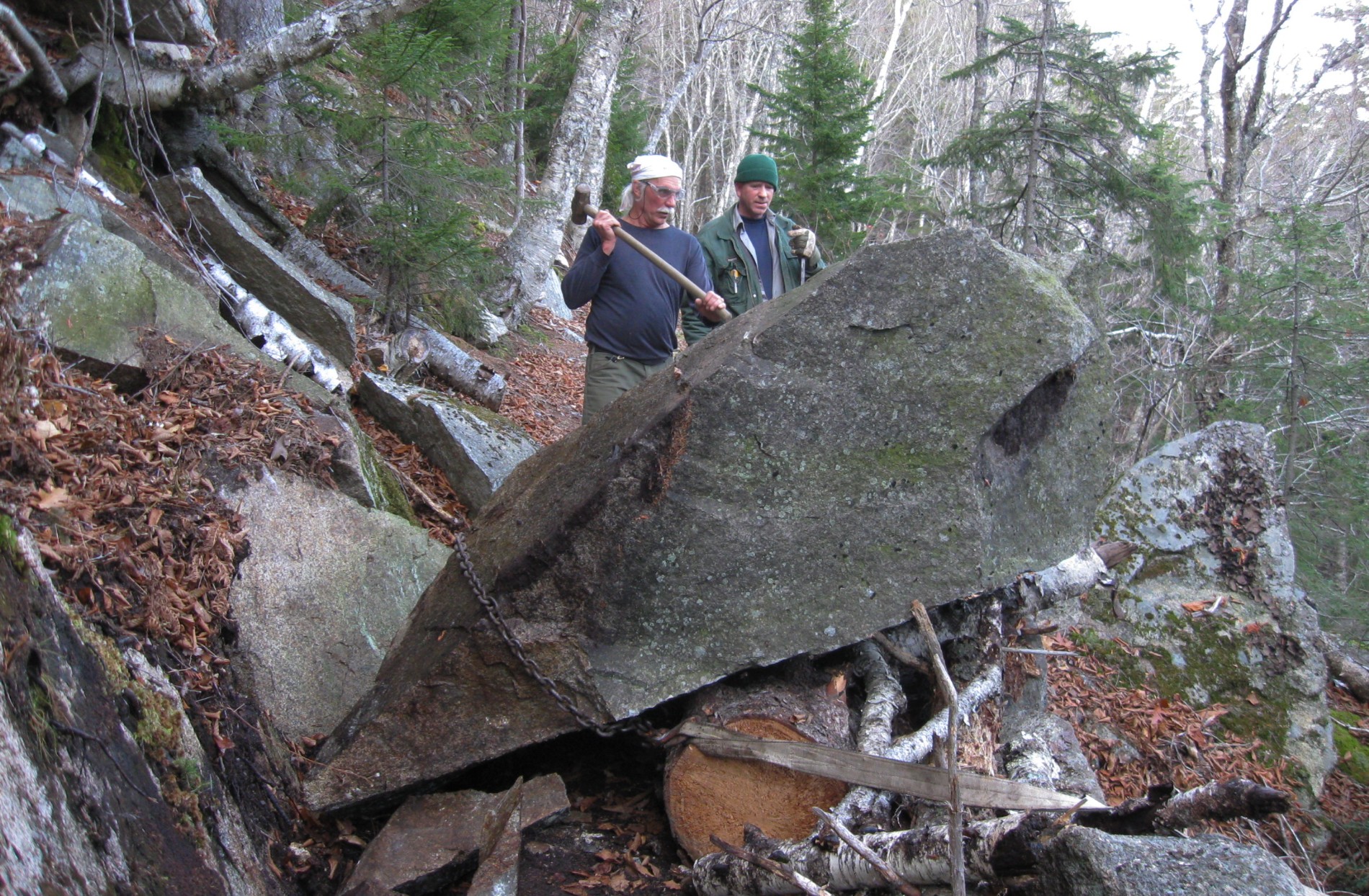
Perpendicular Trail. (NPS Photo)
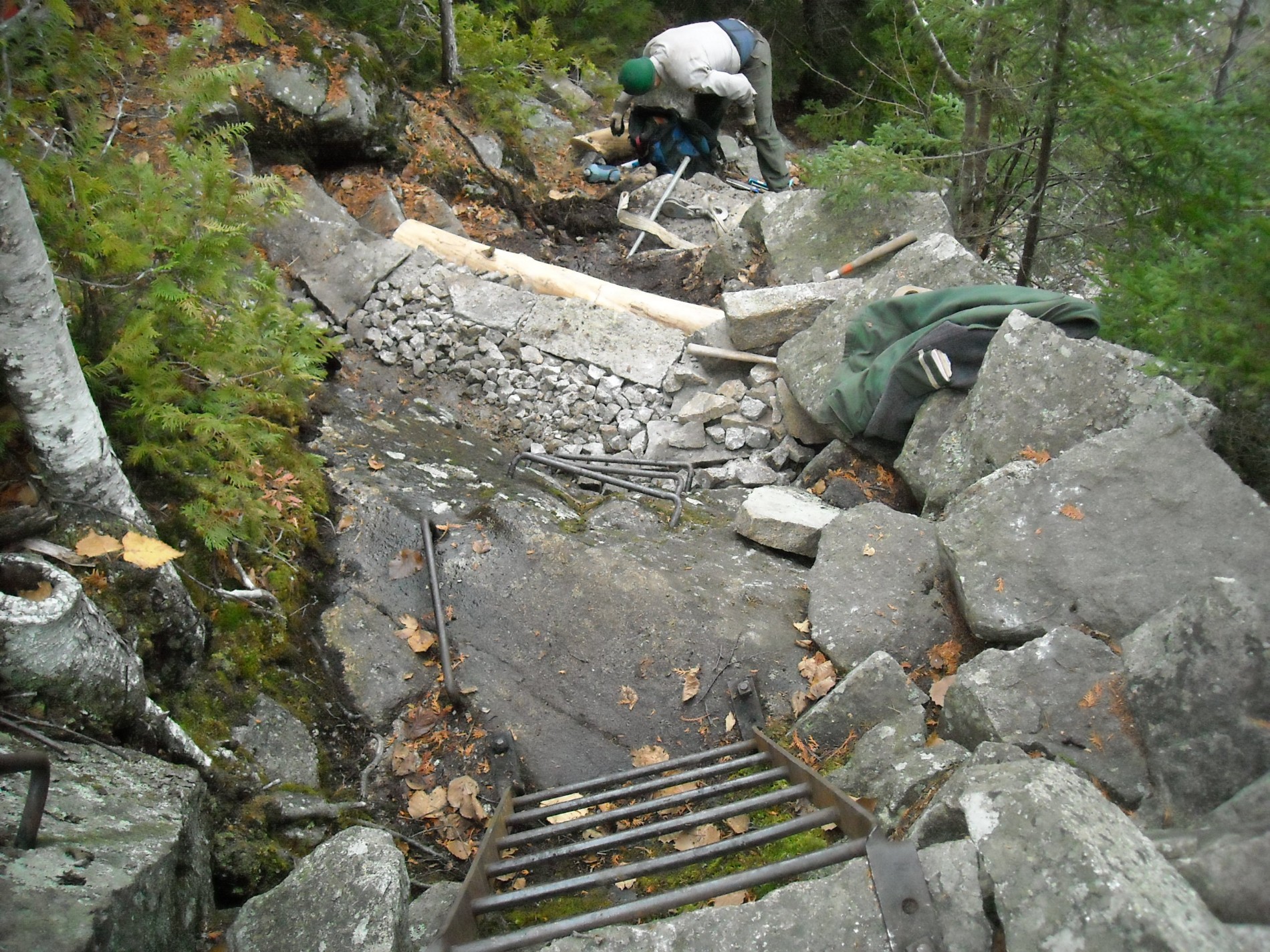
Perpendicular Trail. (NPS Photo)

Acadia Trails Forever

Inspired by the success of the carriage roads campaign, Friends of Acadia launched a second campaign to address the deteriorating trails.

The mission was clear: restore Acadia’s trail system to the highest ecological and aesthetic standards and the most exacting historical specifications. It was a tall order, but in 1999, Friends of Acadia and Acadia National Park undertook a $13 million campaign called Acadia Trails Forever.

This campaign aimed to fund the rehabilitation of 130 miles of existing trails, reopen some abandoned trails, and construct new village connector trails to link town centers with the park. Similar to the funding approach with the carriage roads, the campaign also sought to establish an endowment to maintain the restored trail network in perpetuity.

The arrangement, which then-Secretary of the Interior Bruce Babbitt called “a landmark initiative,” included $9 million to be raised by Friends of Acadia (the equivalent of close to $18 million today) and $4 million in federal funds, the majority of which came from park entrance fees.

The campaign reached its goal in just under one year, and Acadia became the first privately endowed trail system in national park history.

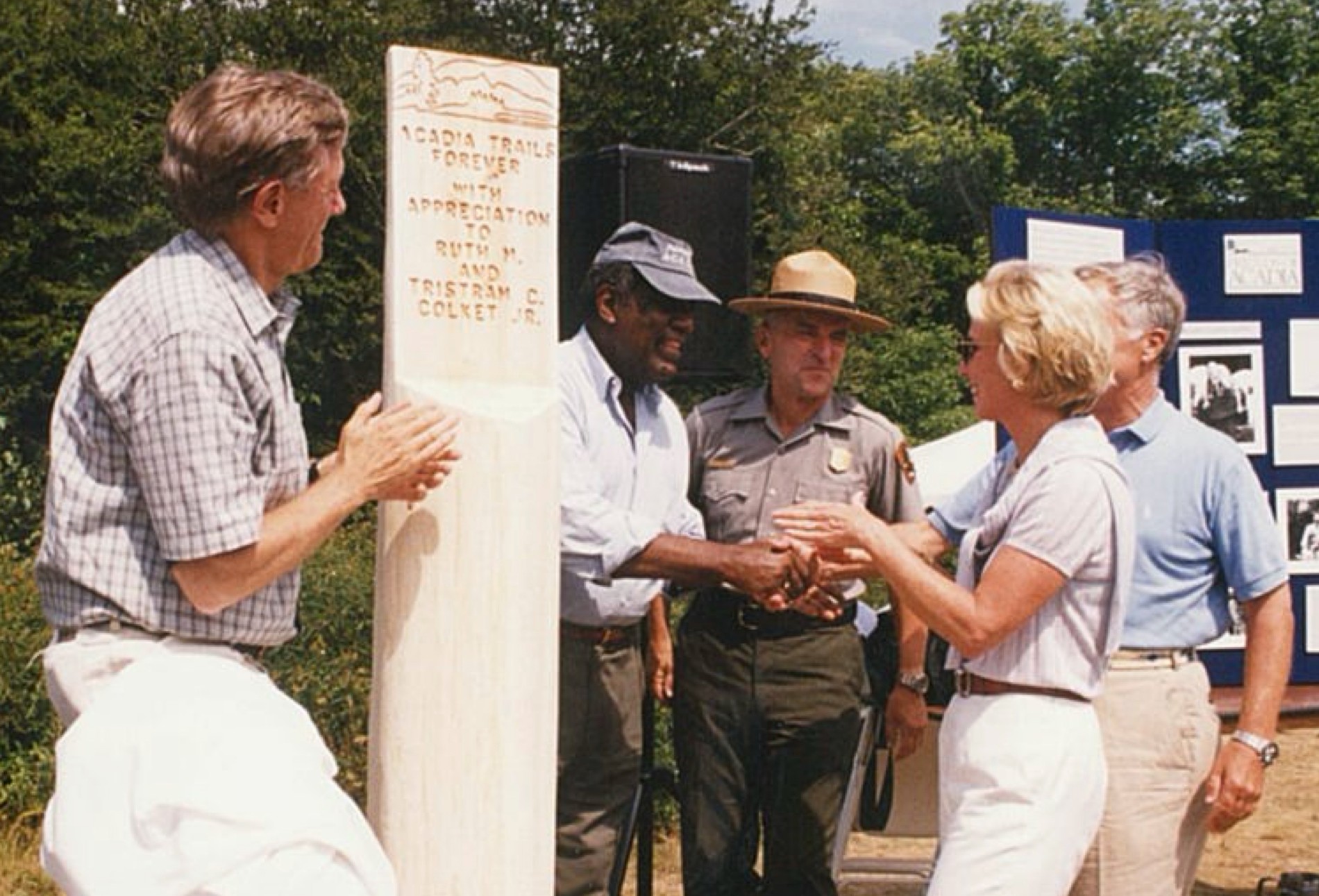
Much of the success of the campaign is a credit to Ruth and Tris Colket, summer residents of Bar Harbor, who pledged a lead gift of $5 million, including $2 million outright and a $3 million challenge grant. The challenge spurred an outpouring of community support. Of the 1,000 contributions, 60 percent gave gifts ranging from $5 to $100.

“A lot of smaller donors wanted to give because they love to use the trails,” said Stephanie Clement, Friends of Acadia’s vice president of conservation, back in 2011. “I think trails are starting to come back into fashion.”

The Acadia Trails Forever model has since been adapted by other national parks and their partners to ensure trails have the consistent support they need to stay well maintained.

Ruth and Tristram Colket provided a $5 million foundational gift for Acadia Trails forever, helping complete the $9 million private fundraising goal for Acadia Trails Forever two years ahead of schedule in July 2000. (Friends of Acadia)


Rebuilding the Trails

In Acadia, those first years following the campaign saw an impressive amount of work and skill development.

“The builders that built so much of Acadia’s original work had a very specialized skill set,” said Barter. “That had really faded from the culture at large—people who could do dry stone masonry and cut stones, people who knew how to move big, heavy objects around,” especially on trails where mechanized equipment couldn’t go.

After decades of thin staffing, the park was able to hire a robust crew and re-establish project teams with supervisors to efficiently manage the work. They began rebuilding skills and know-how that had been lost over the decades.

“We really set out to learn those specialized skills and have a teaching apparatus in place for people as they came in to learn how to do what we did safely and effectively,” Barter added.

They hosted a trails conference in Bar Harbor, which Friends of Acadia helped sponsor and where they met and learned from expert trail builders from around the country.

Working with the Olmsted Center for Landscape Preservation, the park created the Acadia Trails Treatment Plan, a guide to restoring and preserving Acadia’s trail system in line with the “pathmaker” construction styles of the Civilian Conservation Corps (CCC) and village improvement societies.

Stellpflug left Acadia National Park for a spell in 1991. He returned in 1999 to a totally different program.

“There’s money, there are trucks, there are people,” he said, remembering what it felt like to return. “The program was more reliable. Friends of Acadia certainly had stabilized things. For a couple of years, our government funding fell through, but the endowment would kick in, so you could maintain a viable program and keep people coming back.”

Within the first decade following the Acadia Trails Forever campaign, more than 3,000 steps, 16,760 square feet of walls, and 259 culverts were repaired or constructed as trails like Schiff Path, Valley Trail, and Emery Path were restored. The overgrown Jesup Path was revamped with a more than 2,000-foot boardwalk, guiding visitors through birch forest and above grassy wetlands. A sturdy new boardwalk was built on the western portion of Jordan Pond Path. Five miles of village connector trails were built and 1.8 miles of abandoned trails reopened.

With a consistent program and returning crews, institutional knowledge grew.

In the decades since the trail rehabilitation began, work has continued in earnest, with major rehabilitation projects focusing on the Perpendicular Trail in 2007, the Valley Trail in 2010 and 2017 through 2019. In recent years, trail crews have built new stone stairs on the Bubbles Divide Trail, repaired storm washouts on Ocean Path, and worked with volunteers to rebuild boardwalks and bridges on Hemlock Path and Hunter’s Beach Trail.

Valley Trail rehab 2010. (NPS photo)

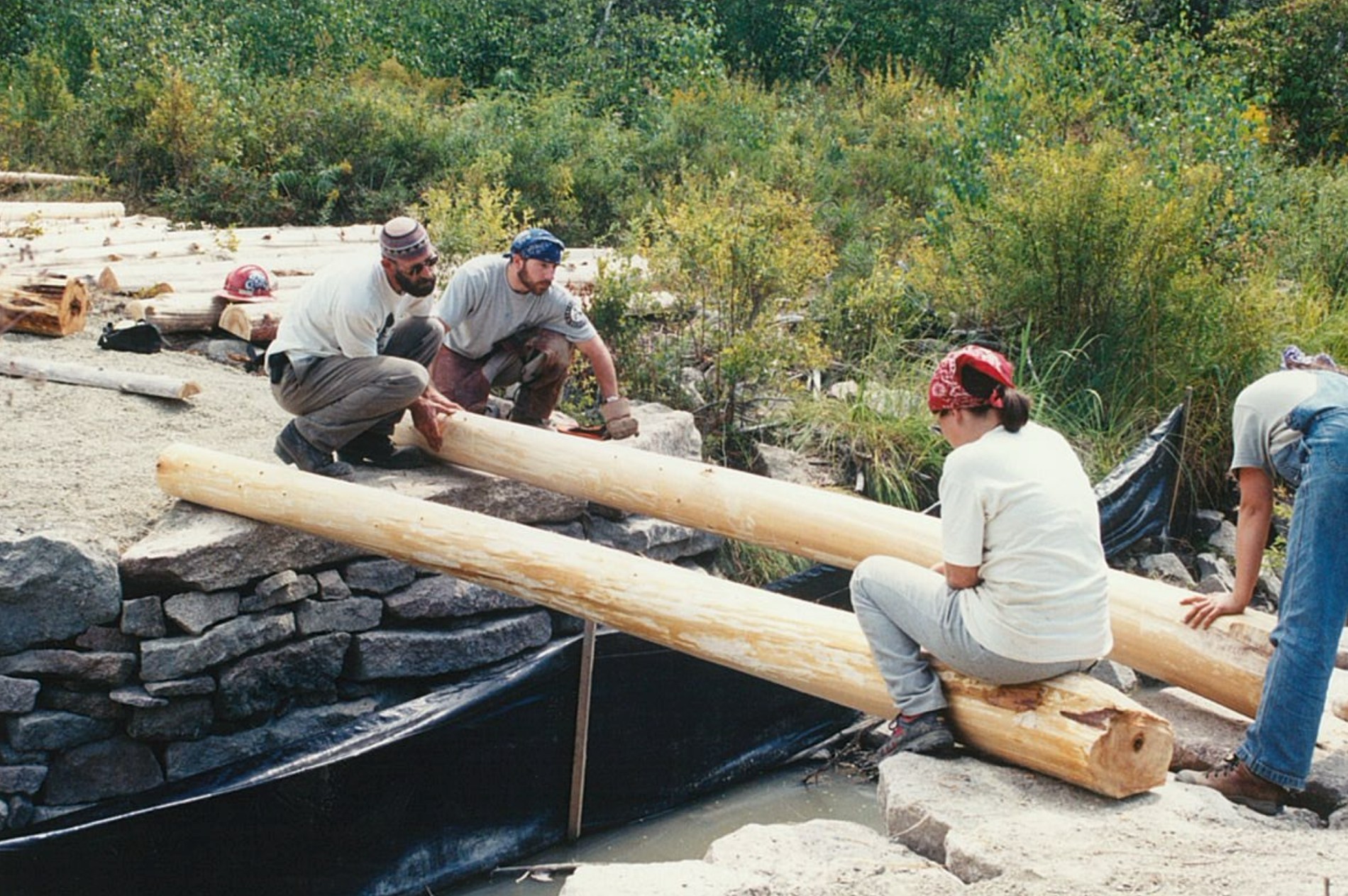
Maine Conservation Corps works to build the bridge on the Great Meadow Loop Trail in Acadia National Park. (Friends of Acadia)

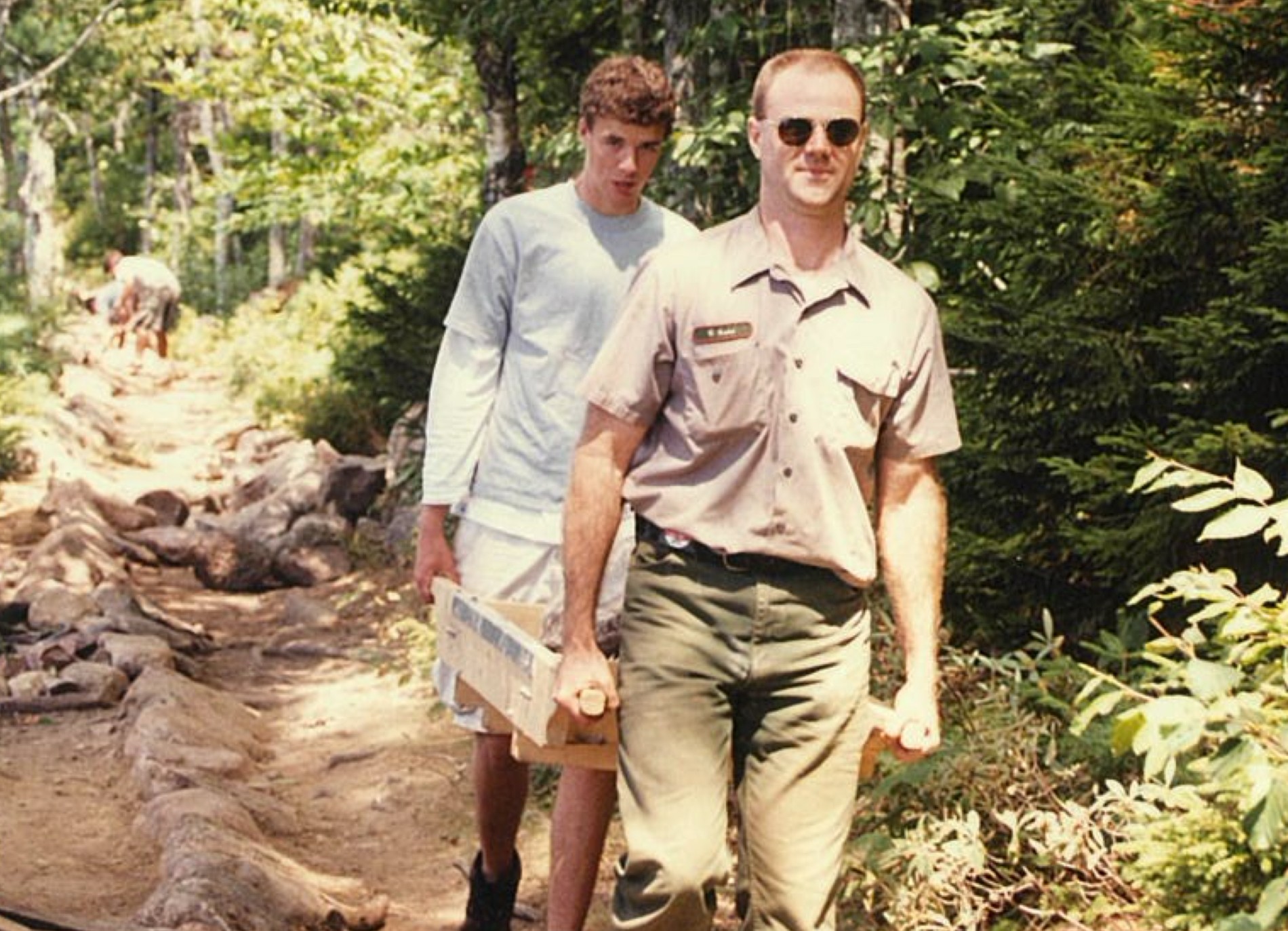
Christian Barter (right) moves large rocks while working on trails in Acadia National Park. (Friends of Acadia)


Ghost Trails Brought Back to Life

Among the miles of trails that have been given new life over the years are some that were nearly lost altogether. At its peak, Acadia’s hiking trail system contained about 230 miles of trail. In the late 1990s, it was estimated that approximately 100 miles of trail had been abandoned, meaning they were no longer marked, mapped, or maintained.

Reviving some of them was a goal of the Acadia Trails Forever initiative.

Trails were abandoned for a slew of reasons. Damage caused by the fire of 1947 on Mount Desert Island buried many. Recreational hiking in Acadia dwindled. As the forest grew during the decades that followed, those paths became increasingly indiscernible, existing only as memories on out-of-date maps. Lean resources kept the park’s attention on more popular trails.

“We explored miles of abandoned trail in this park to find what’s out there,” said Keith Johnston, Acadia’s current chief of facility operations and maintenance who was a trail crew leader in the early 2000s.

All of Acadia’s trails—including abandoned trails—are listed in the Hiking Trails Management Plan, published in 2002. The plan served as a guidebook for park managers as they determined which trails within Acadia National Park would be rehabilitated and maintained.

An evaluation rubric assessed each trail’s cultural and natural resources significance, connection to communities and neighborhoods, as well as visitor experience criteria, helping prioritize the work.

They also used visitor use data, collected over multiple seasons by Resource Specialist Charlie Jacobi, who retired from Acadia in 2017 after 33 years.

Among those forgotten trails was Homans Path, located on the east side of Dorr Mountain. It was built around 1916 and named for Eliza Homans in honor of her donations of large tracts of land that later became part of Acadia National Park. By 1941, it disappeared from maps.

Decades later, Homans was largely unrecognizable. The only remnants of the original trail were a set of stone stairs that stopped in the middle of an open ledge and didn’t connect to another path or lead to the summit of Dorr.

Rehabilitating every abandoned trail wasn’t the park’s goal. In some cases, existing trails were already meeting the needs of the unmarked one (connecting one trail to another or providing walkable access from town into the park). In others, it’s a simple matter of budget.

“We can’t afford to maintain what we have, never mind add to the inventory,” said Johnston. “We have always struggled to have enough resources to take care of the things that are already under our purview.”

For Homans Path, its cultural history and location landed it near the top of the evaluation list.

Homans Path was put back on the map thanks to work completed in 2002. It connects to Emery Path, and at its base, a gravel-surfaced segment was constructed to meet with an open section of Hemlock Road, near the Jesup Path. Friends of Acadia volunteers assisted park crews with the work.

“All told, in about twenty weeks of work, Acadia National Park put one of its most unique and highly crafted trails back on the map,” said Johnston at the time, who was then the trail crew supervisor. “It’s only appropriate that this trail, named for one who donated the first lands that were to become Acadia, is preserved, maintained, and open for all to enjoy.”

Another trail brought back from the brink is the previously abandoned Canada Cliffs Trail, which connects with Valley Trail and Beech Cliff Trail and provides access to Echo Lake beach.

Work on this trail was completed in 2010, and at the parking area entrance to Canada Cliffs, trail crews installed a set of stairs which had first been used as temporary stairs at Sand Beach while work was being done there. In a forward-looking move, crews prefabbed those stairs so they could be “recycled” at Canada Cliffs once the Sand Beach work was complete.

“There is a special joy in reopening an abandoned trail. It’s a bit like discovering Machu Picchu,” said Barter. “There were trails that very few people even knew were there.”

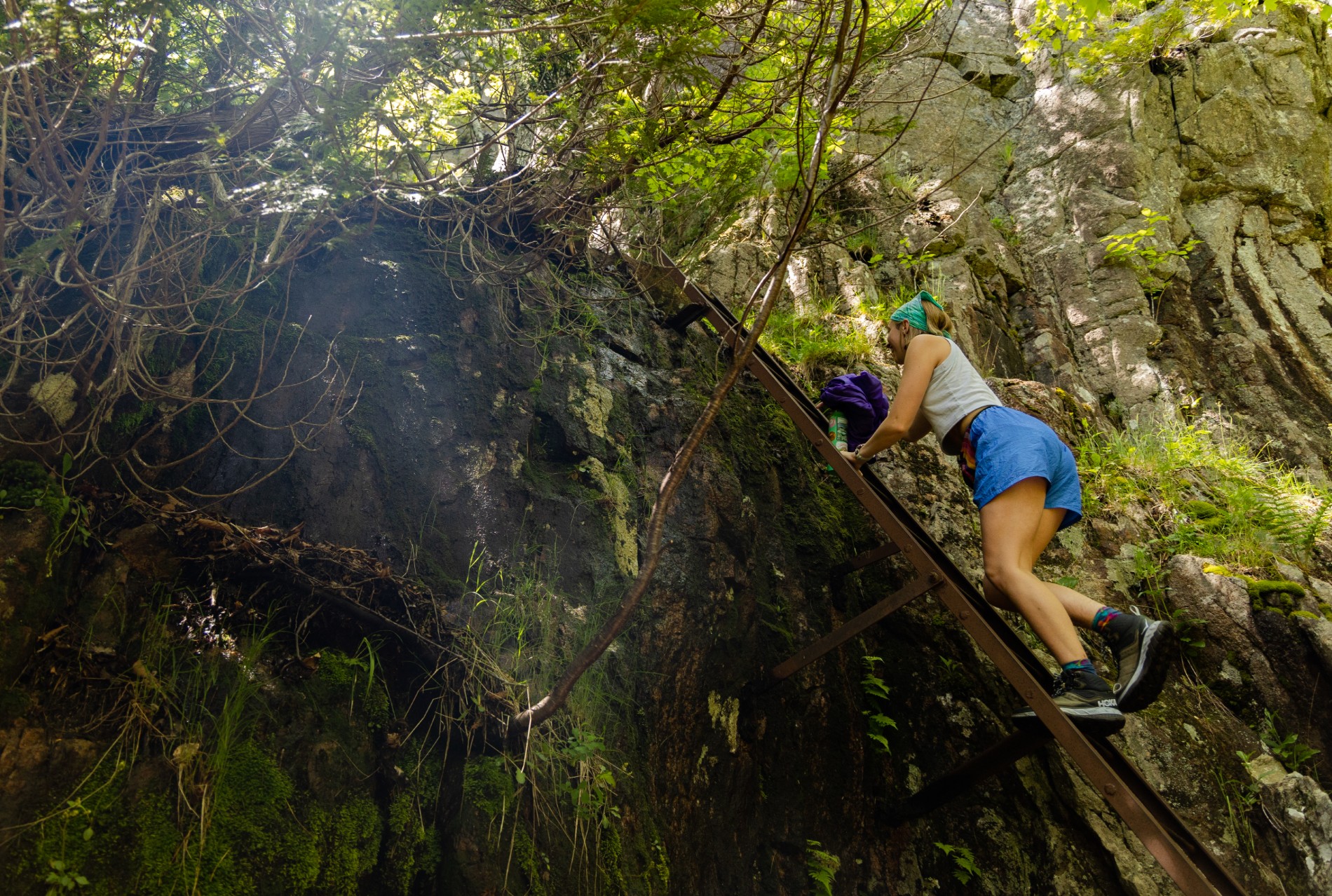
Maria Siewers of Bowling Green, KY, makes her way up the ladders on Canada Cliffs Trail. (Sam Mallon/Friends of Acadia)

Village Connector Trails

Village Connector Trails re-establish the long tradition of walking or biking into Acadia National Park from towns and neighborhoods.

Outside park boundaries, these connector trails are made possible thanks to the generosity of local landowners who agree to allow pathways to cross their properties. They enhance the character and walkability of Mount Desert Island’s villages, and they reduce the number of cars on park roads and at trailheads.

Connector trails complement the Island Explorer buses, providing another option to get into the park, out into quiet landscapes, or to in-town destinations.

Among the goals of the Acadia Trails Forever campaign was to establish five village connector trails. The Great Meadow Loop was the first and has since become an appreciated path for hikers and birdwatchers alike. Then came Western Mountain Connector, connecting the end of Lurvey Spring Road to Western Mountain and Mill Field Roads—and is open to bikes and horses as well. After that were the Giant Slide Trail, Schooner Head Path, and Duck Brook Connector (“a short gem of a hike in its own right,” as noted in the 2011 park trail report).

The work of bringing those trails to life—coordinating with landowners, establishing agreements, and overseeing the building of the trails—was led by Friends of Acadia’s Marla O’Byrne and, later, Terry Begley.

Ashley Conti hikes on the Seaside Path, which connects the Jordan Pond area to Seal Harbor beach and village. (Photo by Will Newton/Friends of Acadia)

Acadia Trails Future

Every spring, the park’s trail crew hikes each trail in the park to identify issues that may have come about since the previous season. It’s an annual routine they call “cruising.” Whether it’s a downed tree over the trail, rotting bogwalk, faded blazes, or eroded terrain, issues are gathered up and prioritized for repair as part of the park’s ongoing trail maintenance.

Trail maintenance is an ever-cycling affair, but reliable funding enables early attention to issues while they’re less costly to repair and enables park managers to plan ahead and prioritize work years into the future.

“Acadia Trails Forever has really helped the maintenance division at the park with the kind of stability that they need,” Clement said. “There will always be a trails program, even if all federal funding were to go away. But what we’ve seen is even better.

These private funds actually help leverage additional federal funds to come to the trails program, which is great. It’s a really important way that Friends of Acadia supports our park partners.”

The Acadia Trails Forever campaign launched 27 years ago at a time when the park sorely needed it. Those who loved Acadia answered that call—and the difference they made can be seen and felt underfoot across every trail in the park today.

“I’m still floored when I think about kind of the conservation legacy that the Colkets and others who are part of the trails campaign provided to future generations,” said Clement. “What a gift it has been to all park visitors to make sure that our trails are in good shape moving forward.”

Today’s visitors might not believe the monumental work that went into restoring Acadia’s trails. In many ways, that is the point.

The stone steps, coping stones, drainage, walls, and carefully shaped paths now feel as though they have always belonged there—a testament to the people who planned, funded, volunteered, and worked to rehabilitate mile after historic mile.

“We really believed, and the trail crew still does, that what we were doing mattered,” Barter said. “People can hike this trail and have this experience in a way that they just couldn’t have if we didn’t do the work that we did. But it’s also about preserving something that’s going to last.”

For Barter, the rehabilitation of Acadia’s trails carried forward the same care, creativity, and devotion that shaped Acadia’s earliest paths. “We call it rehabilitation,” he said. “But I think it was really another generation of artistic construction in the same way that [George B.] Dorr’s was and that the CCC was—all that joy pouring from our hearts and souls is still there out there in the woods. I like to think that you could kind of feel it when you’re out there hiking on the trails.”

And perhaps that is the greatest measure of the campaign’s success. Nearly three decades later, visitors are still climbing those steps, crossing those stones, and following those trails into the heart of Acadia—often unaware of the extraordinary effort that made the experience possible, but benefiting from it with every step.


SHANNON BRYAN is Friends of Acadia’s Content and Website Manager.

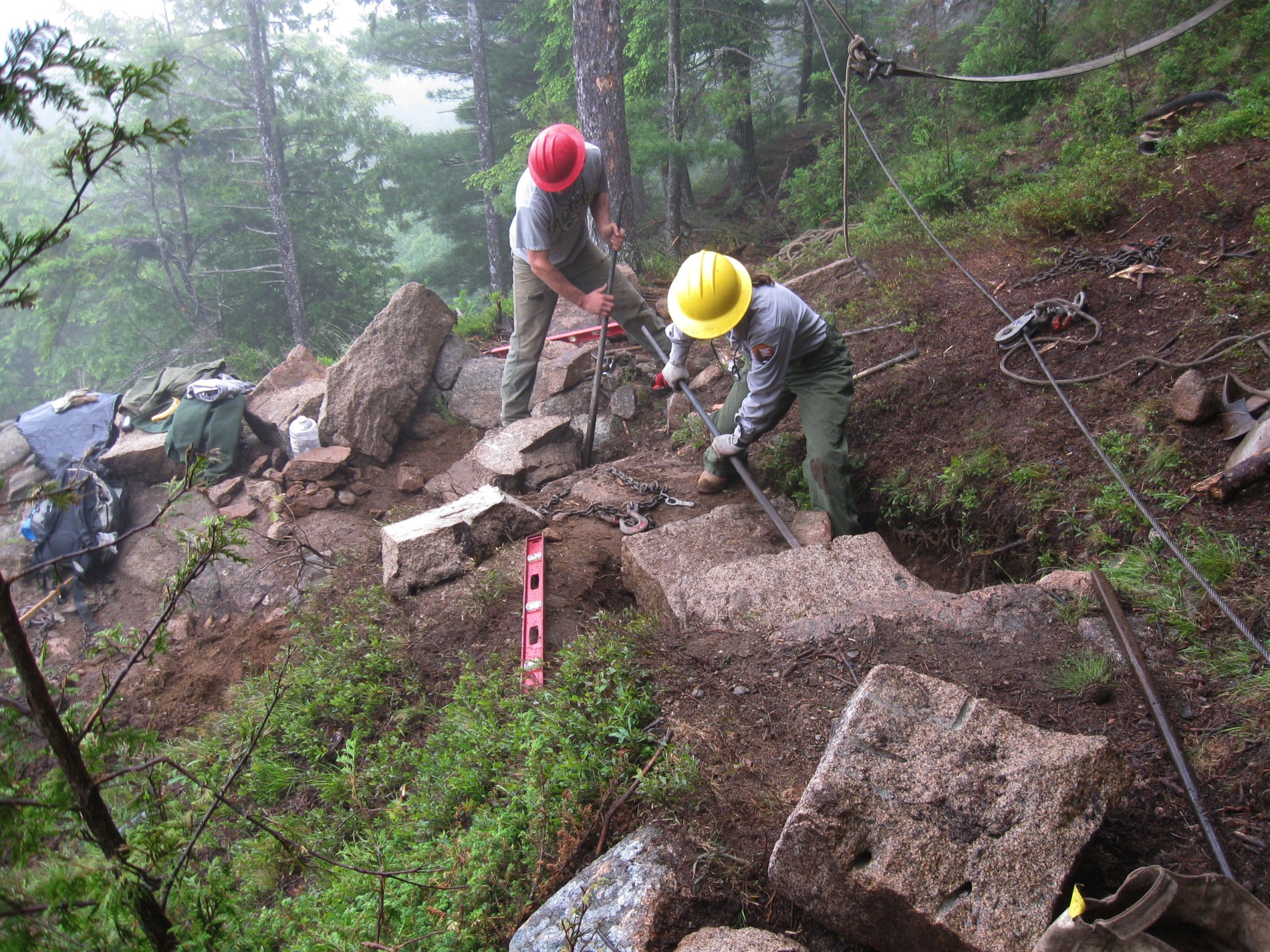
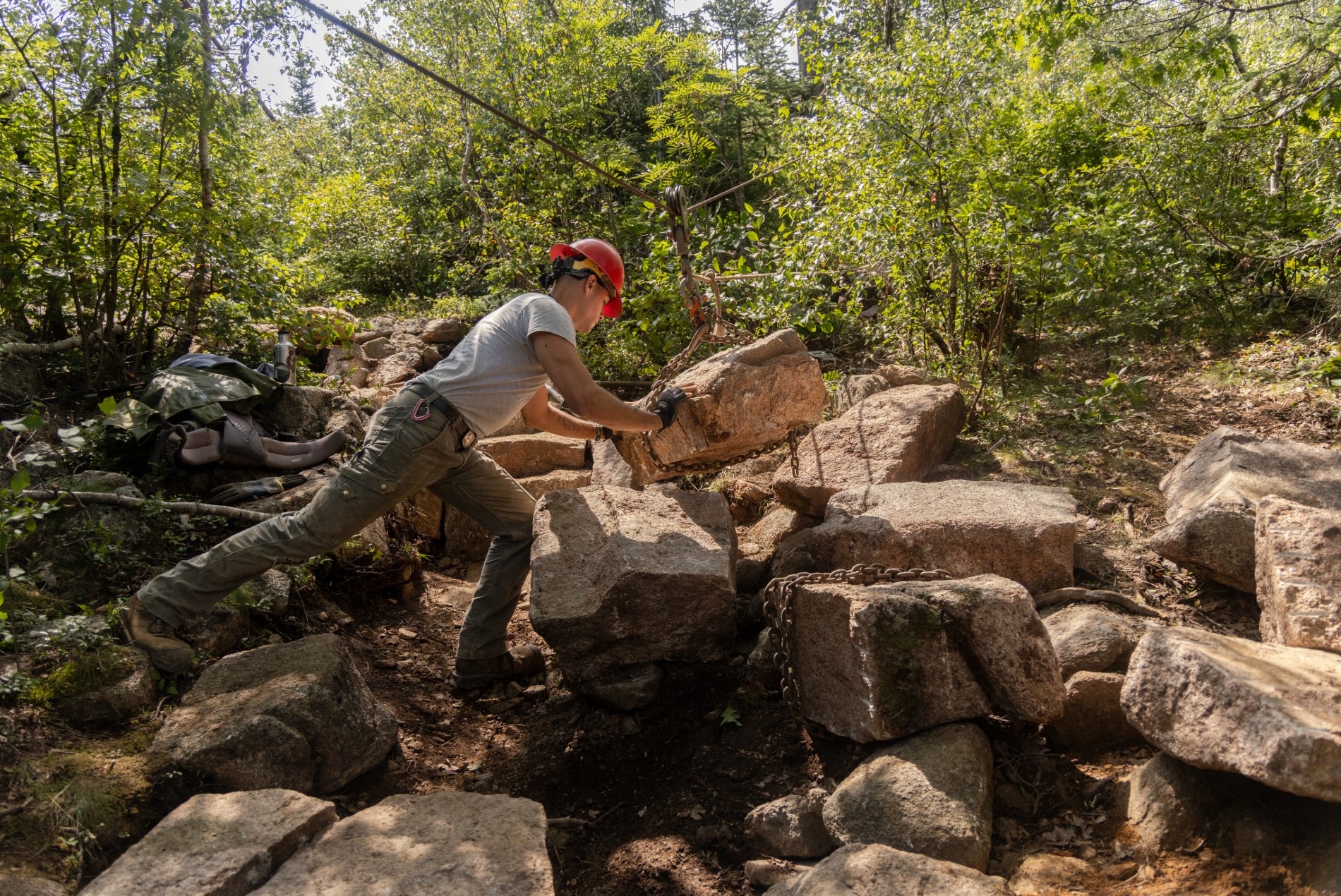
Zach Dixon of the Acadia National Park trail crew uses a highline system to move pieces of granite to build steps during maintenance on Cadillac North Ridge Trail. (Sam Mallon/Friends of Acadia)

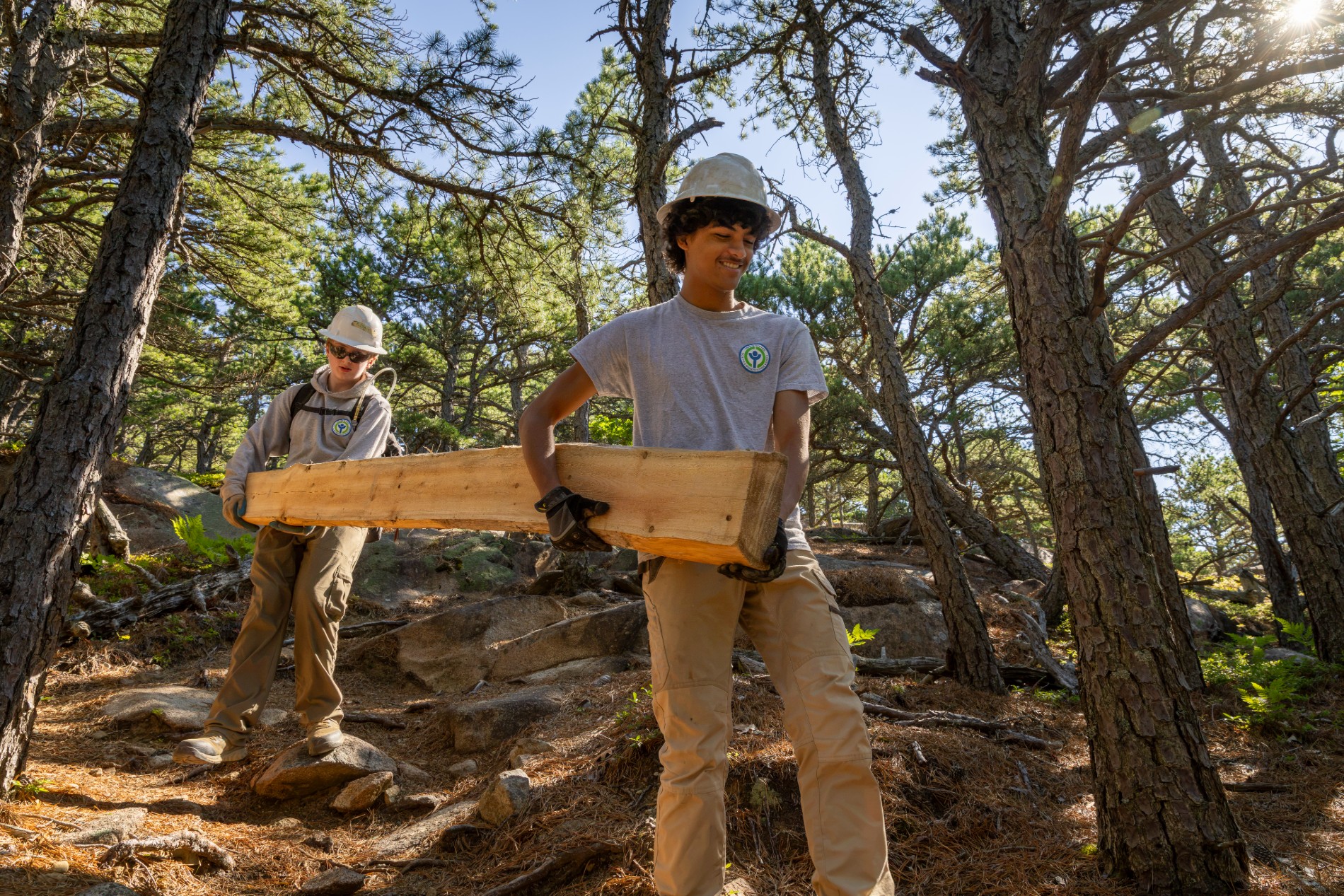
The American Youth Conservation Corps (AYCC) crew carries large pieces of bogwalk up Kebo Mountain in Acadia National Park. (Rhiannon Johnston/Friends of Acadia)